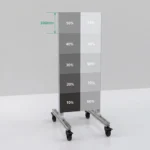
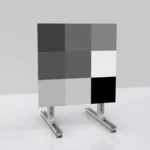
diffuse reflectance mainimage 03 1
diffuse reflectance mainimage 05
diffuse reflectance mainimage 01
diffuse reflectance mainimage 03 1
diffuse reflectance mainimage 05
diffuse reflectance mainimage 01

Diffuse Reflectance Standards for Autonomous Driving & LiDAR Testing

Price range: $149.00 through $369.00

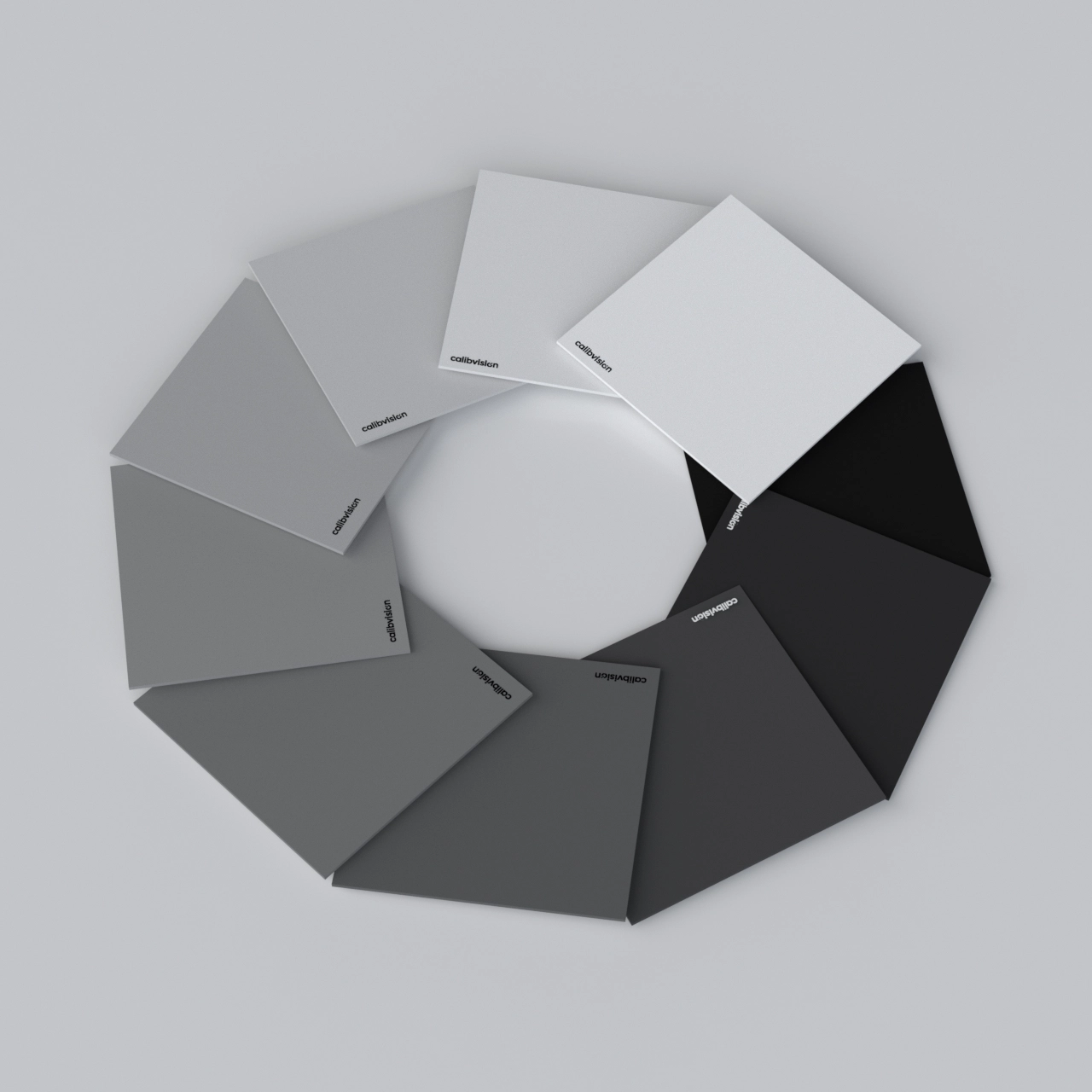
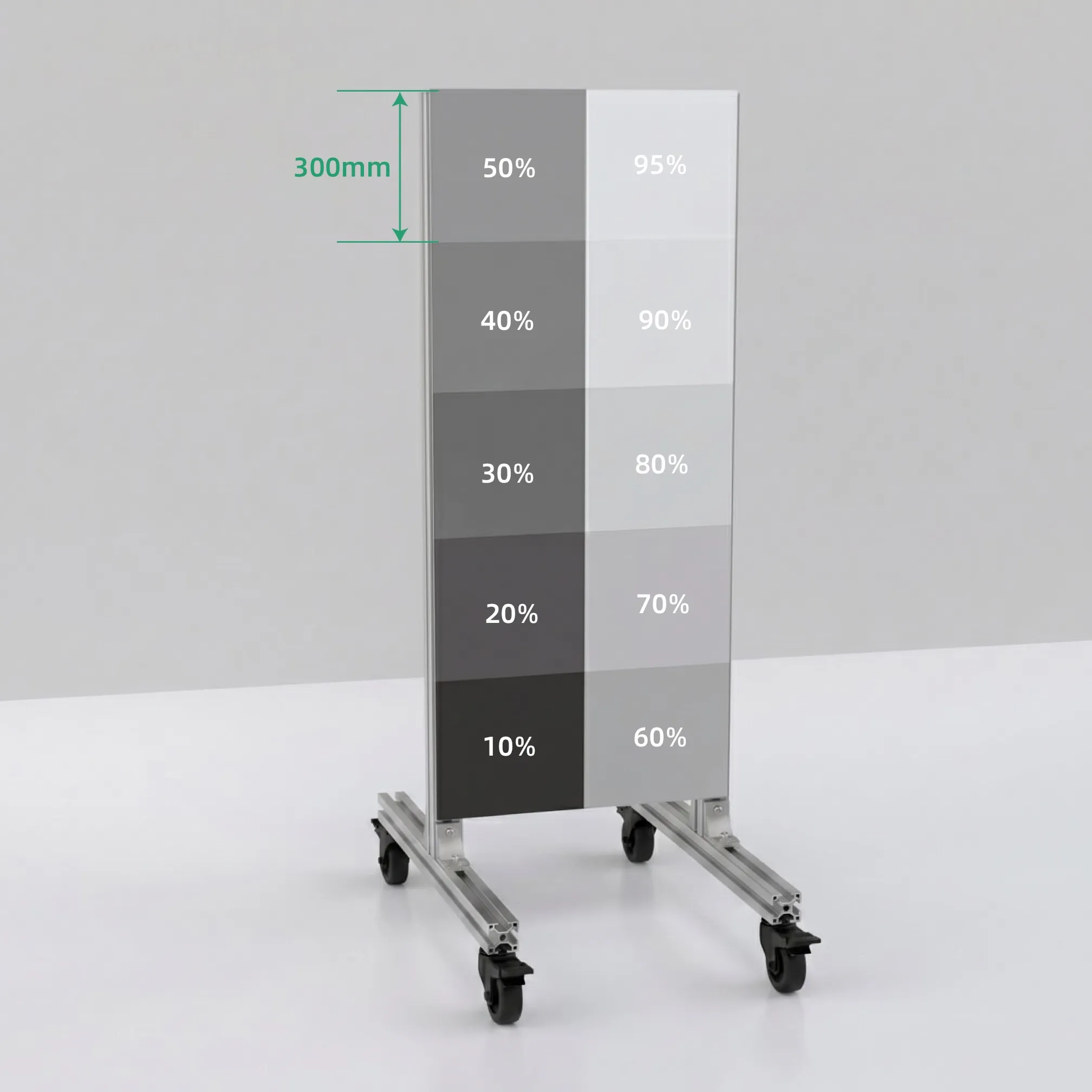
Reflectance values ranging from 10% to 99%
True Lambertian Surface, uniform angular response for accurate LiDAR returns
Spectral 400-1100nm wavelength compatibility (UV-VIS-NIR spectrum)
Automotive-Grade Durability, Waterproof, temperature-stable coating
Custom target sizes up to 3×5 meters 0ptions
Custom 1-99% reflectance available


SKU N/A Category Brand:

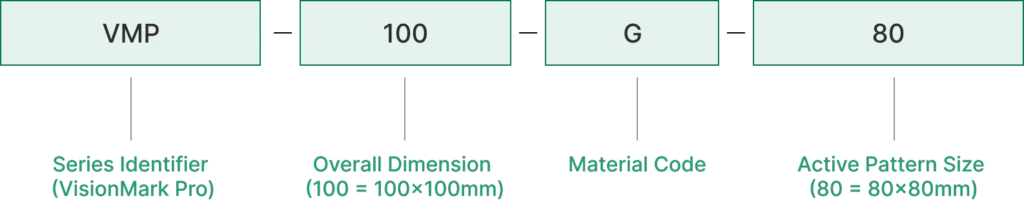
VisionMark™ Pro Series - Naming System Guide

Breaking Down: VMP-100G-80
built to bolt into your existing lidar test setup

Built to Bolt Into Your Existing LiDAR Test Setup

If you’ve ever ordered a reflectance target and then spent two days machining adapter brackets to mount it onto your test fixture — this product was built for you.

CalibVision’s 905nm Multi-Zone Diffuse Reflectance Target Board ships with M6 threaded inserts pre-installed at coordinates you specify. Send us your fixture drawing or coordinate list with your order, and your target arrives ready to bolt directly into your existing test rig — no adapter plates, no field machining, no compromises.
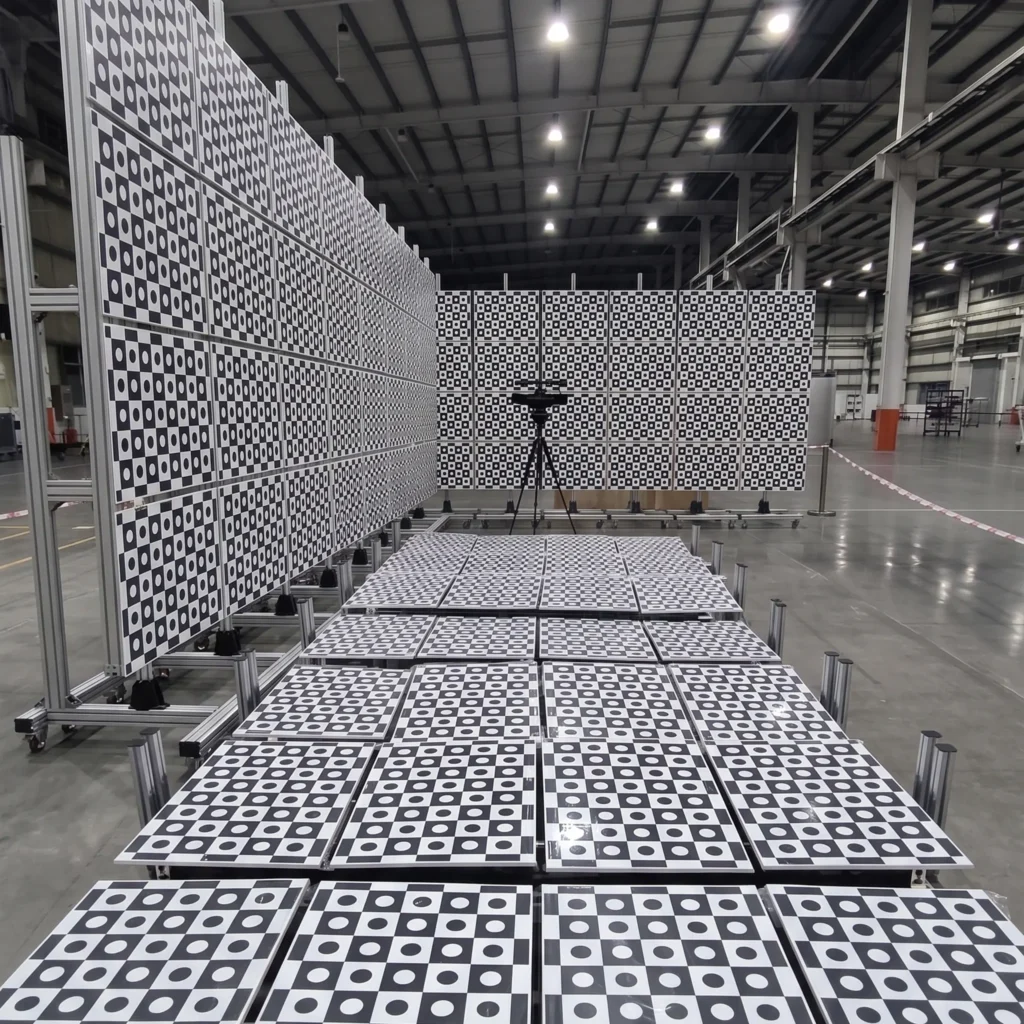
This single capability is the difference between a target that ships in a box and a target that’s running in your test cell on day one.
rel 3

Why 905nm Matters for LiDAR Testing

905nm is the dominant wavelength for short-to-medium-range LiDAR systems in 2026. The major sensor manufacturers — Hesai, Velodyne, RoboSense, Innoviz, Ouster, and most consumer-grade LiDAR (Roborock, Ecovacs, AGV manufacturers, autonomous mobile robots) — operate at this wavelength because silicon-based laser diodes at 905nm are mature, cost-effective, and high-volume.
The trade-off is that 905nm has eye-safety power limits and is more restrictive than 1550nm, which caps maximum useful detection range. That makes accurate performance characterization essential rather than optional — you need a reference target that’s both calibrated for 905nm specifically, and built to test conditions that match your sensor’s working envelope.

A target that’s calibrated for the visible spectrum or general broadband use can give misleading reflectance values at 905nm — the difference is small but enough to invalidate critical LiDAR test results. Our targets are characterized at 905nm under D50/2° illumination on a calibrated spectrophotometer; the certified reflectance values are valid at the wavelength your LiDAR actually uses.
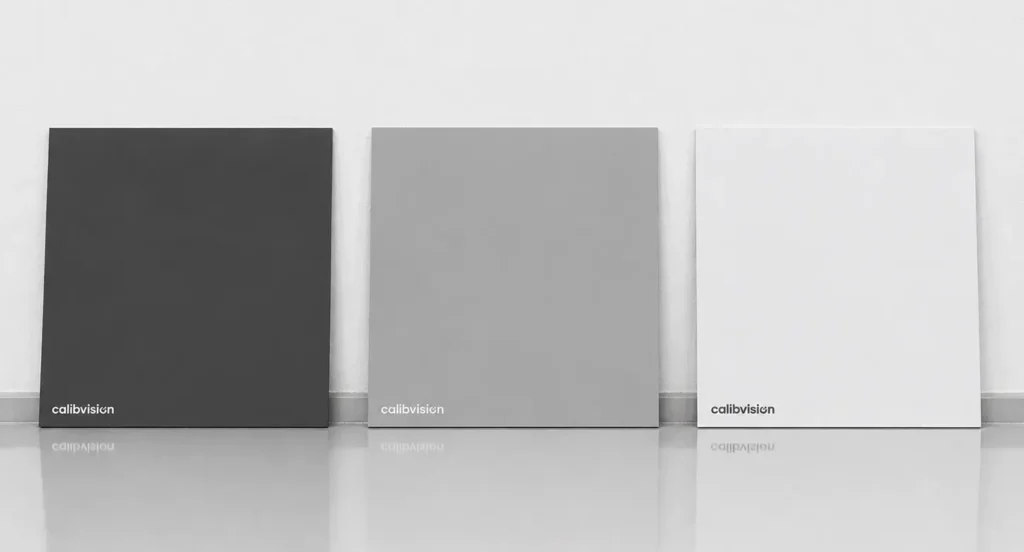
Three Reflectance Zones, One Seamless Board

re group 1
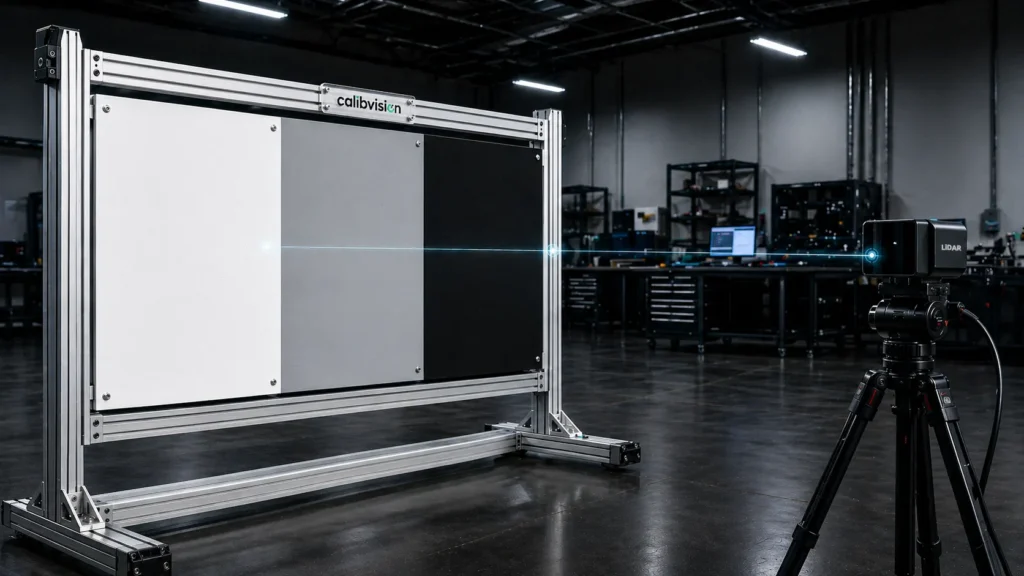
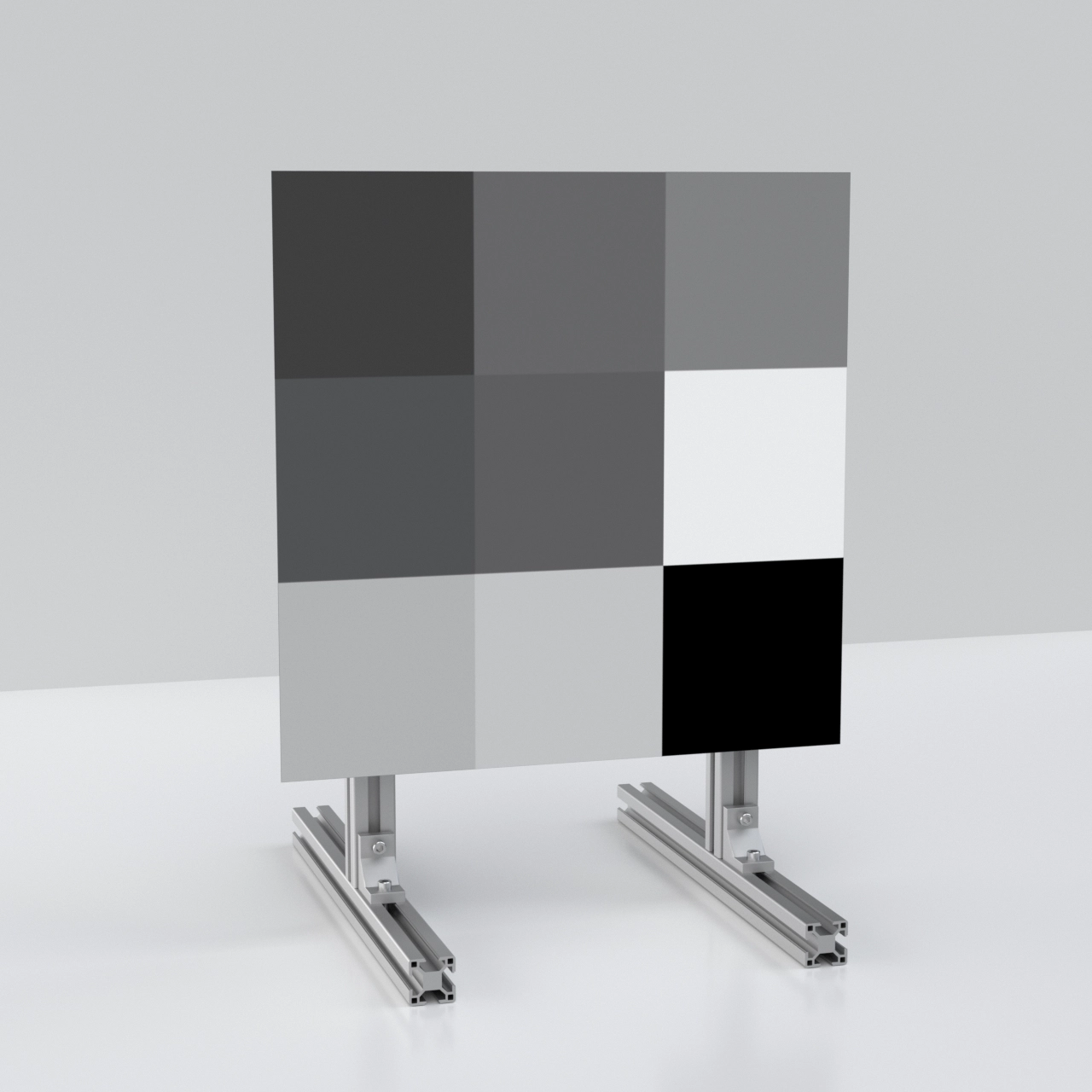
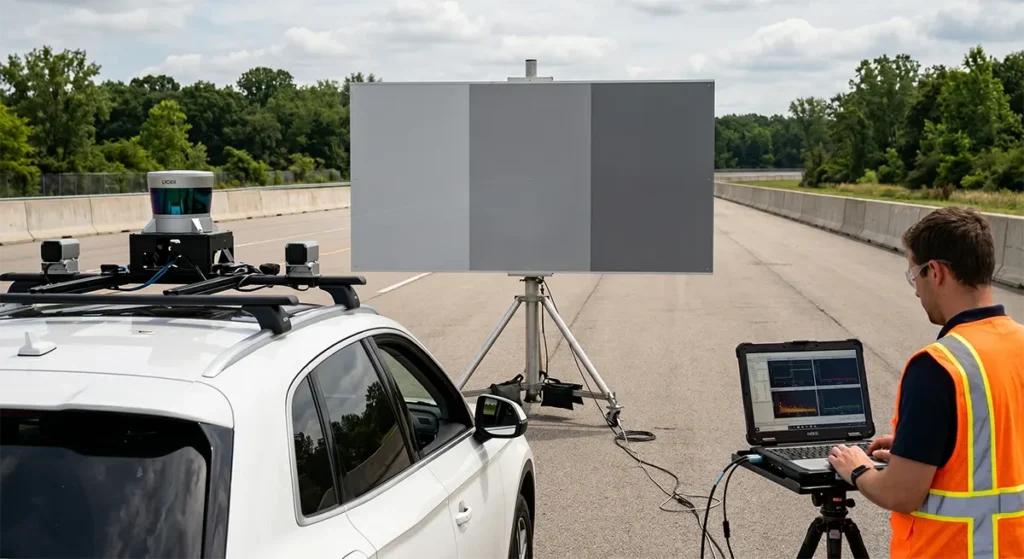
The standard configuration gives you all three industry-standard reflectance values on a single rigid board:

10% reflectance zone

simulates worst-case dark targets (asphalt, black vehicle paint, dark clothing, wet road surfaces). Defines the detection floor of your LiDAR.

50% reflectance zone

simulates typical real-world surfaces (concrete, average vehicle paint, building facades, vegetation). Characterizes typical-case performance.

90% reflectance zone

simulates highly reflective surfaces (white vehicles, road markings, snow, light surfaces). Tests both maximum detection range and signal saturation behavior at close range.

The three zones are produced through a seamless coating process on a single rigid substrate — not three separate panels glued together. This matters in two ways: there’s no transition discontinuity to confuse LiDAR scan returns near zone boundaries, and the entire board has uniform thermal expansion and dimensional stability.
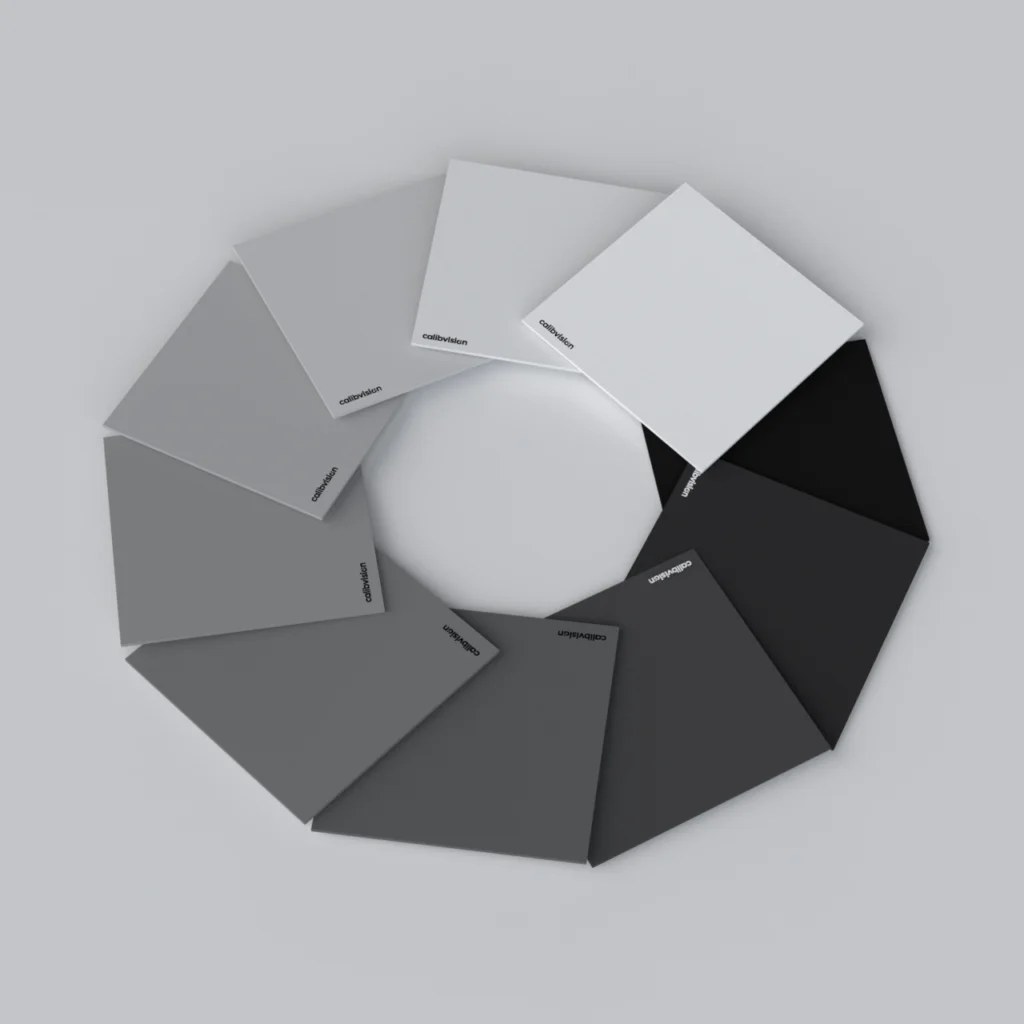
Beyond the Standard Three: Continuous 1% to 99% Reflectance

The 10/50/90 trio is the industry default, but some test programs need finer or wider coverage. We manufacture reflectance panels at any value across a continuous 1% to 99% range — including:

01

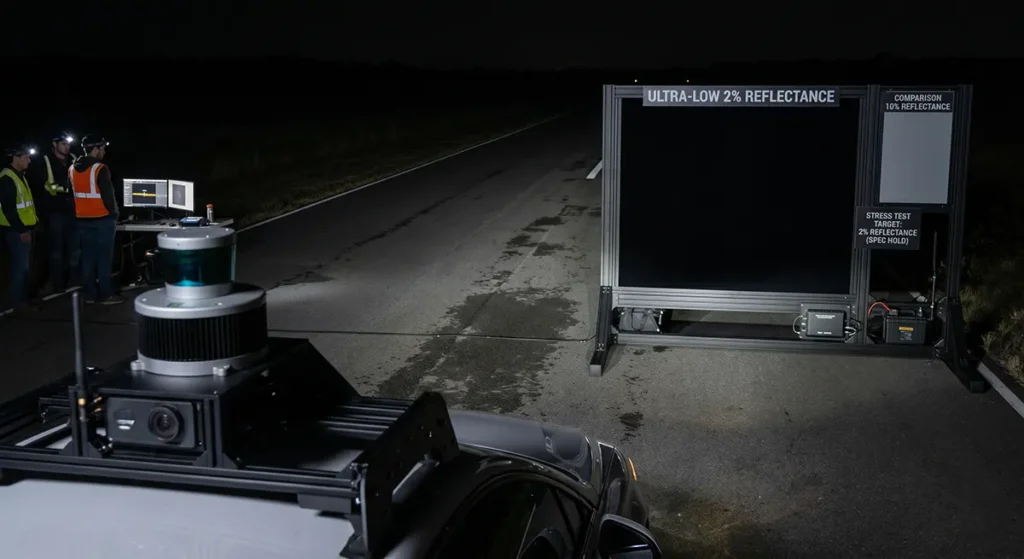
ultra low (1-5%) for stress testing maximum range

Ultra-low (1-5%) for stress-testing maximum-range detection against the darkest real-world surfaces (deep black vehicles, fresh asphalt at night, low-albedo materials). Achieving stable 2% reflectance is significantly harder than 10%, and very few suppliers hold spec at this end.
02

id range custom values (15%, 30%, 70%) for test protocols requiring

Mid-range custom values (15%, 30%, 70%) for test protocols requiring finer reflectance resolution than the standard three steps, such as automotive intensity calibration or perception classifier training data.
03

LiDAR performance test lab setup with sensor on optical bench aimed at multi-zone reflectance target at controlled distance

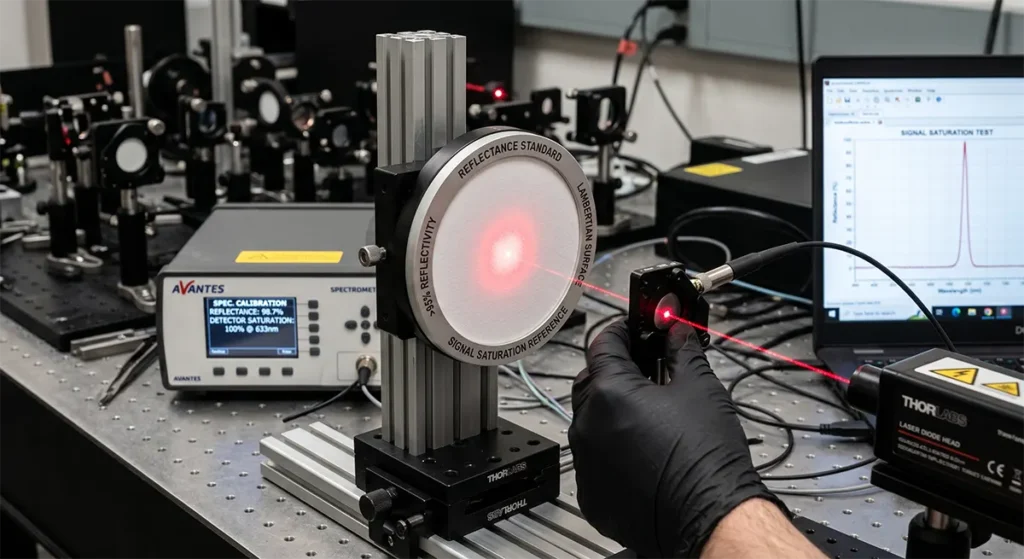
Ultra-high (95%+) approaching the practical reflectance ceiling for engineered Lambertian surfaces, used as near-100% reference for signal saturation testing and as a quasi-perfect-reflector reference in spectrometer applications.

Multi-zone boards can combine any custom values you need in any sequence — 4-zone (1% / 10% / 50% / 90%) or 5-zone configurations are common requests. Quote any combination by sending us your spec.
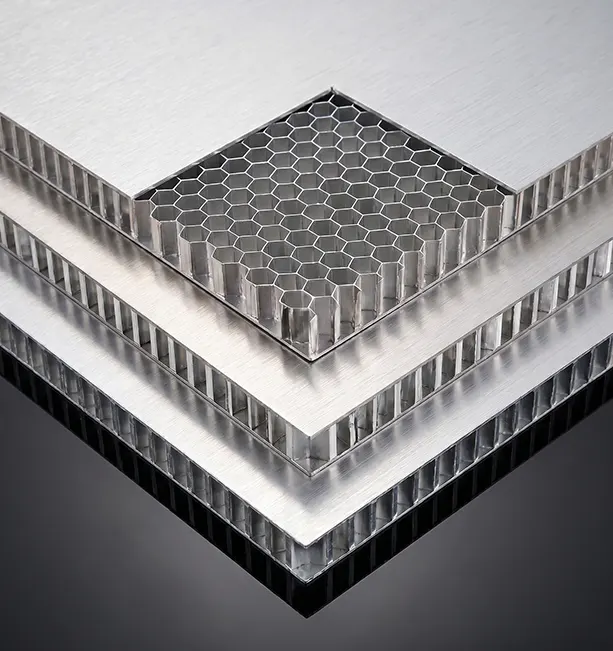
Substrate Options: Standard Aluminum vs Honeycomb Composite

The board ships with one of two substrate options depending on your application — and choosing the right one matters more than most buyers realize. Both substrates use the same calibrated 905nm Lambertian coating; what differs is mechanical performance, mounting capability, and price.
aluminum plate 1

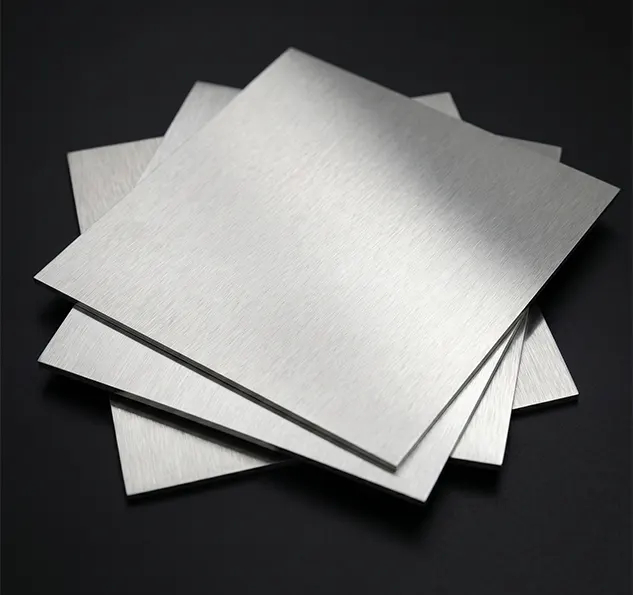
Standard Aluminum Plate

Default substrate — for non-drilled mounting
The default configuration ships on a single-sheet aluminum plate. It’s the right choice when:
This is the substrate you see in most general-purpose reflectance target listings on the market.
honeycomb composite 1

Honeycomb Composite (Required for Custom Mount Holes)

The honeycomb composite upgrade is required when:
This is the same substrate class used in satellite optical benches and race-car body panels — where flatness and weight both matter at scale.
Customers who order custom mount holes are automatically quoted on honeycomb composite. The upgrade is included in the custom-quote price, not charged separately.
sintered ptfe reference standard 1

Premium Substrate — Sintered PTFE Reference Standard

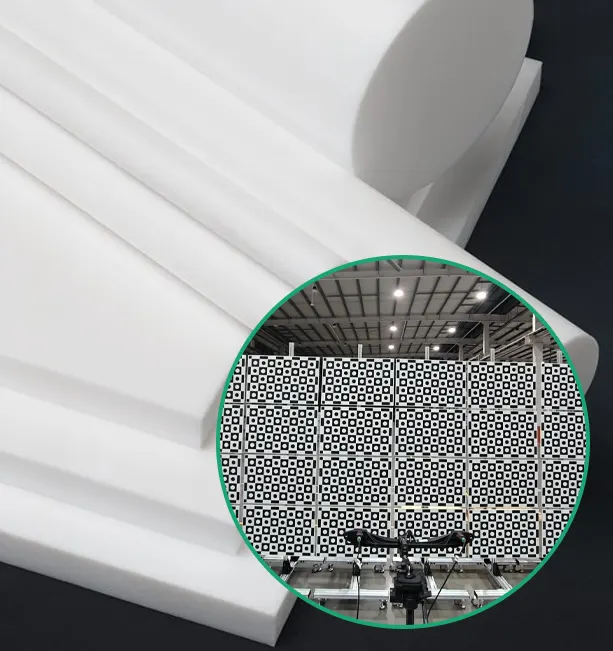
For metrology-grade applications where the reflectance reference itself must be near-perfect, we offer sintered PTFE diffuse reflectance standards as a premium product line:

PTFE standards aren’t typically used for LiDAR test boards — they’re reference materials for spectrometer calibration, laser power measurement, optical metrology, satellite remote-sensing calibration, and academic research where the reflectance reference itself has to be defensible to ±0.5% or better. If your application sits in this metrology-grade tier, contact us with your specifications.

Calibvision’s Diffuse Reflectance Standards are precision optical targets designed for LiDAR system calibration, autonomous vehicle testing, and optical sensor validation. Manufactured with specialized matte coatings on rigid substrates, these targets provide consistent, angle-independent reflectance across visible and infrared wavelengths.
Ideal for:
– Automotive LiDAR range and intensity calibration
– Autonomous driving perception system validation
– Long-range LiDAR sensor testing (50-300m)
– Camera-LiDAR fusion algorithm development
– Robotic vacuum cleaner optical sensor testing


0
    0
    Your Cart
    Your cart is emptyReturn to Shop

    Get Your Quote Now

    Please fill out the form below or email us directly to sales@calibvision.com, our sales engineers will review your request and get back to you within 24 hours(typically faster).

    diffuse reflectance mainimage 03 1

    Diffuse Reflectance Standards for Autonomous Driving & LiDAR Testing