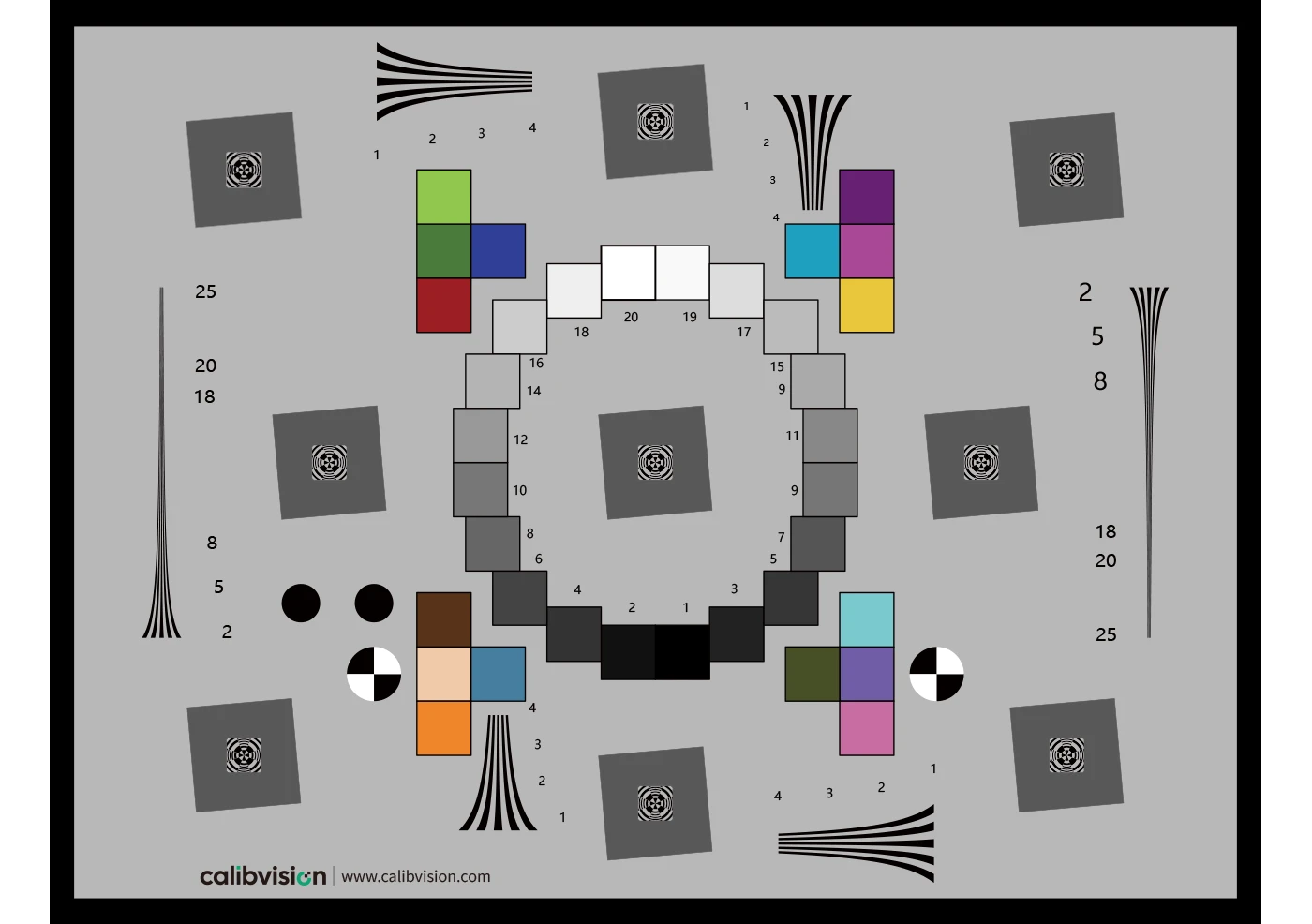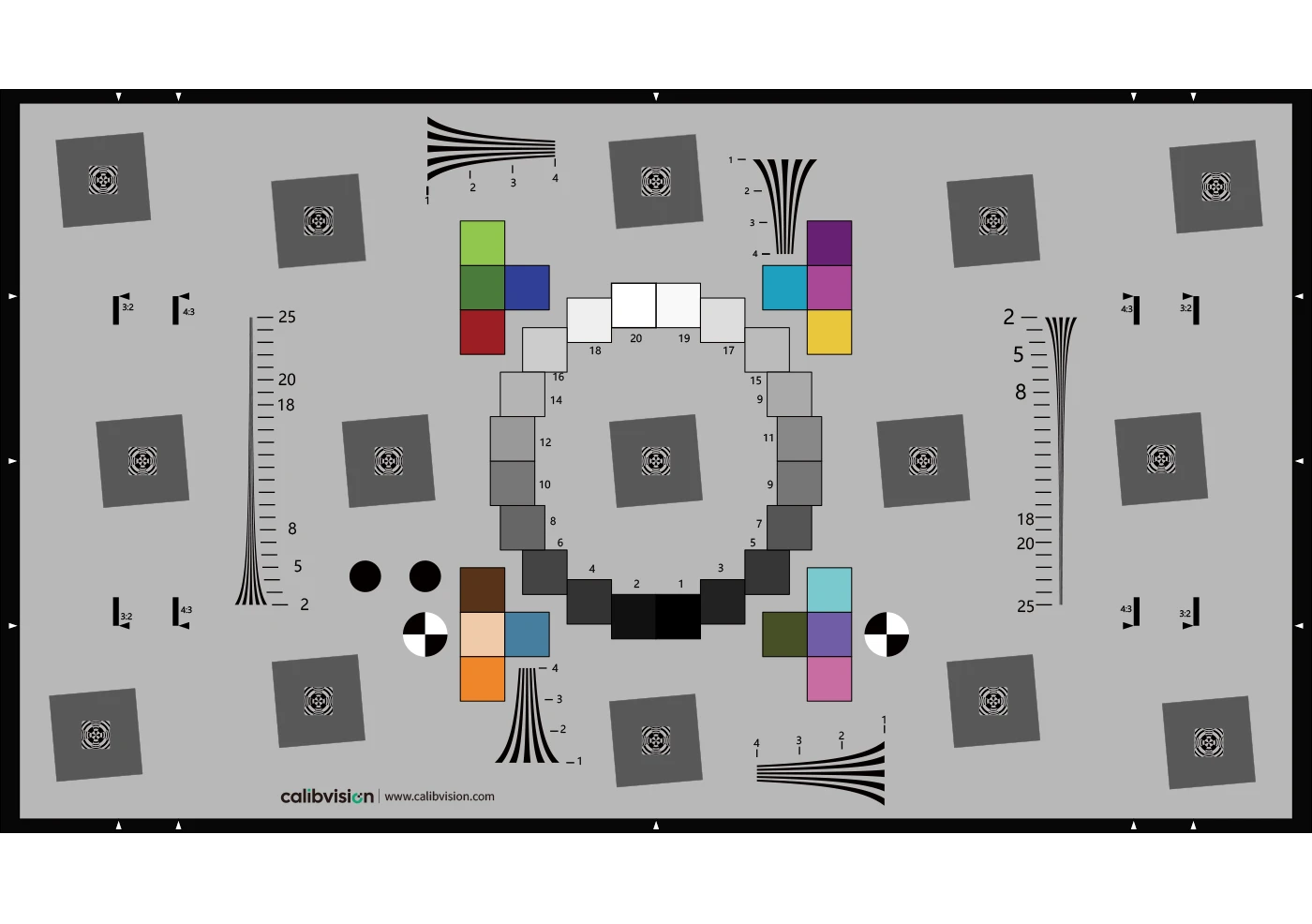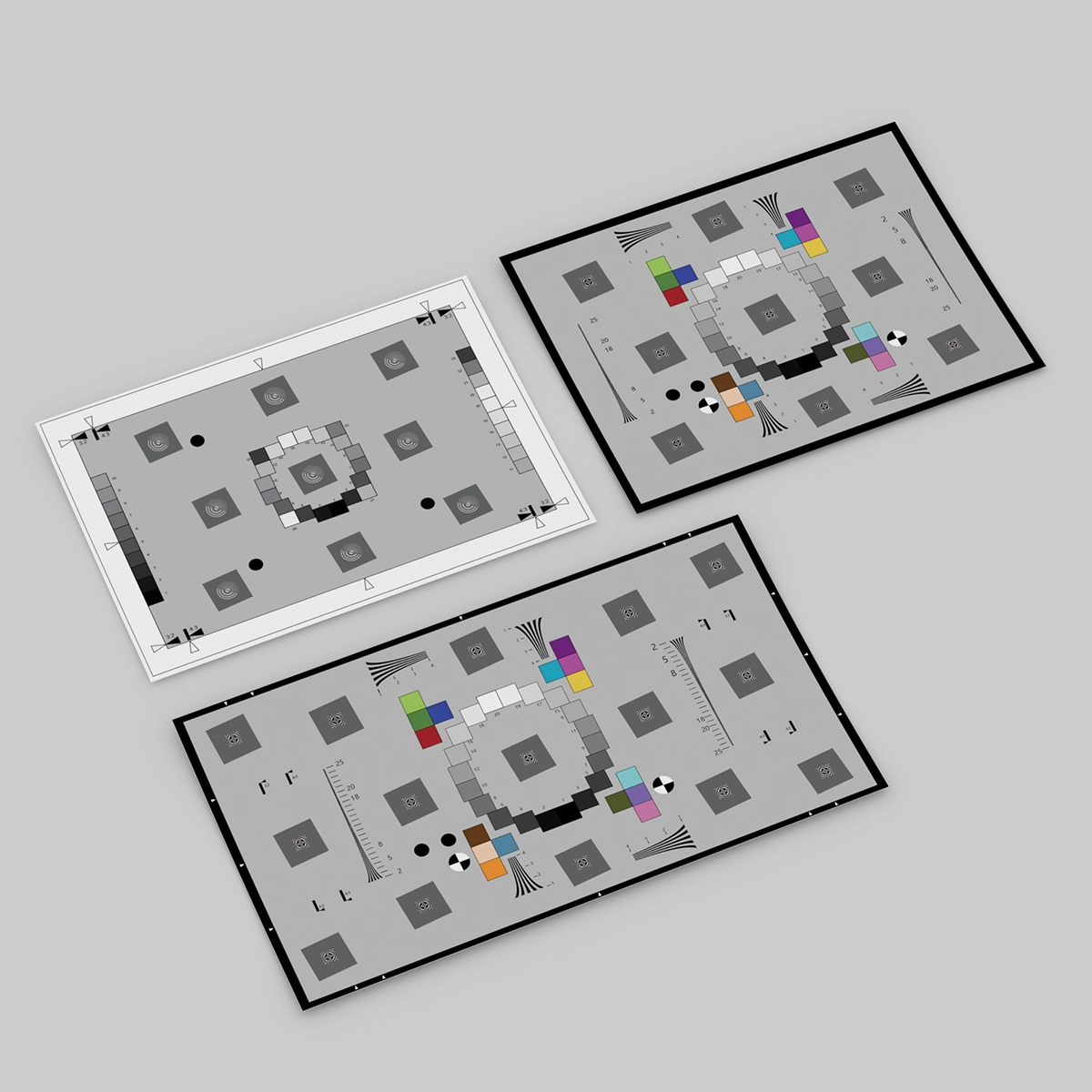
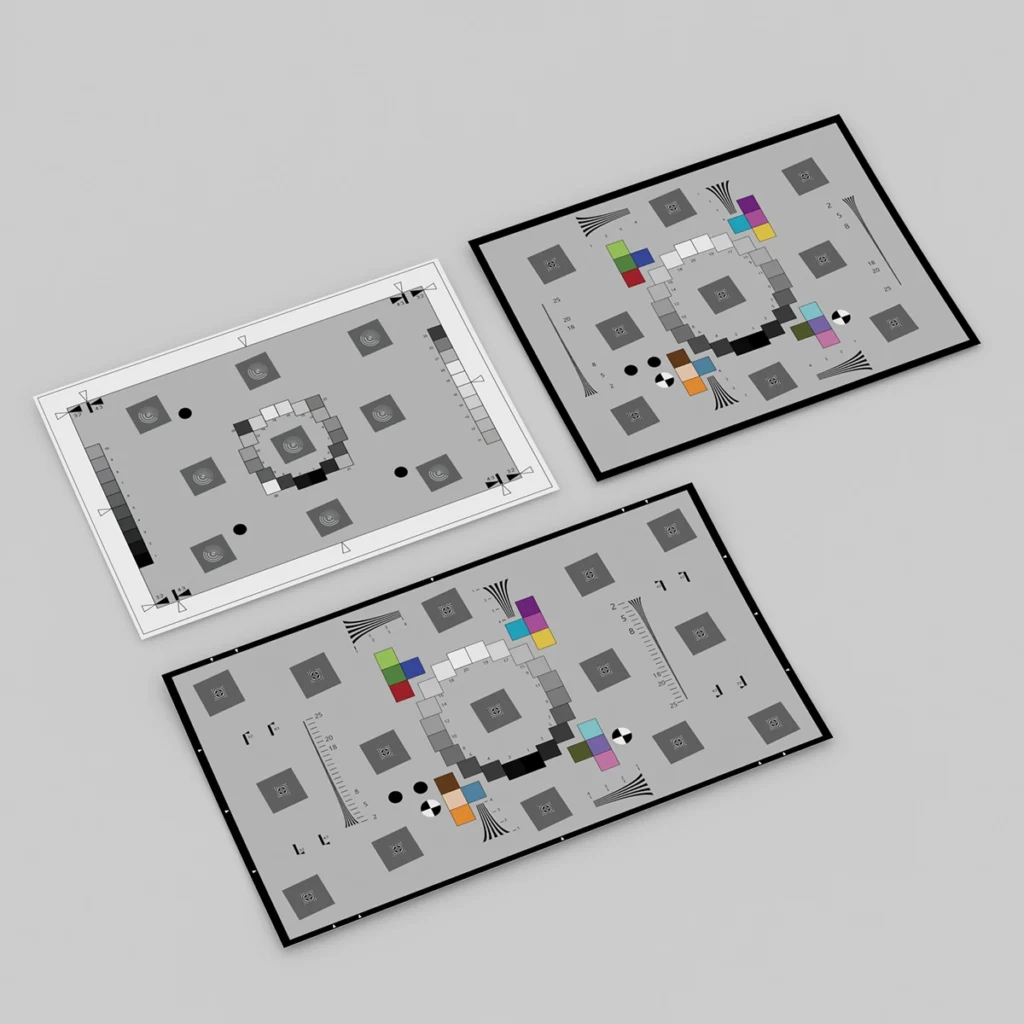
eSFR ISO 12233:2017 Test Chart — Low-Contrast Edge SFR Target with Slanted Squares, OECF Patches & Color/Wedge Patterns

Price range: $99.00 through $899.00
  •  Low-contrast 4:1 edges: ISO 12233:2017 compliant slanted squares for accurate SFR/MTF measurement
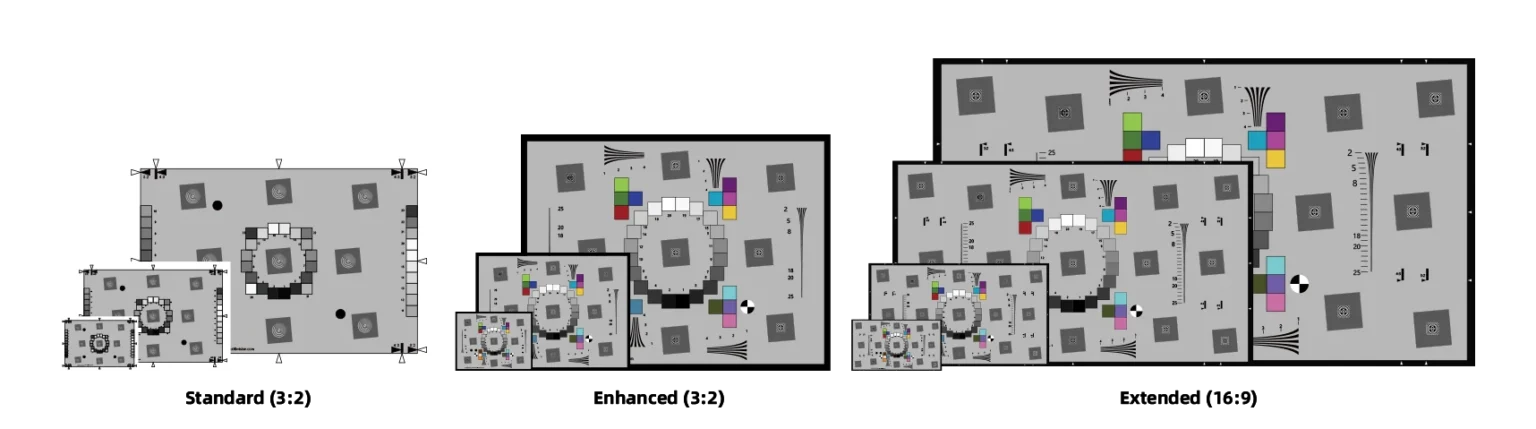
  • Three variants: Standard (3:2 base) / Enhanced (3:2 + color & wedges) / Extended (16:9 + color & wedges)
  • Imatest-ready: Registration marks enable automatic ROI detection in eSFR ISO module — no manual selection required
  • One chart, six metrics: Sharpness, noise, color accuracy, distortion, lateral chromatic aberration, and tonal response
SKU N/A Category Brand:

Resolution Test Series - Naming System Guide

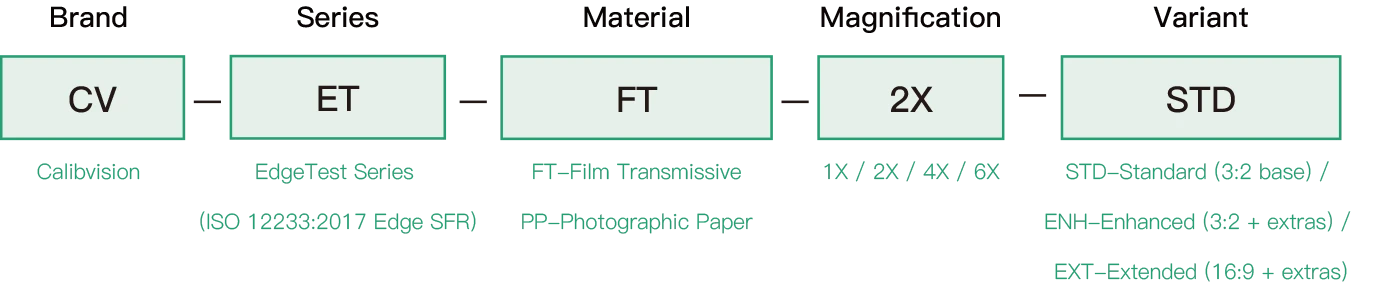
Breaking Down: CV-ET-FT-2X-STD
iso12233 2017 test chart part numbering system calibvision
iso12233 2017 test chart variants comparison calibvision
Model Substrate Lighting Chart Size (mm) Chart Size (inch) Aspect Ratio Variant Magnification Standard Accuracy
CV-ET-FT-1X-STD Film Transmissive 200×305 7.87×12.01" 3:02 Standard 1X ISO 12233:2017 ±15 μm
CV-ET-FT-1X-ENH Film Transmissive 200×305 7.87×12.01" 3:02 Enhanced 1X ISO 12233:2017 ±15 μm
CV-ET-FT-1X-EXT Film Transmissive 200×356 7.87×14.02" 16:09 Extended 1X ISO 12233:2017 ±15 μm
CV-ET-FT-2X-STD Film Transmissive 400×610 15.75×24.02" 3:02 Standard 2X ISO 12233:2017 ±15 μm
CV-ET-FT-2X-ENH Film Transmissive 400×610 15.75×24.02" 3:02 Enhanced 2X ISO 12233:2017 ±15 μm
CV-ET-FT-2X-EXT Film Transmissive 400×712 15.75×28.03" 16:09 Extended 2X ISO 12233:2017 ±15 μm
CV-ET-FT-4X-STD Film Transmissive 800×1220 31.50×48.03" 3:02 Standard 4X ISO 12233:2017 ±15 μm
CV-ET-FT-4X-ENH Film Transmissive 800×1220 31.50×48.03" 3:02 Enhanced 4X ISO 12233:2017 ±15 μm
CV-ET-FT-4X-EXT Film Transmissive 800×1422 31.50×55.98" 16:09 Extended 4X ISO 12233:2017 ±15 μm
CV-ET-PP-4X-STD Photo Paper Reflective 800×1220 31.50×48.03" 3:02 Standard 4X ISO 12233:2017 ±0.1 mm
CV-ET-PP-4X-EXT Photo Paper Reflective 800×1422 31.50×55.98" 16:09 Extended 4X ISO 12233:2017 ±0.1 mm
CV-ET-PP-6X-EXT Photo Paper Reflective 1200×2136 47.24×84.09" 16:09 Extended 6X ISO 12233:2017 ±0.1 mm
Property Transmissive Film Photographic Paper
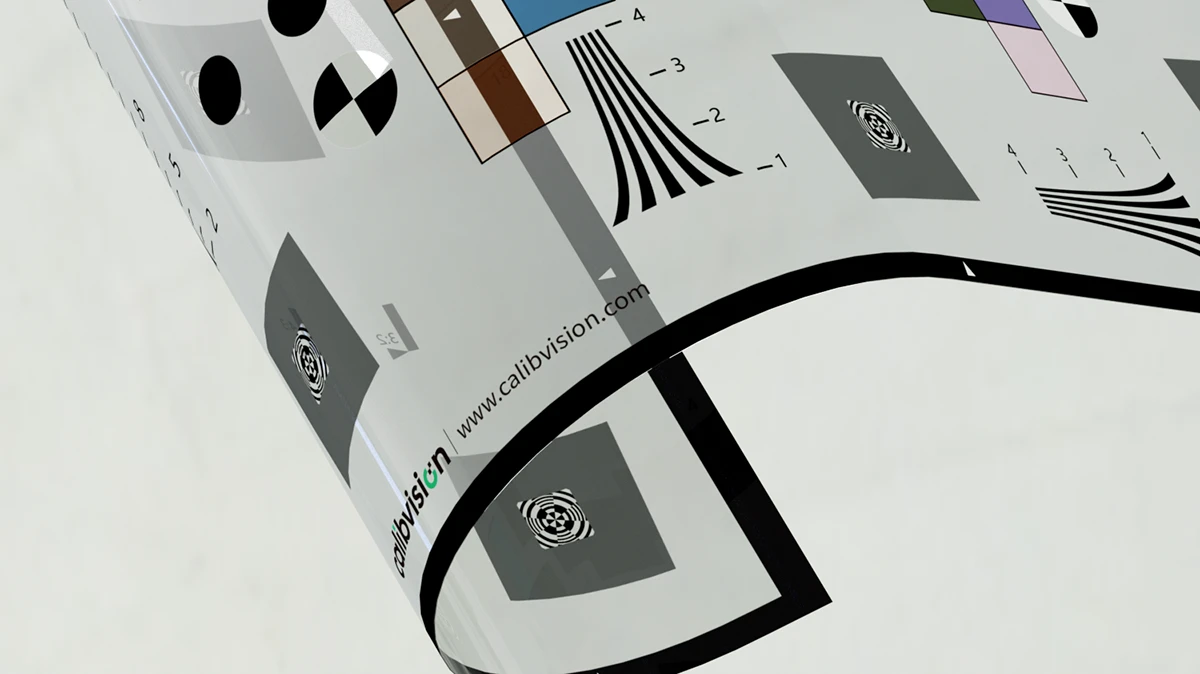
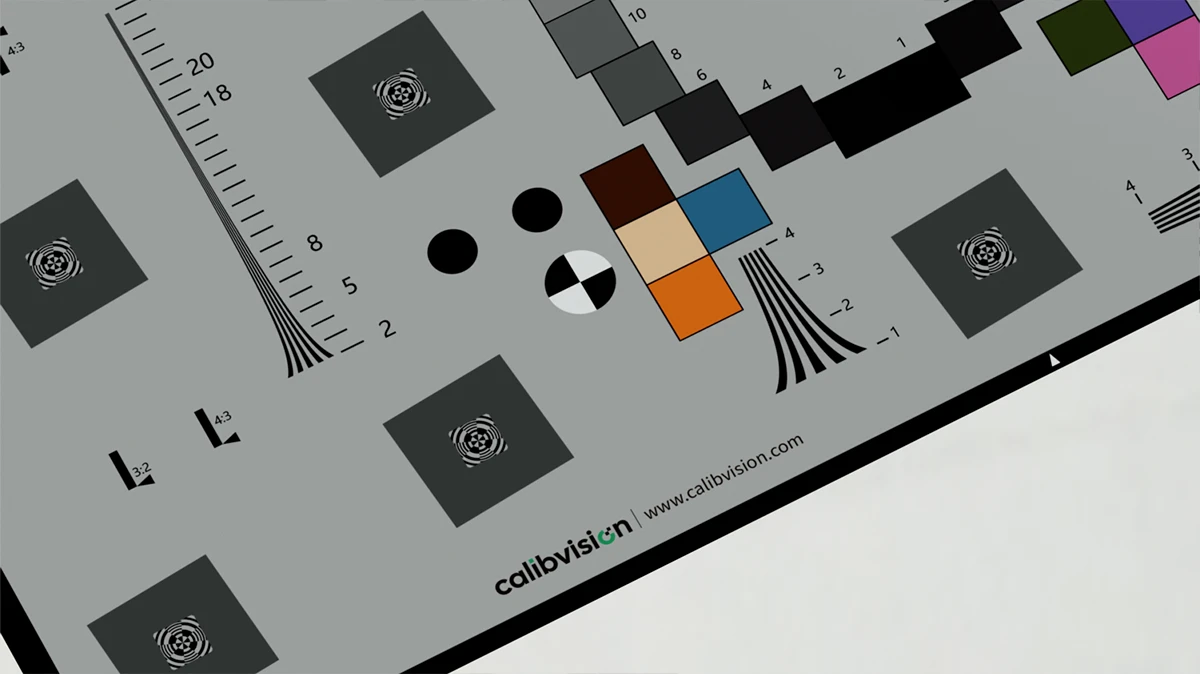
iso12233 2017 extended film transmissive chart close up calibvision iso12233 2017 extended photographic paper chart close up calibvision
Feature Accuracy ±15 μm ±0.1 mm
Surface Glossy, Transparent Base Matte, Reflective
Required Lighting Backlit light box (D65) Diffuse 45° from both sides
Maximum Size 1200×2136 mm (6X) 1600×2844 mm (8X) and beyond
Contrast Higher, more uniform Slightly lower, depends on lighting
Durability Resists scratches, easy to clean More sensitive to fingerprints
Best for Lab SFR/MTF measurement Field, production, large-format

ISO 12233 Test Chart Overview

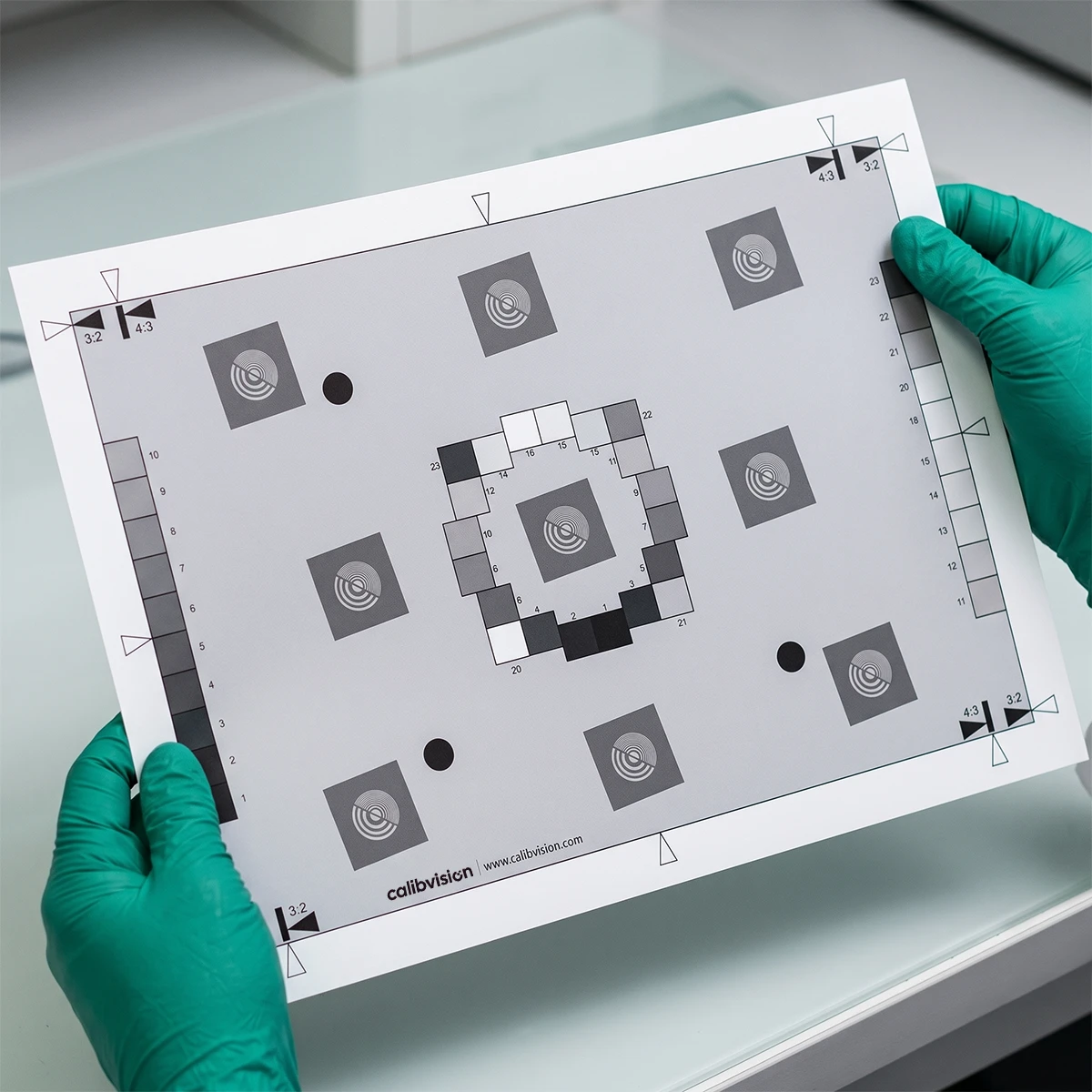
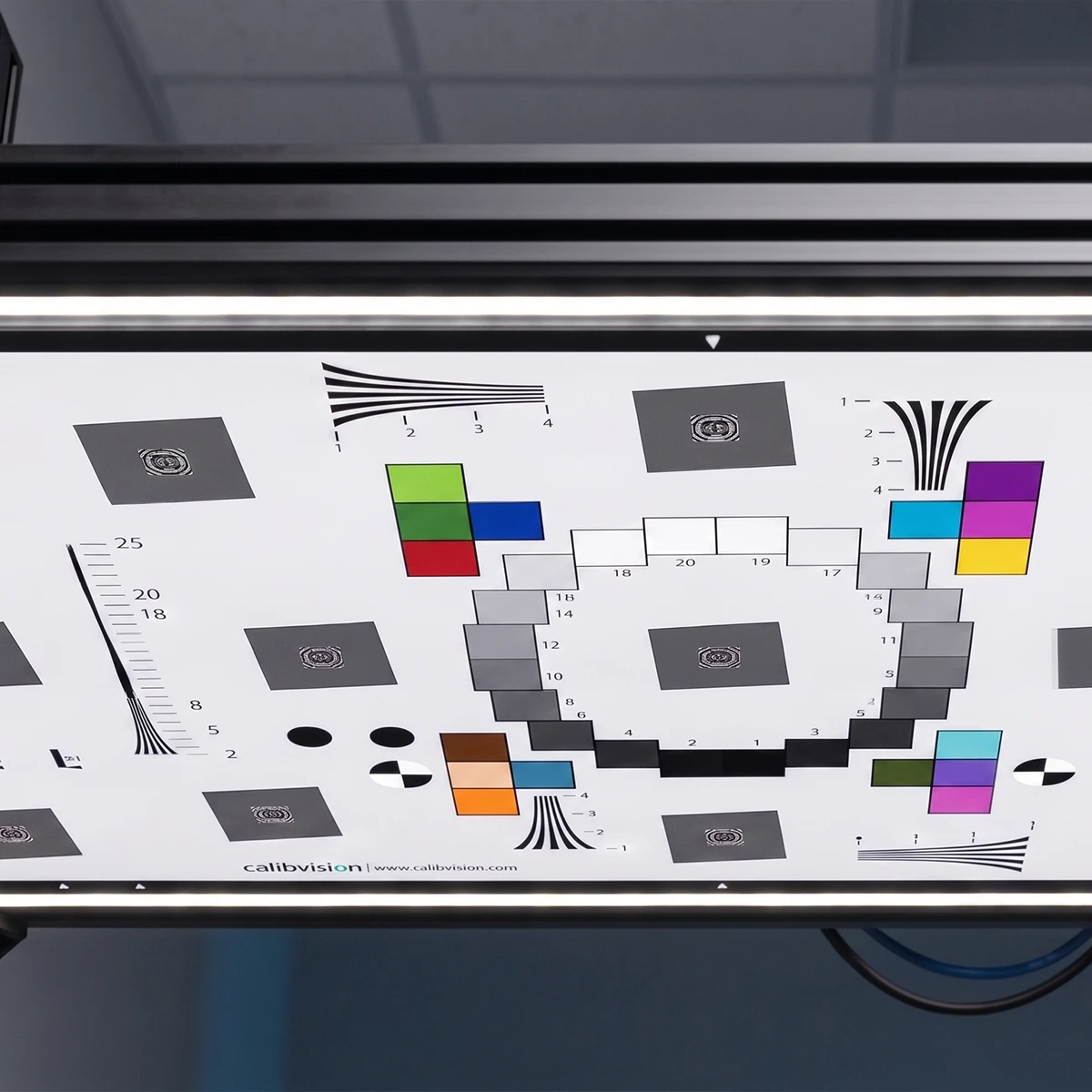
The Calibvision eSFR ISO 12233 Test Chart is the modern, low-contrast resolution target designed under the ISO 12233:2017 standard for automated camera image quality testing. Built around 9 to 15 precisely placed slanted squares with 4:1 edge contrast, OECF grayscale patches, and optional color and wedge patterns, the eSFR chart is the chart of choice for labs running Imatest, MTF Mapper, or any modern SFR analysis software. Available on transmissive film (±15 μm accuracy) and matte photographic paper (±0.1 mm) in 12 size and variant combinations.
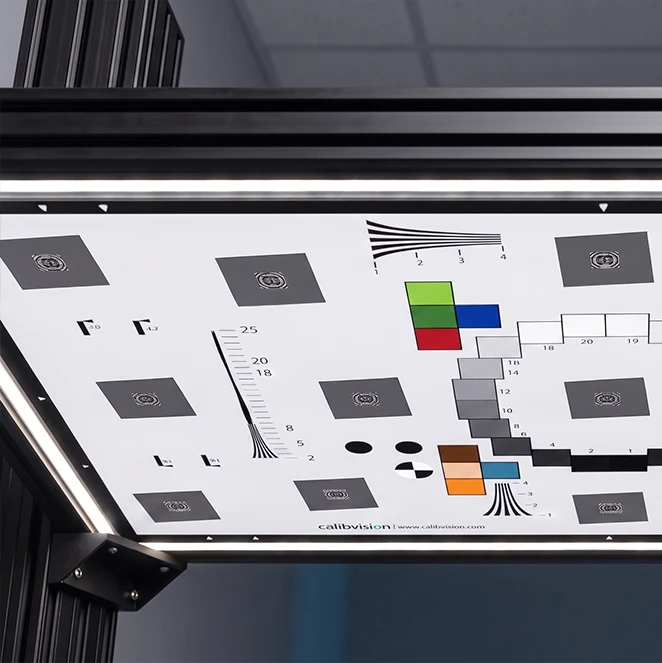
camera calibration system with iso12233 2017 chart calibvision
iso12233 2017 color film chart with led backlight calibvision
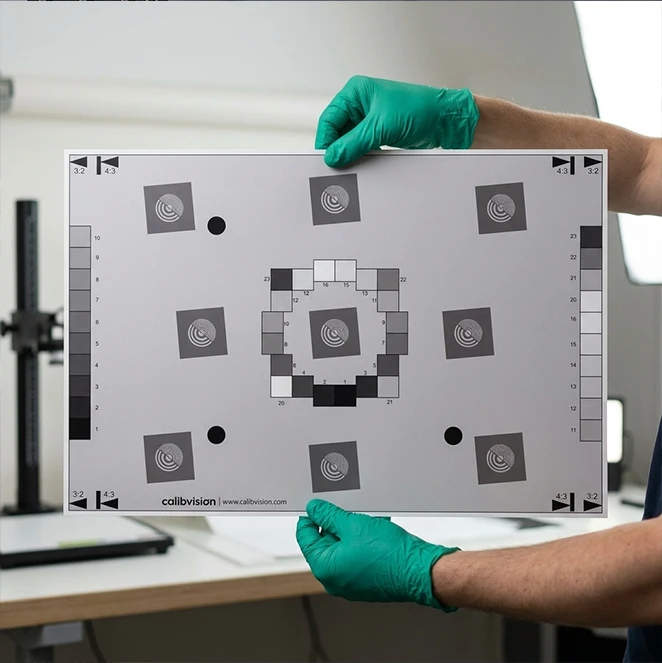
iso12233 2017 photographic paper chart handling calibvision
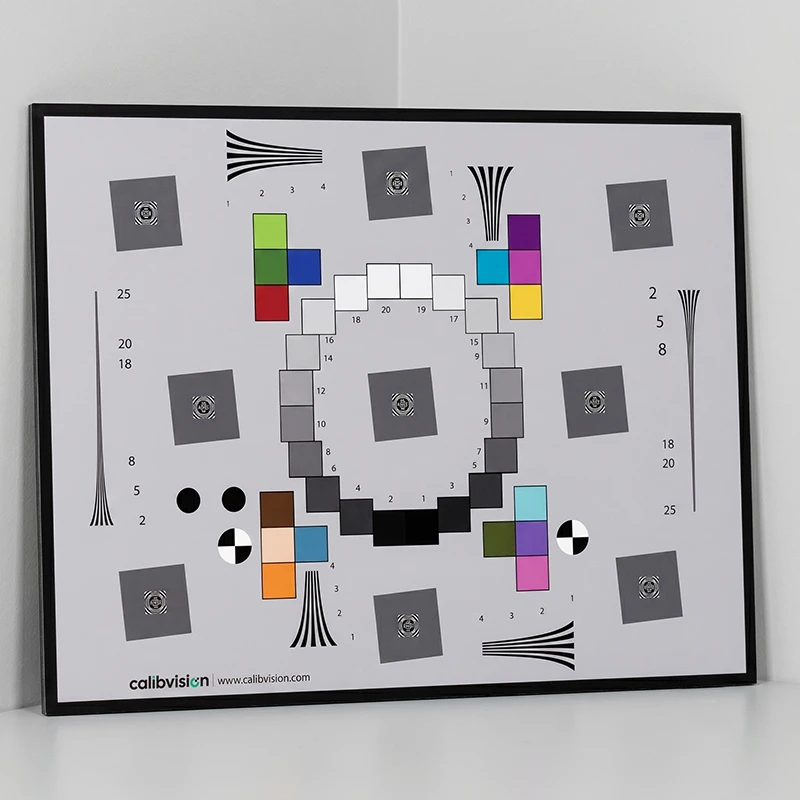
iso12233 2017 enhanced chart photographic paper on kt board calibvision

What Is the eSFR ISO 12233 Test Chart?

An eSFR ISO 12233 test chart is a low-contrast resolution target designed under ISO 12233:2017 Annex C to measure Edge Spatial Frequency Response (E-SFR) from slanted-edge analysis. Unlike the classic high-contrast ISO 12233:2000 chart, the eSFR chart uses 4:1 edge contrast to avoid clipping and nonlinear processing artifacts, and includes OECF grayscale patches, optional color patches, and registration marks for fully automated region-of-interest detection in software such as Imatest.
Specification Standard Enhanced Extended
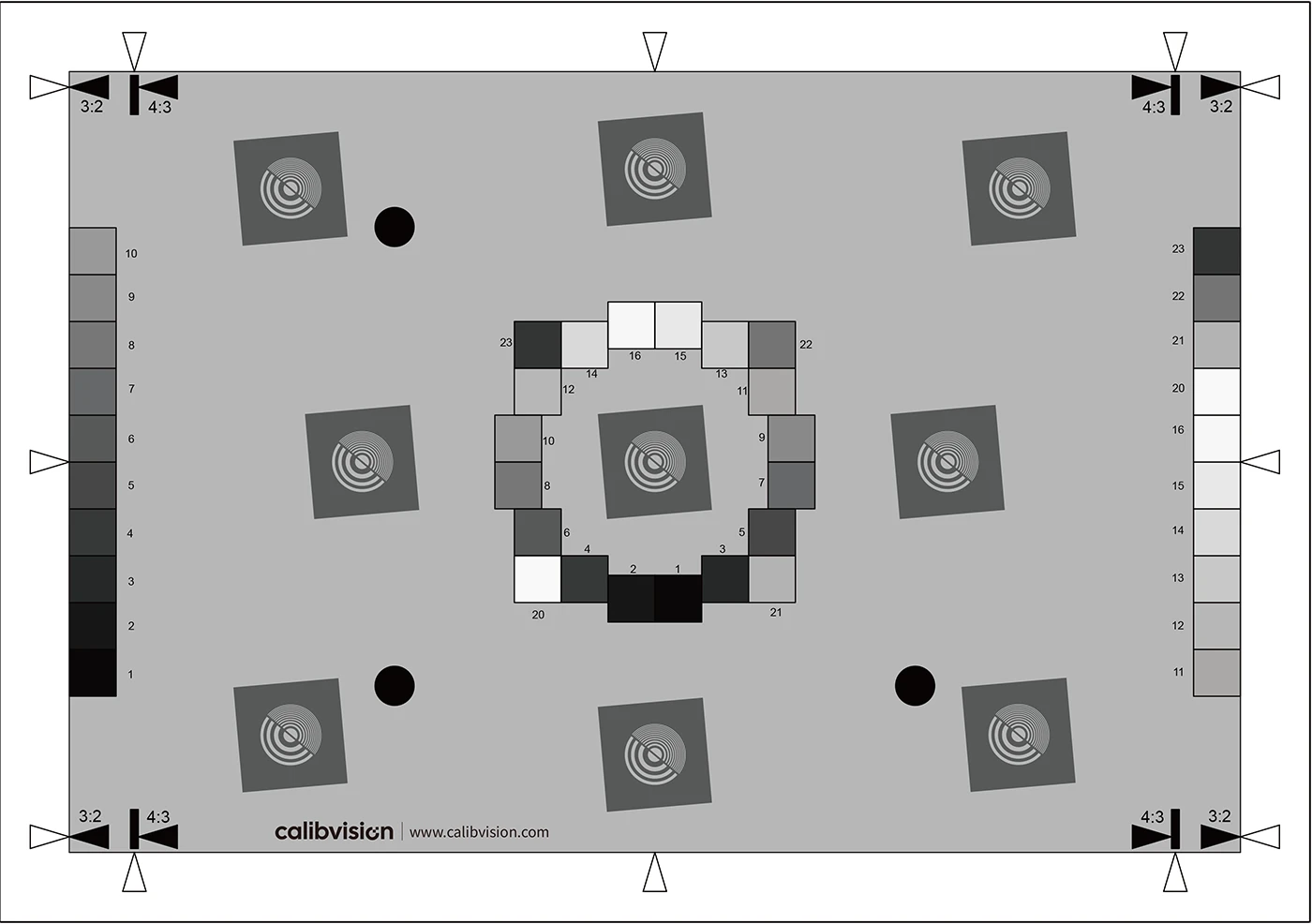
iso12233 2017 edge sfr test chart 3 2 calibvision iso12233 2017 enhanced edge sfr chart 3 2 calibvision iso12233 2017 extended edge sfr chart 16 9 calibvision
Aspect Ratio 3:2 3:2 16:9
Standard Reference ISO 12233:2017 ISO 12233:2017 ISO 12233:2017
Slanted Squares 9 (closest to ISO C.1 figure) 15 (9 base + 6 corner/side) 15 (9 base + 6 corner/side)
Edge Contrast 4:1 4:1 4:1
OECF Grayscale Patches 20 patches 20 patches 20 patches
Color Patches 16 patches 16 patches
Hyperbolic Wedges 4 pairs 4 pairs
Logarithmic Wedges (extra) Optional +8 Optional +8
Registration Marks 4 (for auto detection) 4 (for auto detection) 4 (for auto detection)
Center Zone Plate
Best For Lab SFR reference; ISO conformance High-MP sensor, full IQ analysis HDTV / cinema / DSLR / wide-angle
Sensor Coverage Up to ~24 MP Up to ~54 MP (4X size) Up to ~54 MP (4X size)

Why Calibvision eSFR Charts

Fully ISO 12233:2017 compliant — manufactured to the exact specifications of Annex C low-contrast Edge SFR chart, with 4:1 edge ratio verified per batch
Imatest-ready — registration marks placed for the eSFR ISO module’s automatic ROI detection; no manual region selection needed
±15 μm feature accuracy on film verified by CNAS-accredited third-party calibration (CNAS L0579) )

3 variants, 12 sizes — Standard / Enhanced / Extended × 1X / 2X / 4X / 6X, fits any sensor from smartphone to 8K studio

Two media options — transmissive film for lab backlit boxes, matte photographic paper for production floor and wall-format use

20-patch OECF included for tonal response and noise analysis in the same capture

One chart, six metrics — sharpness, noise, color accuracy, distortion, lateral chromatic aberration, tonal response — analyzed simultaneously

Each chart ships with serial number + dimensional inspection report ✓ 3–5 business day production, worldwide shipping
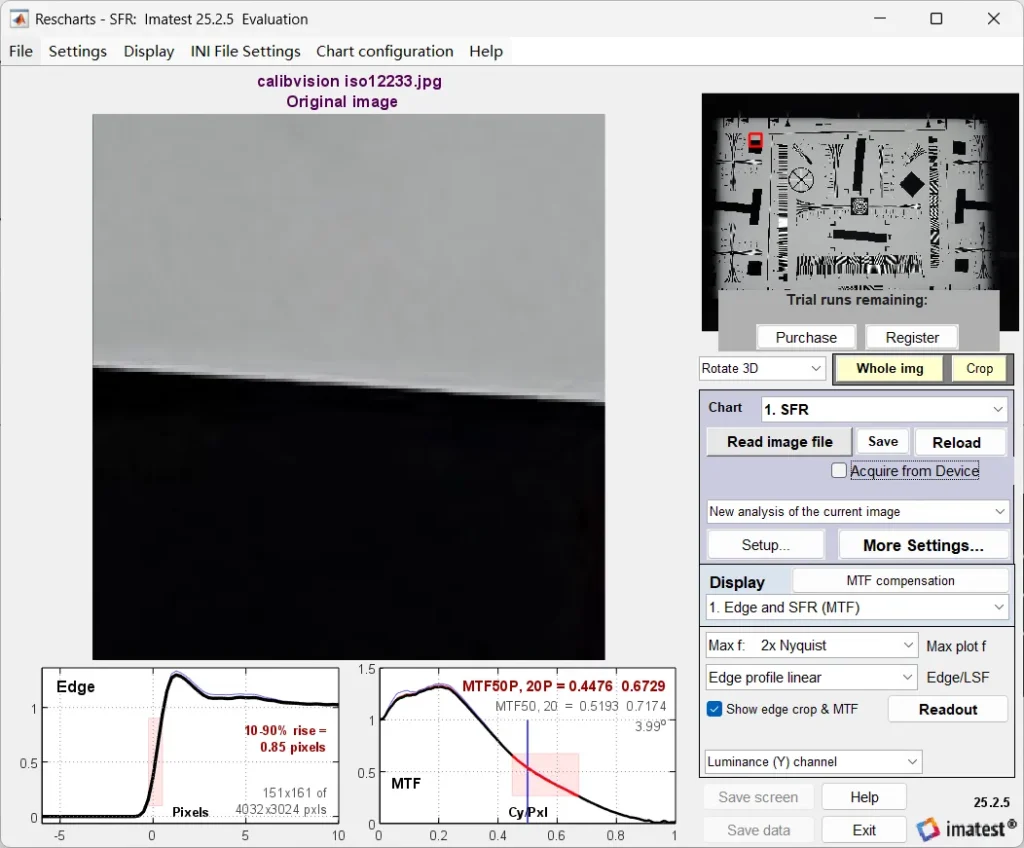
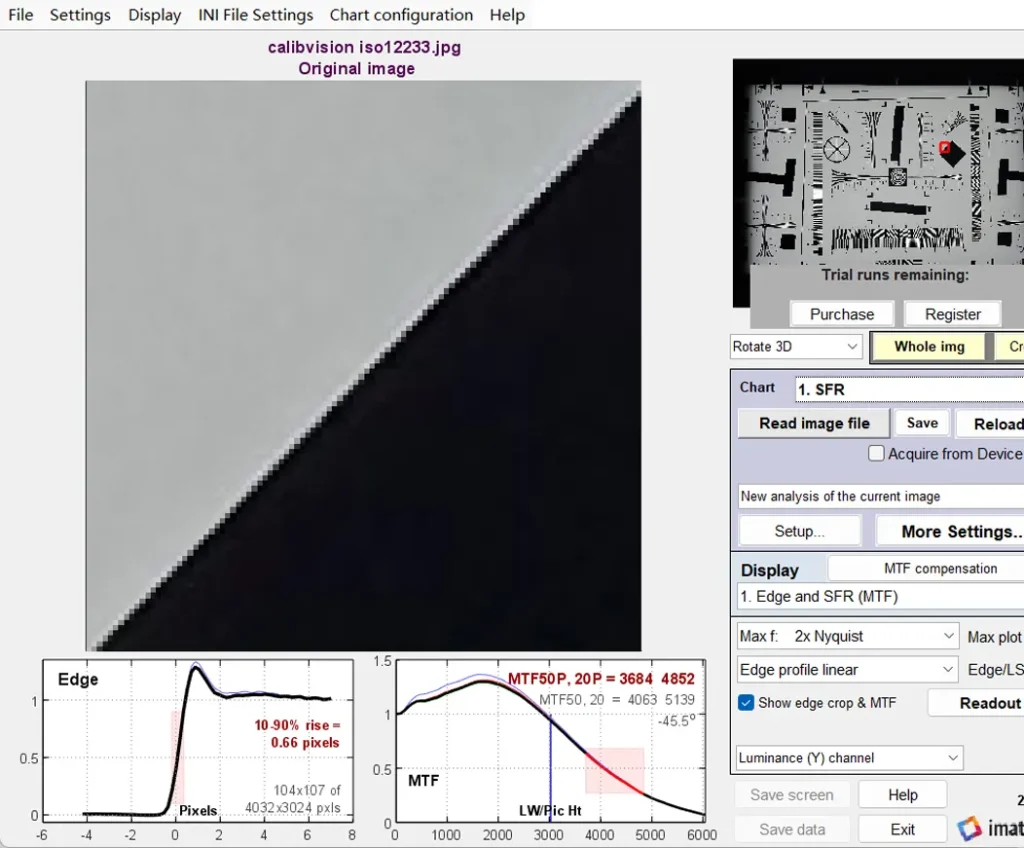
How to Use an eSFR ISO 12233 Test Chart

calibvision iso12233 imatest 1
calibvision iso12233 imatest 2
01

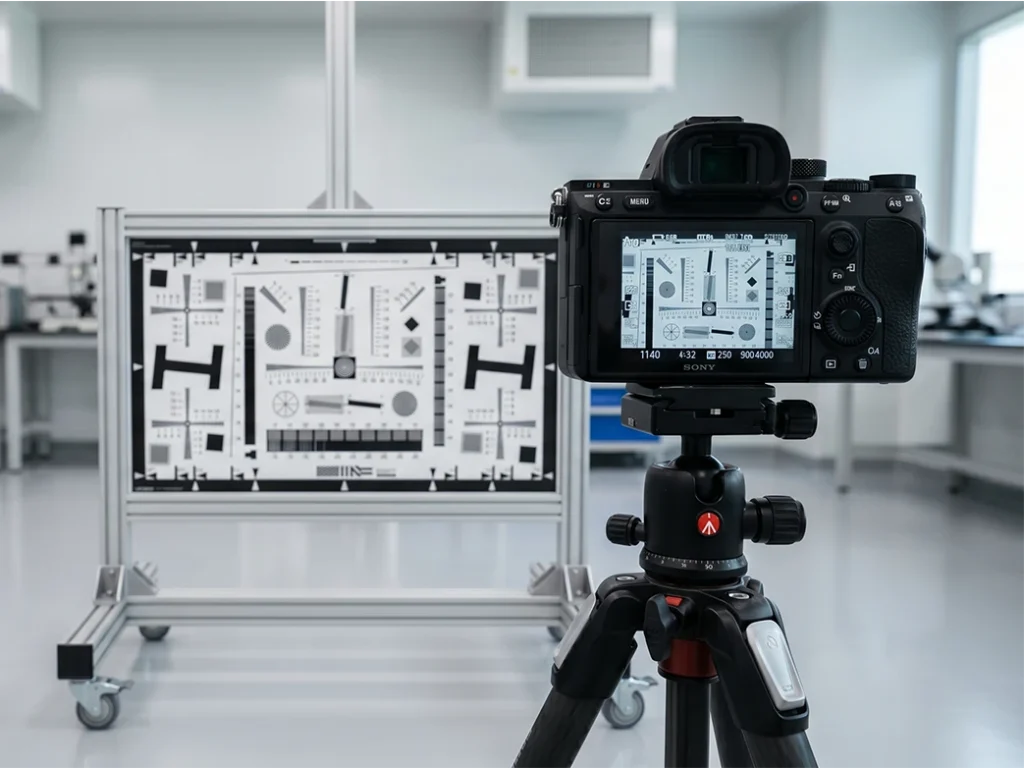
Mount the chart flat and perpendicular to the camera’s optical axis. Tilt above 1° introduces edge-angle error in the SFR calculation.

02

Illuminate evenly — for film, place in a D65 backlit light box; for paper, use two diffuse 45° softboxes equidistant from the chart.

03

Frame the chart so the four registration marks are within the image but as close to the corners as possible (Imatest needs all four for projective transform).

04

Configure the camera at native resolution, ISO base value, sharpening off, noise reduction off, RAW format if available.

05

Focus precisely on the central zone plate or one of the central slanted squares — never autofocus on the OECF patches.

06

Capture multiple exposures — eSFR analysis benefits from bracketed shots; pick the one with no clipping in the 20 OECF patches.

07

Load into Imatest eSFR ISO module (or MTF Mapper / sfrmat5) — for the Imatest module, automatic ROI detection will find all 9–15 squares without manual input.

08

Read the report — SFR50, SFR10, MTF50 across center / mid-field / corner, plus noise, color, distortion, and tonal curves in one run.

How to Choose the Right eSFR Chart Size

Pick the chart size based on your camera’s pixel count and working distance. The chart should fill 80%+ of the frame at normal use distance.
Camera Resolution Recommended Magnification Chart Size SKU Example
≤ 12 MP 1X 200×305 mm (3:2) / 200×356 mm (16:9) CV-ET-FT-1X-STD / -EXT
12–24 MP 1X – 2X 200–400 mm width CV-ET-FT-1X / -2X
24–50 MP 2X 400×610 mm (3:2) / 400×712 mm (16:9) CV-ET-FT-2X-ENH / -EXT
50–100 MP 4X 800×1220 mm (3:2) / 800×1422 mm (16:9) CV-ET-FT-4X-ENH / -EXT
100 MP+, medium format 4X – 6X 800–1200 mm width CV-ET-FT-4X / CV-ET-PP-6X-EXT
Cinema, 8K studio, wide angle 6X+ 1200×2136 mm CV-ET-PP-6X-EXT
mirrorless camera resolution testing with iso12233 chart calibvision
camera resolution test chart iso12233 calibvision

Applications

Camera and Smartphone Manufacturers

Incoming sensor / module QC

Lens Designers

Through-focus MTF and resolution mapping

Automotive

ADAS camera and surround-view calibration

Machine Vision

Line-scan and area-scan camera characterization
Broadcast & Cinema

4K / 6K / 8K lens evaluation

Medical Imaging

Endoscope and surgical camera validation

Academic & Test Labs

ISO conformance and standards reference
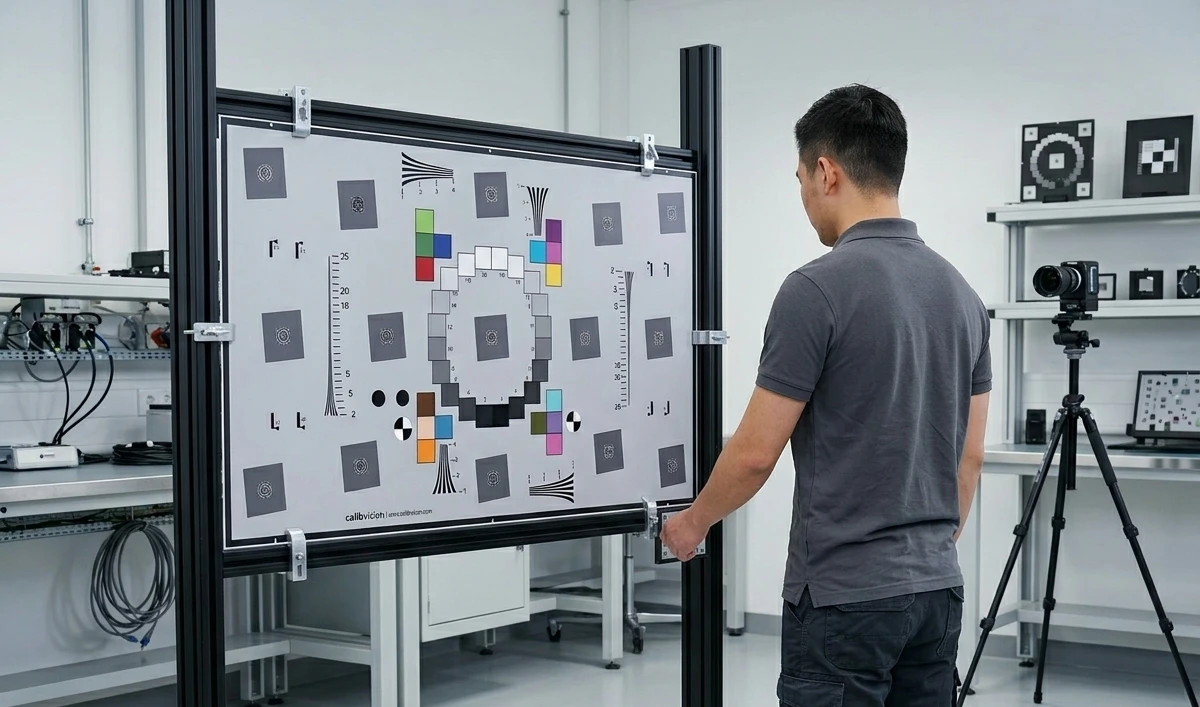
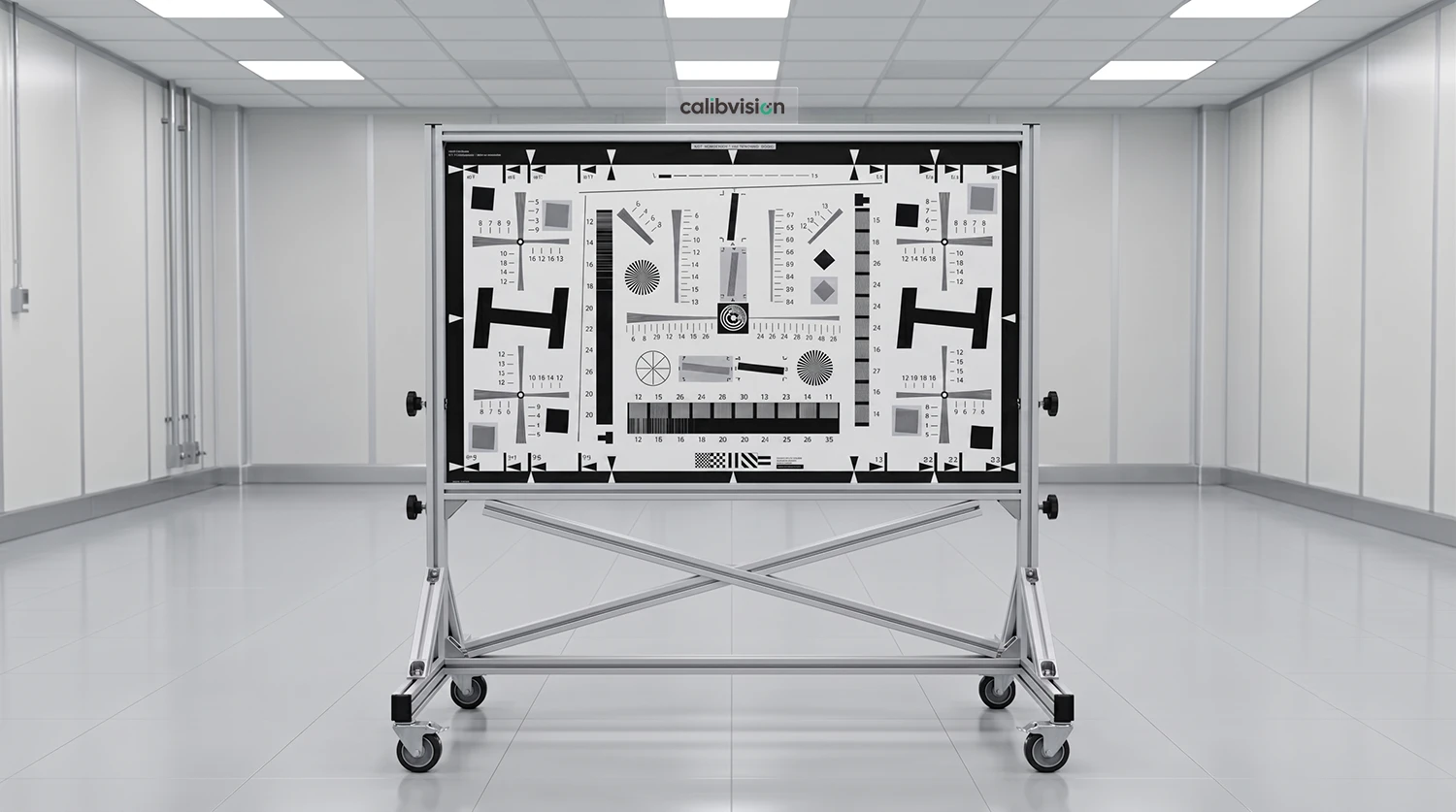
iso12233 resolution chart with heavy duty mobile stand calibvision
Q1. What is an eSFR ISO 12233 test chart?
An eSFR ISO 12233 test chart is a low-contrast resolution target designed under ISO 12233:2017 Annex C. It uses 9 to 15 slanted squares with 4:1 edge contrast, OECF grayscale patches, and registration marks for automatic region detection. The “e” stands for Edge SFR — measuring spatial frequency response from slanted edges.

The Standard chart is the minimal 3:2 variant with 9 slanted squares — closest to the ISO C.1 figure. Enhanced adds 6 extra slanted squares, 16 color patches, and wedge patterns while staying 3:2. Extended has the same added features as Enhanced but in a 16:9 aspect ratio — designed for HDTV, cinema, and wide-angle camera testing.

The old high-contrast ISO 12233:2000 chart (≥40:1) often caused clipping and nonlinear processing artifacts in modern cameras, leading to corrupted SFR results. Lower 4:1 contrast keeps the camera operating in its linear response region and produces more accurate, more representative sharpness measurements.
Yes — the eSFR ISO chart is designed specifically for the Imatest eSFR ISO module, which performs automated region detection using the chart’s registration marks. No manual ROI selection is required. The chart is also compatible with MTF Mapper, sfrmat5, QuickMTF, and most modern SFR analysis tools.
The classic ISO 12233 chart (2000 design) uses hyperbolic wedges and high-contrast (≥40:1) patterns for visual resolution reading and manual SFR analysis. The eSFR chart (2017 design) uses slanted squares with 4:1 contrast for automated software analysis and adds OECF, color, and wedge patches for multi-metric measurement in one capture.

For lab work with DSLR/mirrorless cameras (3:2 sensors), choose Enhanced — best balance of features and aspect ratio match. For HDTV, cinema, or wide-angle lens testing, choose Extended (16:9). Buy Standard only if you need the absolute minimum ISO C.1 reference for conformance reporting.

Choose transmissive film for laboratory work where a backlit light box is available — film delivers ±15 μm accuracy and the most uniform contrast. Choose matte photographic paper for production floor use, large-format (>1.2 m) installations, and wide-angle camera testing where reflective lighting is more practical.

The eSFR ISO chart (Enhanced/Extended variants) measures in one capture: sharpness (SFR / MTF), noise (multiple types including ISO 15739 visual noise), lateral chromatic aberration, distortion, tonal response and gamma, color accuracy (when color patches present), and aliasing/Moiré (from the wedges in Enhanced/Extended). This is the chart’s biggest advantage over older single-purpose targets.

ISO 12233:2017 is still widely used, but ISO 12233:2023 is the latest edition. The 2023 revision replaces the slanted-square pattern with a four-cycle slanted star, adds 2 color patches (corresponding to Colorchecker row 2 patches 8 and 12), and changes hyperbolic wedges to logarithmic wedges. Calibvision eSFR charts are manufactured to the 2017 spec; 2023 charts are available on request under the CV-ESFR (eSFR Pro) series.
Calibvision eSFR film charts are manufactured to ±15 μm feature accuracy, verified by a CNAS-accredited third-party calibration lab. Photographic paper versions hold ±0.1 mm accuracy. Every unit ships with a serial-numbered dimensional inspection report including the actual measured edge angles of the slanted squares.
Stored flat, away from UV light, at 20–25°C and 30–50% RH, both film and photographic paper eSFR charts remain calibrated for 3–5 years. Recalibration is recommended every 2 years for ISO 17025 accredited labs, or sooner if the chart shows scratches, fading, or dimensional warping. The 4:1 low-contrast edges are slightly more forgiving of minor surface wear than the classic high-contrast chart.
Technically yes, but consumer printers cannot achieve the sub-millimeter edge accuracy and the controlled 4:1 reflectance ratio that the standard requires. Self-printed charts typically introduce 0.5–2 mm position errors and 5–15% contrast variation, which invalidate any SFR measurement above 1000 LW/PH. Professional eSFR charts use laser-drawn film or photolithography on calibrated substrates.

Frequently Asked Questions

Q1. What is the ISO 12233 standard?
ISO 12233 is the international standard published by the International Organization for Standardization that specifies methods for measuring the resolution and spatial frequency response (SFR) of electronic still-picture cameras. The latest editions are ISO 12233:2017 and ISO 12233:2024.
The Standard chart conforms to ISO 12233:2000 with hyperbolic wedges measuring 100–2000 LW/PH. The Enhanced (Pro) version adds a star sector target, 5° slant bar, OECF patches, and color patches, and extends resolution measurement to 4000 LW/PH — suitable for high-megapixel sensors and full ISO 12233:2017 analysis.
Choose transmissive film when you use a backlit light box for high contrast and uniform illumination — this is the standard lab setup. Choose matte photographic paper for ambient or reflective lighting, large-format charts above 1.2 meters, and field installations where backlighting is impractical.
Match the magnification to your camera’s pixel count. The chart should cover at least 80% of the frame at your normal working distance. A 24 MP camera typically uses the 1X (200×356 mm) chart; a 100 MP medium-format sensor needs 3X (600×1068 mm) or larger.
SFR (Spatial Frequency Response) is a numerical measurement of how contrast changes across spatial frequencies in a camera system. ISO 12233 defines two SFR methods: edge-based SFR (e-SFR) using slanted edges, and sine-based SFR (s-SFR) using Siemens star patterns.
Calibvision film ISO 12233 charts are manufactured with ±15 μm feature accuracy, verified by a CNAS-accredited third-party calibration lab. Photographic paper versions hold ±0.1 mm accuracy. Every unit ships with a serial-numbered dimensional inspection report.
Technically yes, but consumer printers cannot reliably achieve the sub-millimeter line accuracy and contrast uniformity required by the standard. Self-printed charts typically introduce 0.5–2 mm errors that invalidate SFR measurements above 1000 LW/PH. Professional charts use photolithography or laser-drawn film.
ISO 12233 charts are compatible with Imatest, sfrmat5 (free MATLAB tool by Peter Burns), QuickMTF, MTF Mapper, and most camera test suites including the DxOMark methodology. Calibvision charts work with all major SFR analysis tools.
LW/PH stands for “Line Widths per Picture Height” — the unit ISO 12233 uses to express resolution. One line pair equals two line widths. A reading of 2000 LW/PH means the camera can resolve 1000 distinct line pairs across the vertical height of the image.
Film and photographic paper charts are stable for 3–5 years if stored flat, away from UV light, at 20–25°C and 30–50% RH. Recalibration is recommended every 2 years for ISO 17025 lab environments, or whenever the chart shows visible scratches, fading, or warping.
0
    0
    Your Cart
    Your cart is emptyReturn to Shop

    Get Your Quote Now

    Please fill out the form below or email us directly to sales@calibvision.com, our sales engineers will review your request and get back to you within 3 working days(typically faster).
    eSFR ISO 12233:2017 Test Chart — Low-Contrast Edge SFR Target with Slanted Squares, OECF Patches & Color/Wedge Patterns