
What Is the Best Checkerboard Size for OpenCV Camera Calibration?
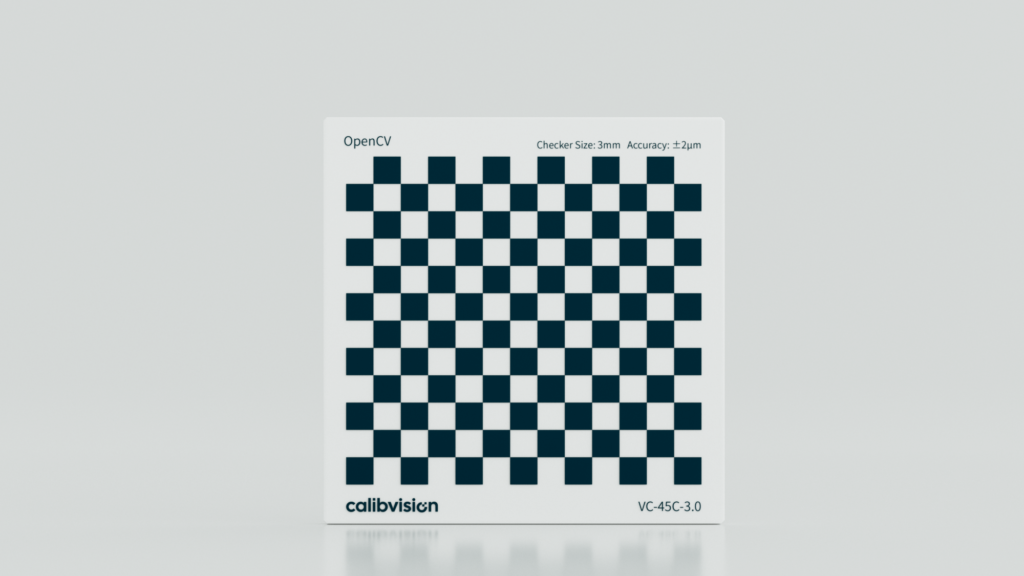
If you’ve set up an OpenCV camera calibration pipeline, this question comes up fast: What size checkerboard should I actually use? The short answer is: there’s no single “best” size. The right dimensions depend on your camera, your working distance, and what level of accuracy you need. But there are clear guidelines that most engineers […]
Why ISO 12233 Slanted-Edge MTF Requires a Low-Contrast Target (4:1 vs 10:1 vs High Contrast)
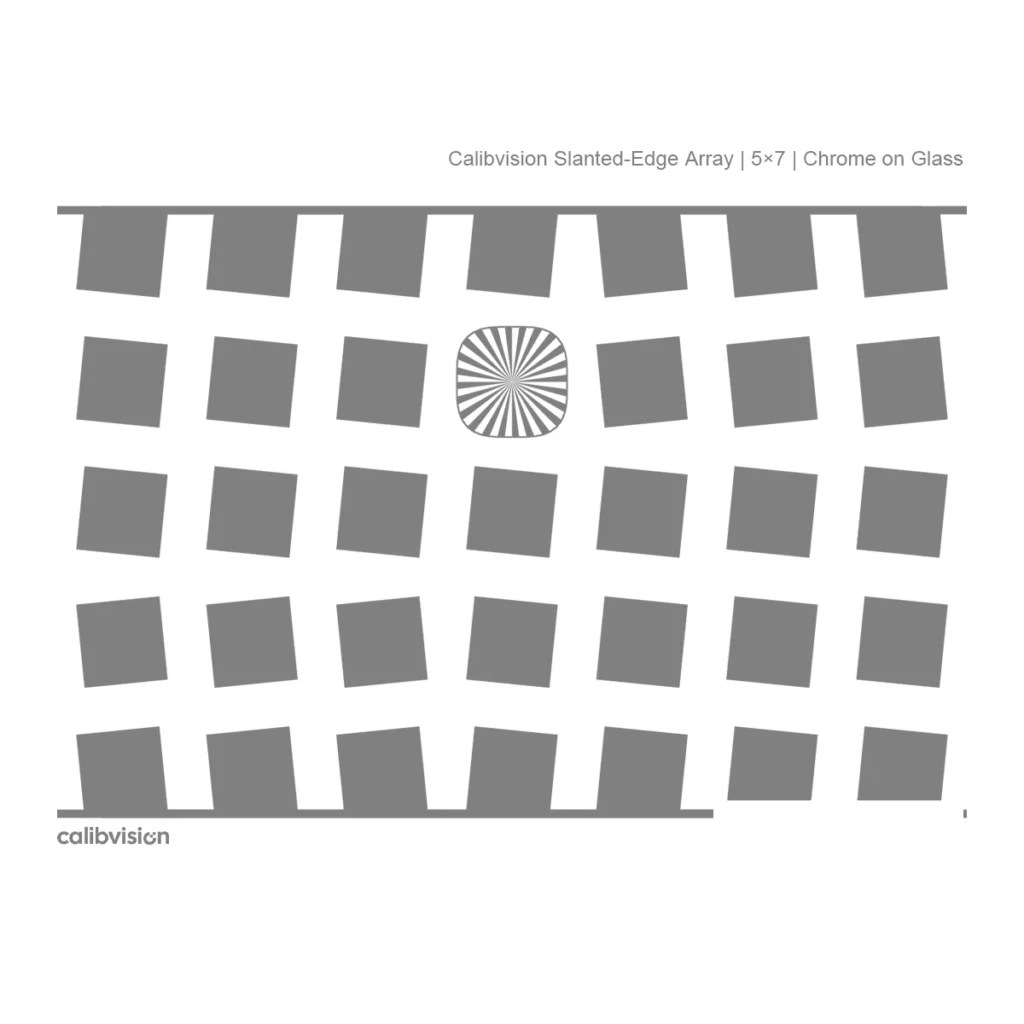
The slanted-edge method only gives a true MTF when the camera responds linearly. A high-contrast black-to-white edge clips and triggers sharpening, inflating the result. This article explains why ISO 12233’s low-contrast edge — about 4:1 — keeps the edge in the linear range, and compares 4:1, 10:1, and high-contrast targets.
Camera Calibration Targets: How to Choose the Right Pattern, Substrate, and Accuracy
A camera calibration target is a precisely patterned plate that gives a camera a field of known reference points. Choosing one comes down to pattern type, substrate and accuracy, physical size, and toolchain fit — and the target, not the algorithm, sets your accuracy ceiling. A navigational overview that links to each in-depth guide.