
HALCON Calibration Plate: CALTAB Dot-Mark Targets, Geometry, and Description Files
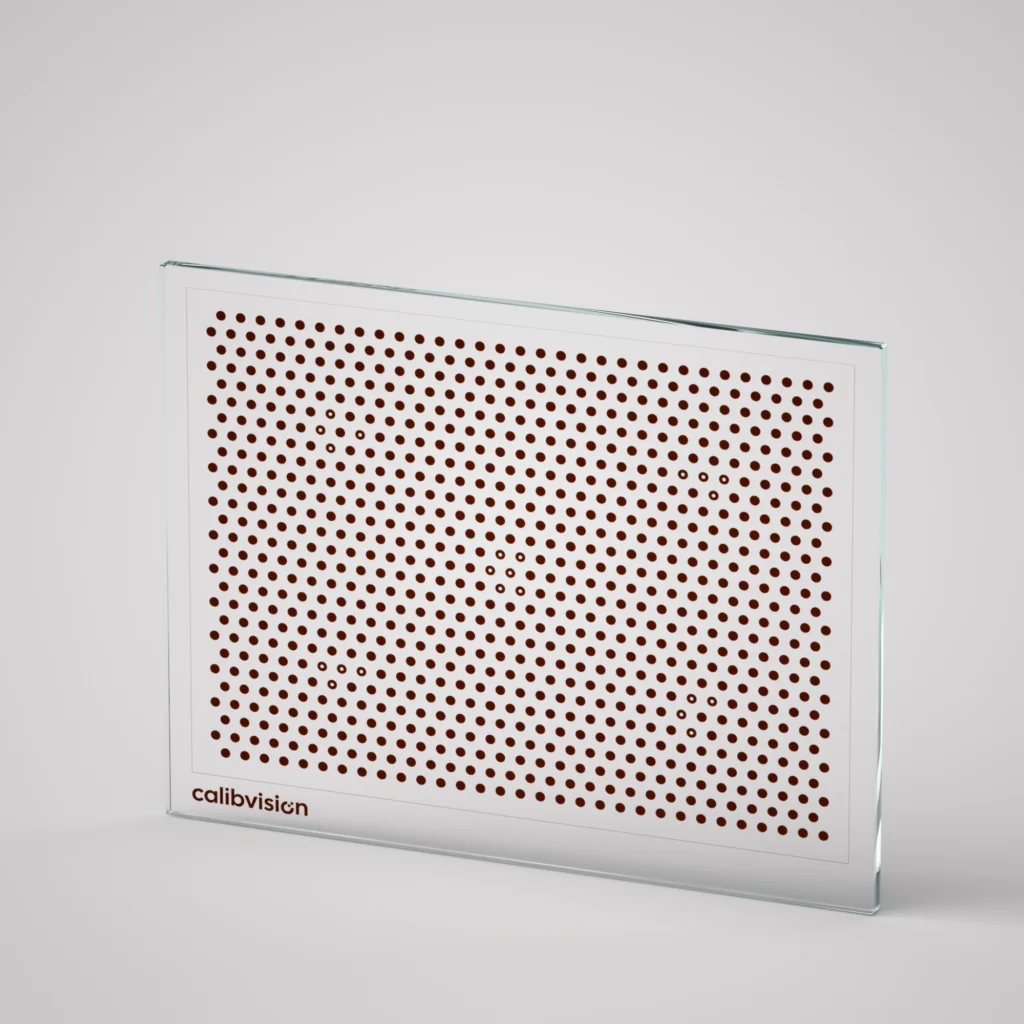
HALCON calibrates from a plate of circular marks, not a checkerboard. The plate geometry is defined by a description file, the marks are fit as ellipses with perspective-bias correction, and a finder pattern fixes the origin. How the CALTAB workflow works, classic fully-visible versus newer partial-view plates, why a third-party plate needs a matching description file, substrate and accuracy from ±0.5 µm, and the VME-series models.
Camera Calibration Pattern Types: Checkerboard, ChArUco, Dot Grid, and AprilGrid Compared
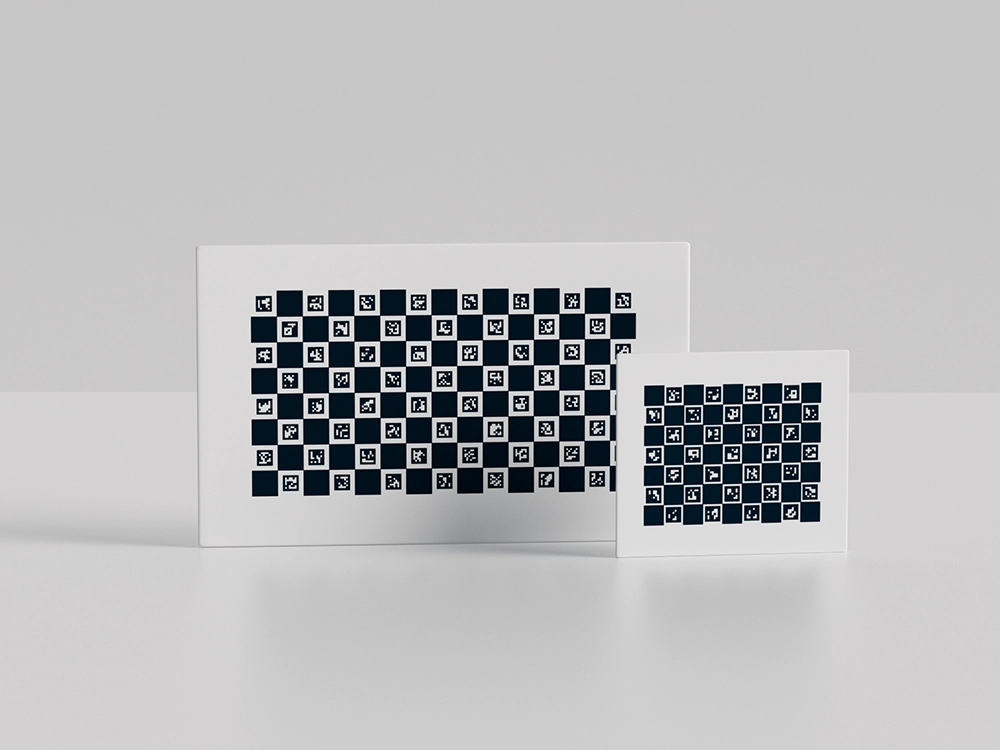
A calibration pattern gives a camera a field of reference points with known geometry. The families differ in feature type (corner, centroid, coded marker), whether points are individually identified, and which software expects them. Overview of checkerboard, ChArUco, dot/circle grid and AprilGrid, how to choose by toolchain and application, and why the substrate sets the accuracy ceiling.
Checkerboard vs Dot Grid Calibration Targets: Corner Detection, Centroid Bias, and How to Choose
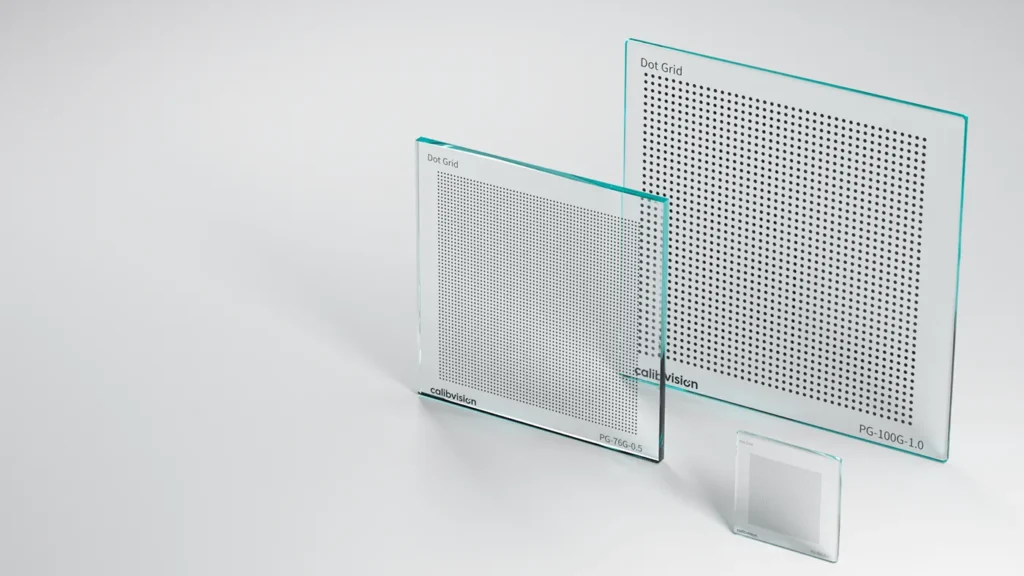
A checkerboard is detected by its corners (saddle points); a dot grid by the centroids of its dots. Corners are projectively invariant — no systematic offset under perspective; dot centroids are lower-noise and denser but carry a perspective/eccentricity bias unless the detector models the ellipse. What that means for accuracy, which software expects which pattern, substrate accuracy from ±0.5 µm, and how to choose.