
SFRreg: Why Wide-FOV and Ultra-Wide Systems Use Multiple Registration Targets Instead of One Large Chart
A single flat chart can’t be the right size, distance, and focus across a wide field of view — corners end up defocused and foreshortened. This article explains why ultra-wide, fisheye, automotive, and endoscope MTF testing uses multiple SFRreg registration targets instead: each is placed and angled for its field position, covering center and corners (plus sagittal/tangential MTF and lateral CA) in a single capture.
Optical Density vs Contrast Ratio: What 10:1 and 4:1 Really Mean
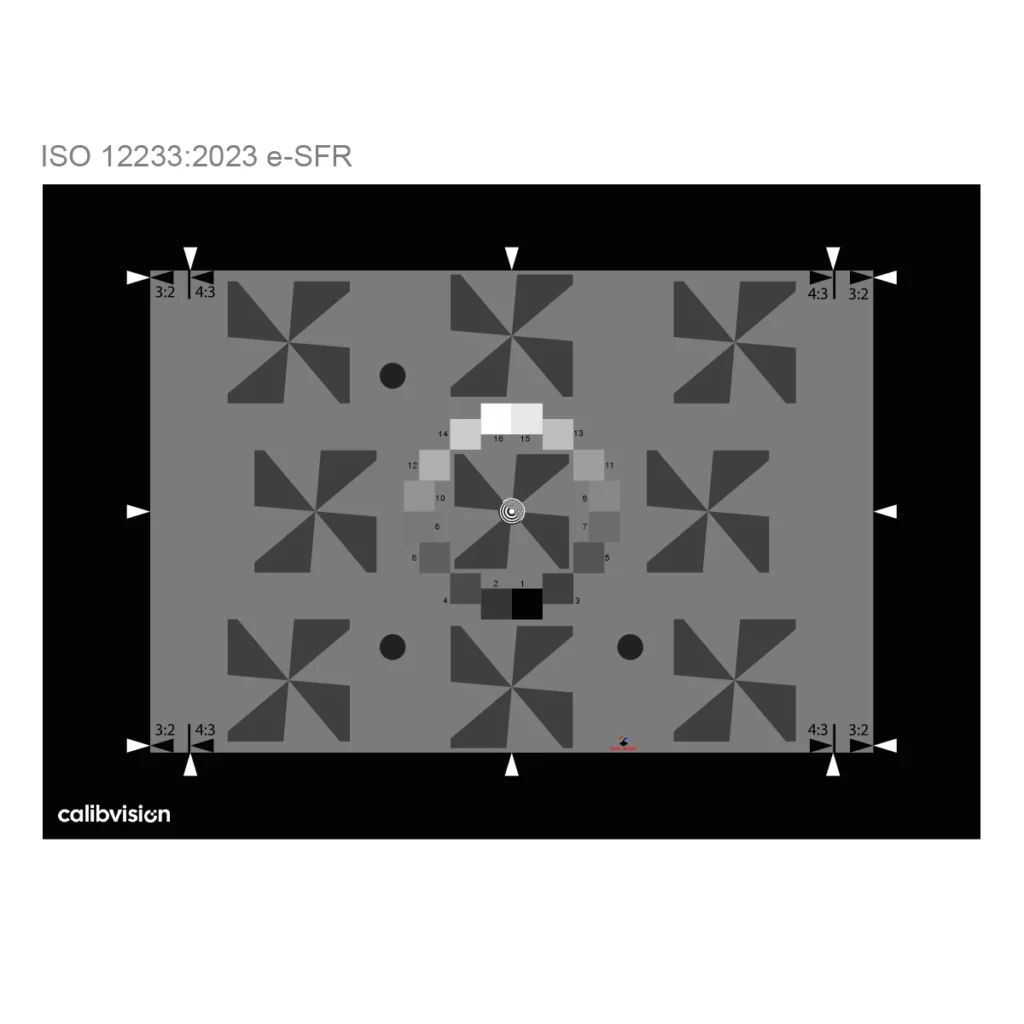
Optical density and contrast ratio describe the same thing, linked by one equation: contrast ratio = 10^(ΔOD). This article shows how to convert between them, why 10:1 = OD 1.0 and 4:1 ≈ OD 0.6, and why opaque chrome (OD 3 ≈ 1000:1) can never be a low-contrast target.
Why ISO 12233 Slanted-Edge MTF Requires a Low-Contrast Target (4:1 vs 10:1 vs High Contrast)
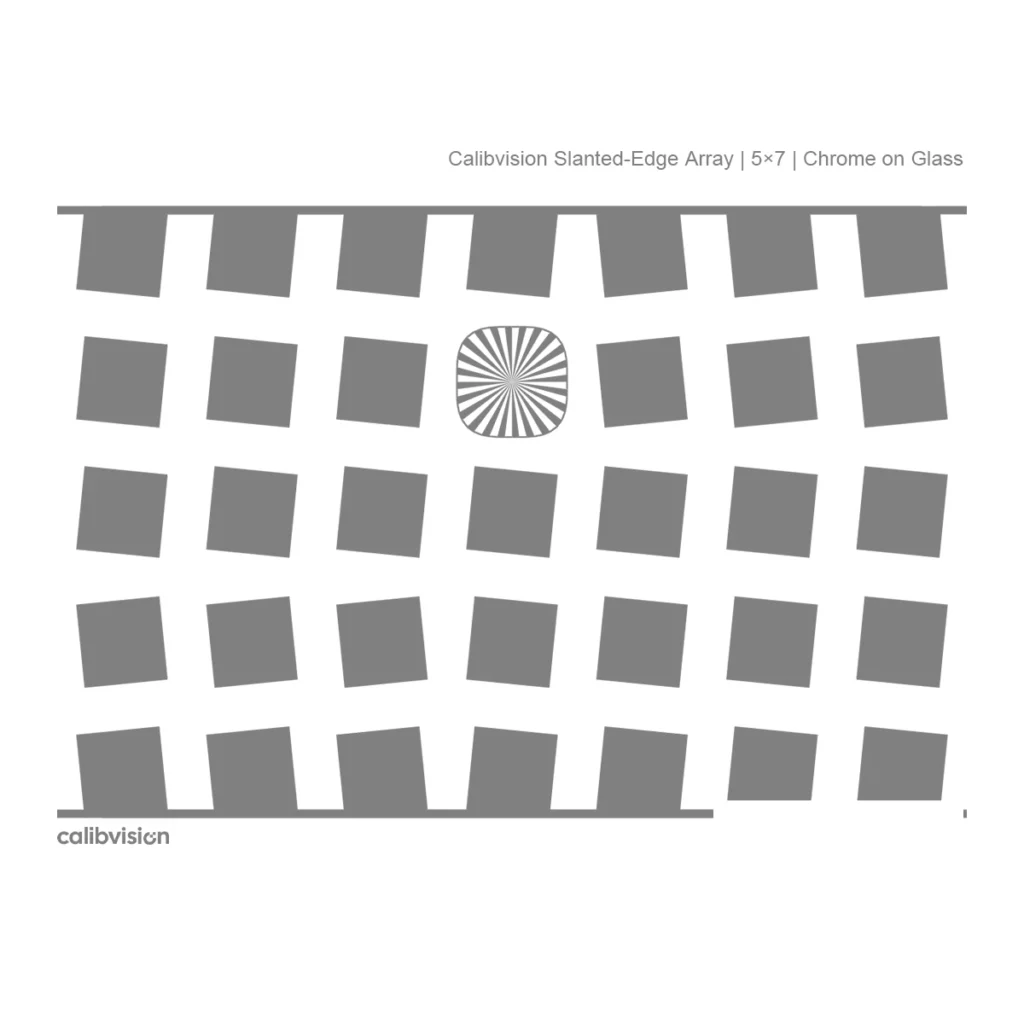
The slanted-edge method only gives a true MTF when the camera responds linearly. A high-contrast black-to-white edge clips and triggers sharpening, inflating the result. This article explains why ISO 12233’s low-contrast edge — about 4:1 — keeps the edge in the linear range, and compares 4:1, 10:1, and high-contrast targets.
AprilGrid Calibration Targets: Coded AprilTag Grids for Kalibr Camera-IMU and Multi-Camera Calibration
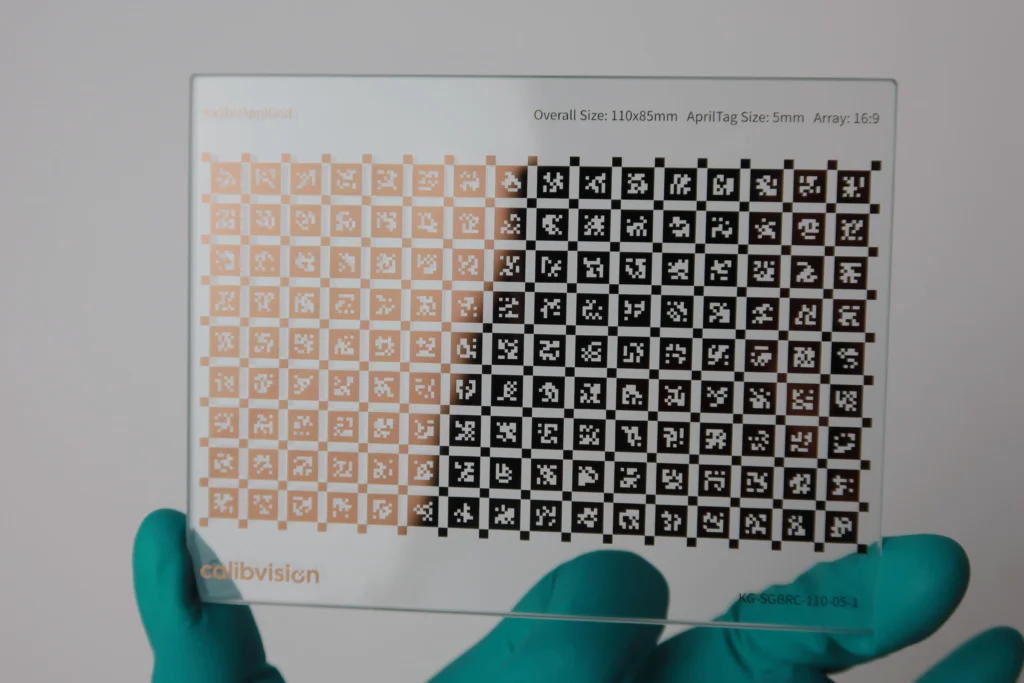
An AprilGrid is a grid of individually coded AprilTags used by the Kalibr toolbox for multi-camera and camera-IMU calibration. Unique tag IDs let calibration succeed from partial views and remove the pose-flip ambiguity that affects symmetric checkerboards and circle grids. What it is, why Kalibr recommends it, the tag parameters that matter, how it differs from ChArUco, and how substrate sets the accuracy ceiling.