
USAF 1951 Target Buying Guide: 6 Specs to Decide Before You Order
Buying a USAF 1951 target comes down to six decisions: the top resolution (group/element) you need, positive or negative polarity, physical size, substrate and chrome coating, the tolerance and flatness your measurement demands, and whether you need traceable calibration. A practical buying guide with a selector by application and the specs that actually matter.
USAF 1951 vs ISO 12233: Which Resolution Target Should You Use?
USAF 1951 and ISO 12233 both measure resolution, but differently: USAF is a visual, pass/fail limit in line pairs per millimetre from three-bar targets; ISO 12233 is an automated MTF/SFR curve from slanted edges. USAF suits optical hardware, microscopy and quick bench checks; ISO 12233 suits digital camera and lens image-quality testing. A neutral comparison to help you pick — with each pointing to the right target.
Positive vs Negative USAF 1951 Targets: Which One to Use
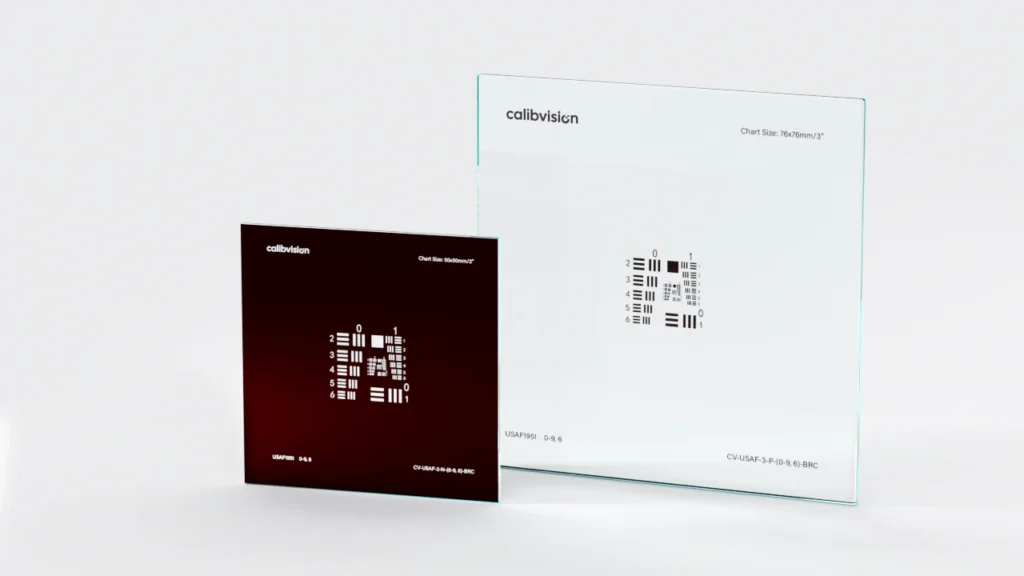
A positive USAF 1951 target has opaque chrome bars on a clear background; a negative target has clear bars cut into a chrome field. The choice is set by your illumination: positive for brightfield and camera MTF, negative for darkfield, phase contrast, DIC and collimator or backlit work. What each is, how they image, a selection table by application, and the substrate that sets accuracy.