
USAF 1951 Target Buying Guide: 6 Specs to Decide Before You Order
Buying a USAF 1951 target comes down to six decisions: the top resolution (group/element) you need, positive or negative polarity, physical size, substrate and chrome coating, the tolerance and flatness your measurement demands, and whether you need traceable calibration. A practical buying guide with a selector by application and the specs that actually matter.
SFRreg: Why Wide-FOV and Ultra-Wide Systems Use Multiple Registration Targets Instead of One Large Chart
A single flat chart can’t be the right size, distance, and focus across a wide field of view — corners end up defocused and foreshortened. This article explains why ultra-wide, fisheye, automotive, and endoscope MTF testing uses multiple SFRreg registration targets instead: each is placed and angled for its field position, covering center and corners (plus sagittal/tangential MTF and lateral CA) in a single capture.
Optical Density vs Contrast Ratio: What 10:1 and 4:1 Really Mean
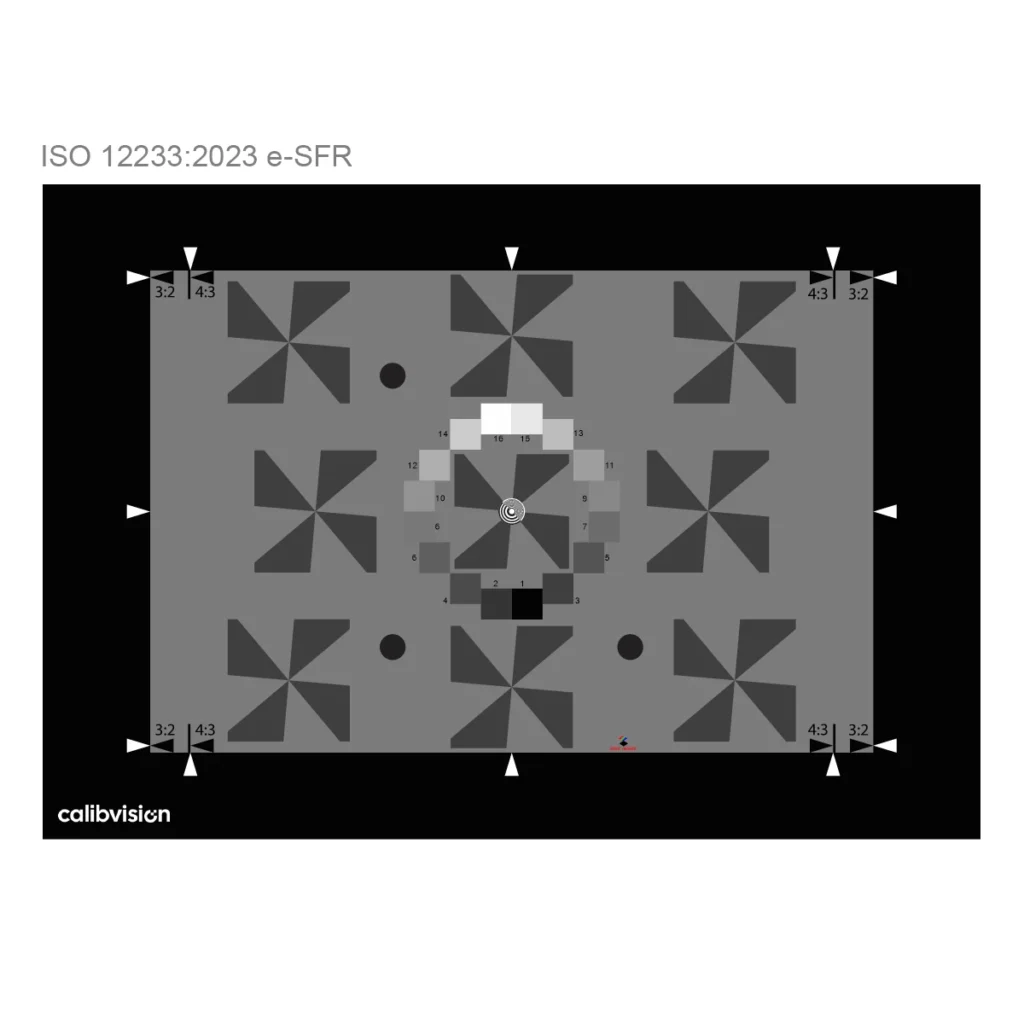
Optical density and contrast ratio describe the same thing, linked by one equation: contrast ratio = 10^(ΔOD). This article shows how to convert between them, why 10:1 = OD 1.0 and 4:1 ≈ OD 0.6, and why opaque chrome (OD 3 ≈ 1000:1) can never be a low-contrast target.
Why ISO 12233 Slanted-Edge MTF Requires a Low-Contrast Target (4:1 vs 10:1 vs High Contrast)
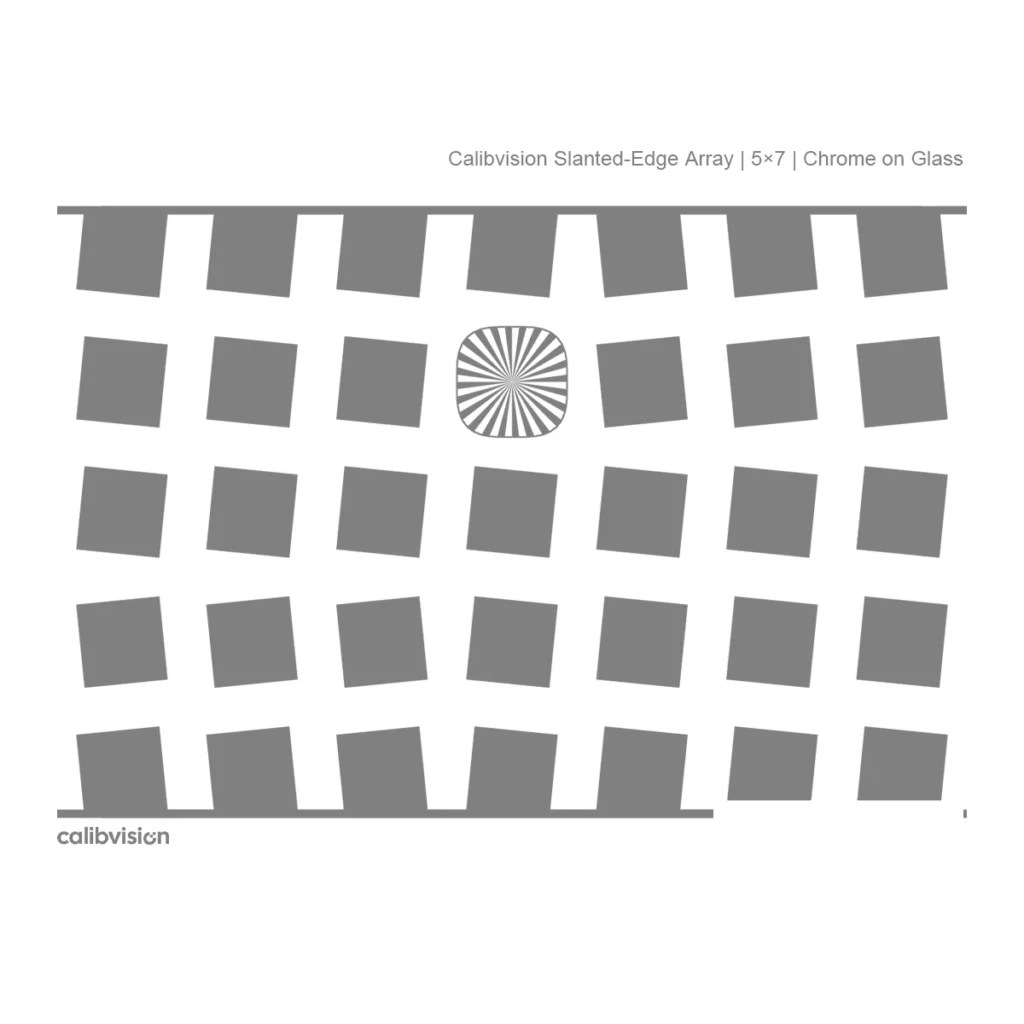
The slanted-edge method only gives a true MTF when the camera responds linearly. A high-contrast black-to-white edge clips and triggers sharpening, inflating the result. This article explains why ISO 12233’s low-contrast edge — about 4:1 — keeps the edge in the linear range, and compares 4:1, 10:1, and high-contrast targets.
How Calibration Targets Are Made: Photolithography, Chrome-on-Glass, and Acceptance Inspection
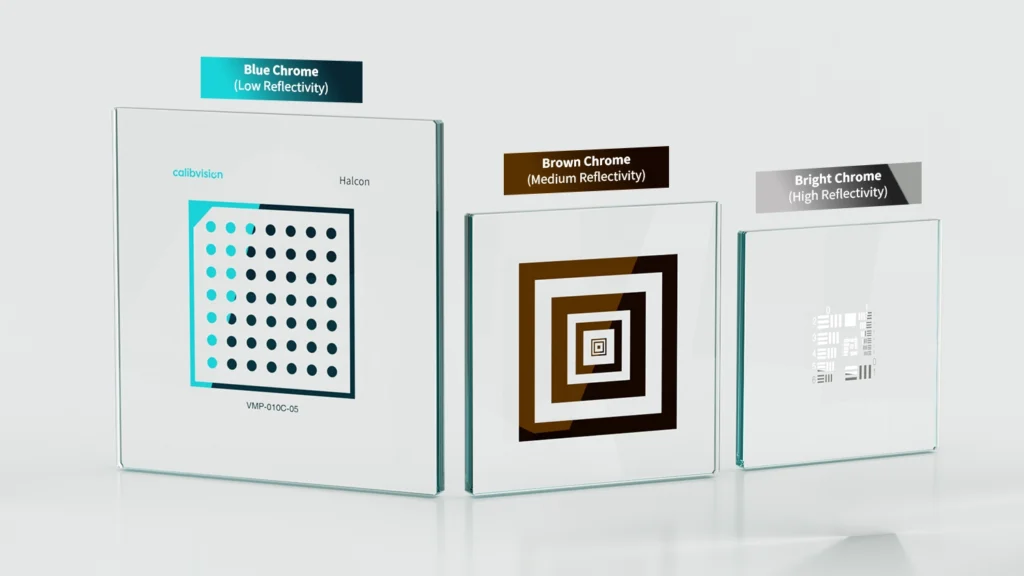
A calibration is only as accurate as the target it is derived from, so how a target is made is the floor the whole measurement sits on. Why photolithographic chrome-on-glass beats printing (sub-micron versus 50–300 µm edges), the five quality parameters that define a professional target, how chrome-on-glass is produced step by step, how substrate and chrome are chosen, and how CalibVision’s fabless model qualifies partners and inspects every finished part before shipment.