
USAF 1951 vs ISO 12233: Which Resolution Target Should You Use?
USAF 1951 and ISO 12233 both measure resolution, but differently: USAF is a visual, pass/fail limit in line pairs per millimetre from three-bar targets; ISO 12233 is an automated MTF/SFR curve from slanted edges. USAF suits optical hardware, microscopy and quick bench checks; ISO 12233 suits digital camera and lens image-quality testing. A neutral comparison to help you pick — with each pointing to the right target.
ISO 16505 SFR and MTF Testing for Camera Monitor Systems
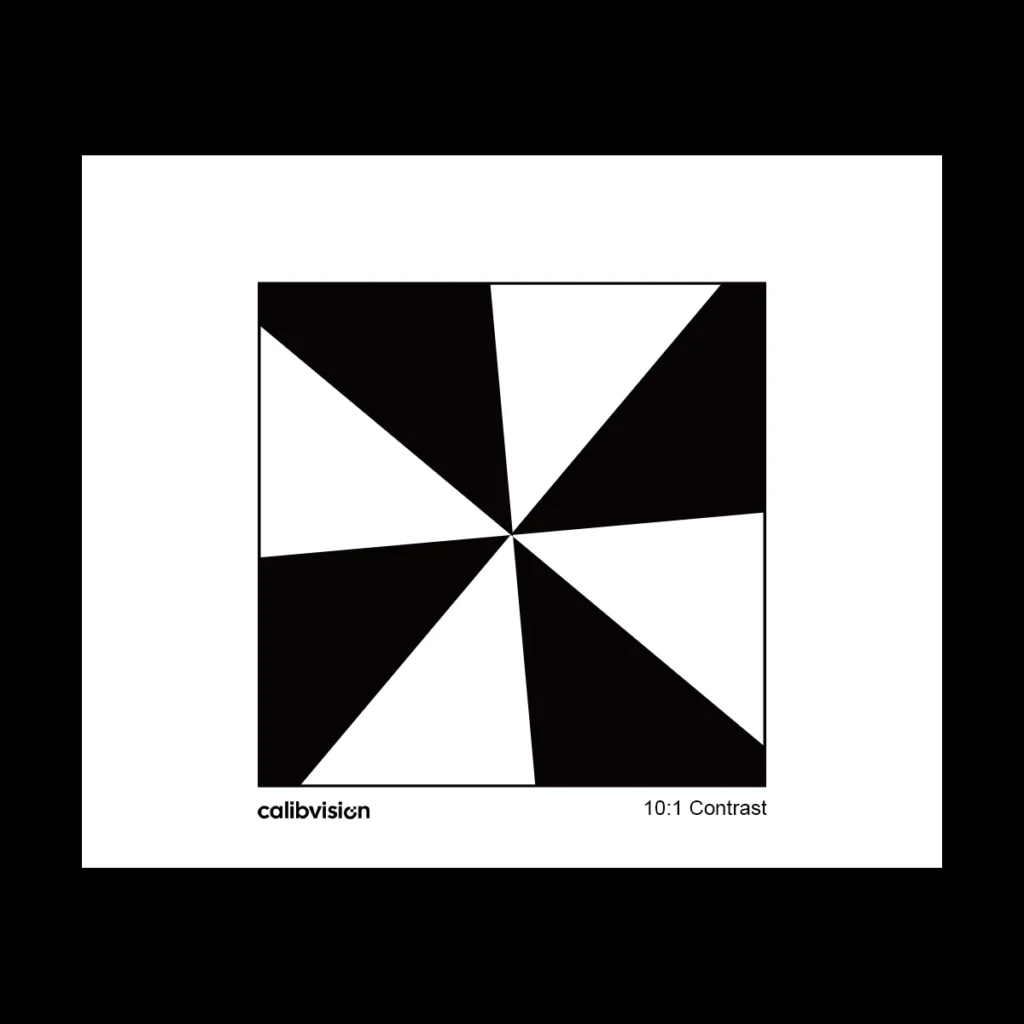
ISO 16505 is the standard for camera monitor systems (CMS) that replace a vehicle’s mirrors, and its SFR chart measures the resolution of the whole camera-to-monitor chain — not just the camera. Why CMS testing images the display with a second camera, the slanted-edge SFR chart on an 18% gray background, the LW/PH spatial-frequency unit that trips people up, the multi-chart bundle ISO 16505 defines, and how it differs from ISO 12233.
SFRreg: Why Wide-FOV and Ultra-Wide Systems Use Multiple Registration Targets Instead of One Large Chart
A single flat chart can’t be the right size, distance, and focus across a wide field of view — corners end up defocused and foreshortened. This article explains why ultra-wide, fisheye, automotive, and endoscope MTF testing uses multiple SFRreg registration targets instead: each is placed and angled for its field position, covering center and corners (plus sagittal/tangential MTF and lateral CA) in a single capture.
Optical Density vs Contrast Ratio: What 10:1 and 4:1 Really Mean
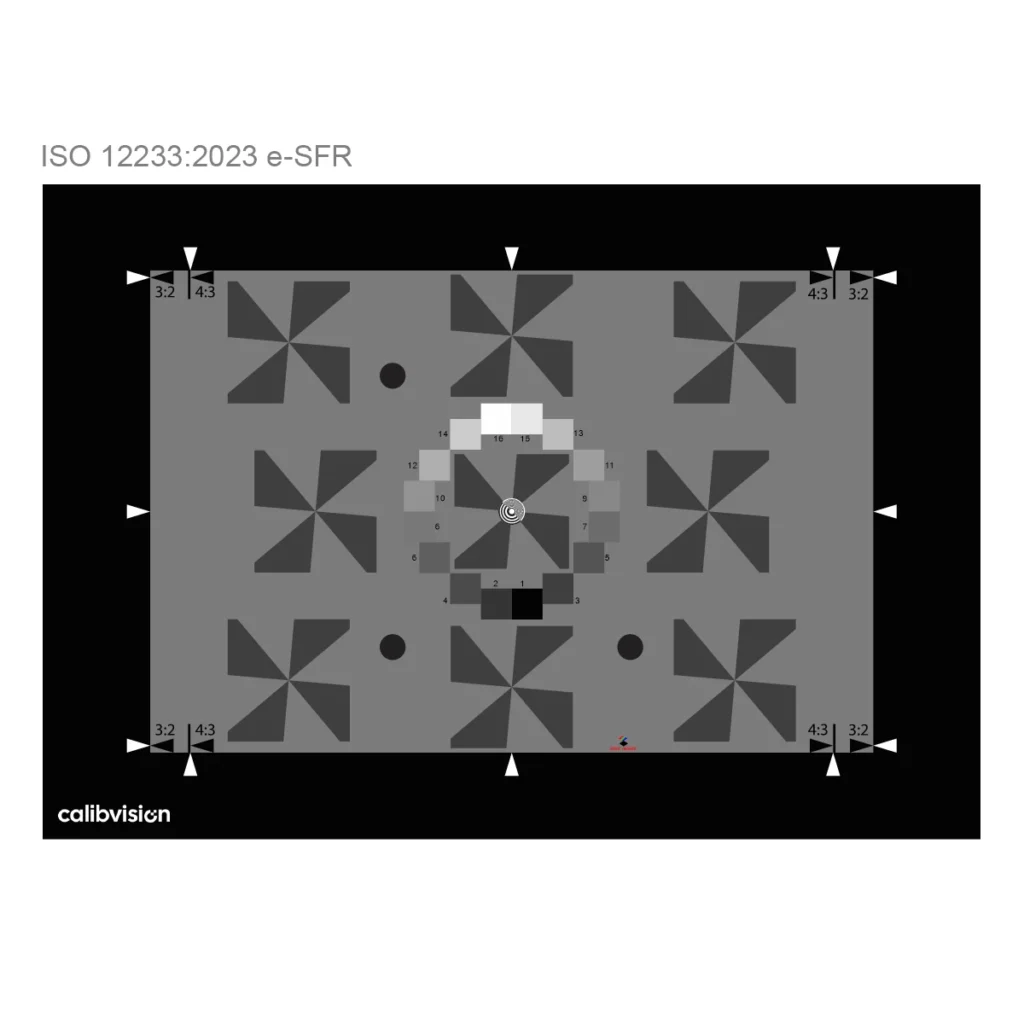
Optical density and contrast ratio describe the same thing, linked by one equation: contrast ratio = 10^(ΔOD). This article shows how to convert between them, why 10:1 = OD 1.0 and 4:1 ≈ OD 0.6, and why opaque chrome (OD 3 ≈ 1000:1) can never be a low-contrast target.