
HALCON Calibration Plate: CALTAB Dot-Mark Targets, Geometry, and Description Files
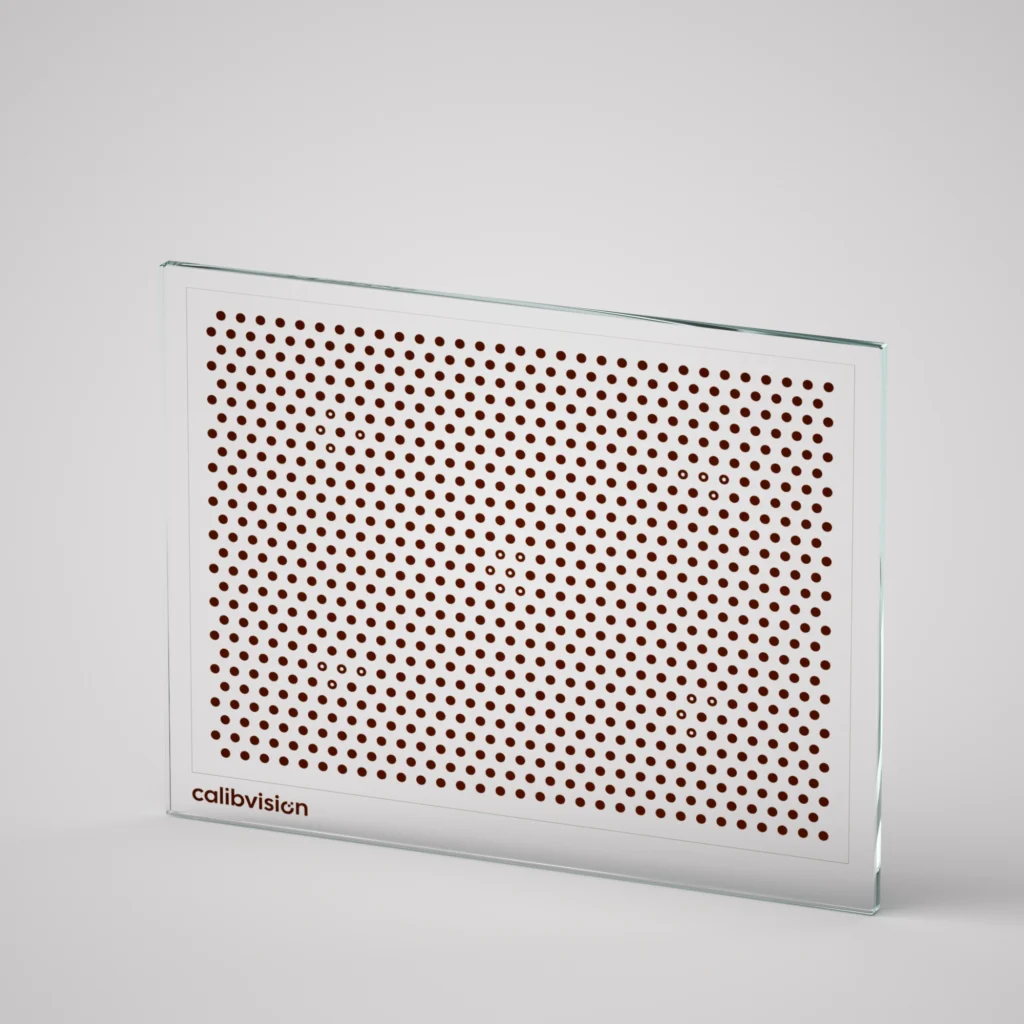
HALCON calibrates from a plate of circular marks, not a checkerboard. The plate geometry is defined by a description file, the marks are fit as ellipses with perspective-bias correction, and a finder pattern fixes the origin. How the CALTAB workflow works, classic fully-visible versus newer partial-view plates, why a third-party plate needs a matching description file, substrate and accuracy from ±0.5 µm, and the VME-series models.
Best Checkerboard Size for OpenCV Camera Calibration: Squares, Square Size, and Board Dimensions
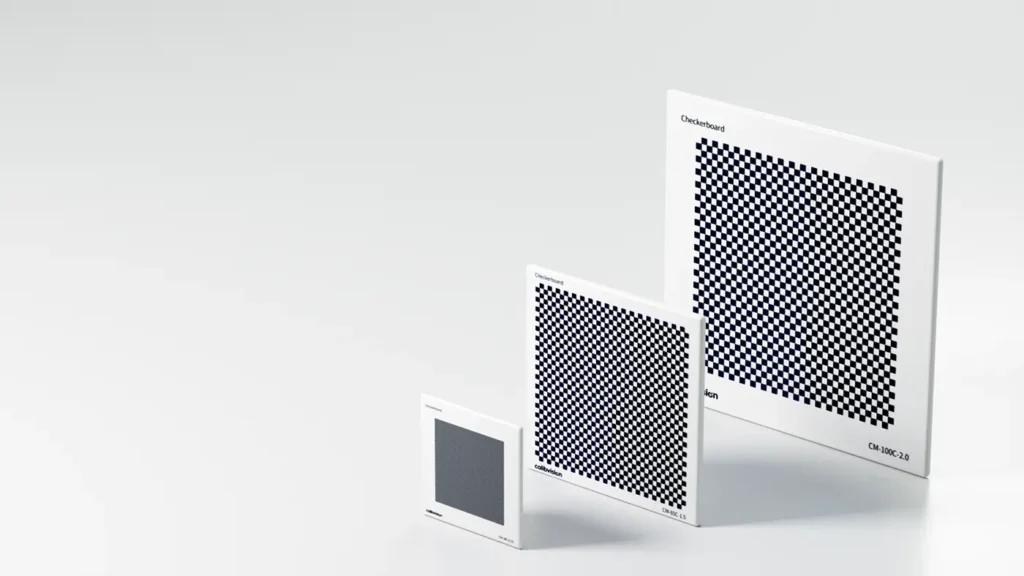
In OpenCV, three choices decide checkerboard calibration quality: the inner-corner count you pass to findChessboardCorners (equal to squares minus one), the physical square size relative to working distance, and overall board size and flatness. How to pick each, a recommended starting configuration, the feature-count-versus-images trade-off, and when a plain checkerboard is the wrong pattern.
Camera Calibration Pattern Types: Checkerboard, ChArUco, Dot Grid, and AprilGrid Compared
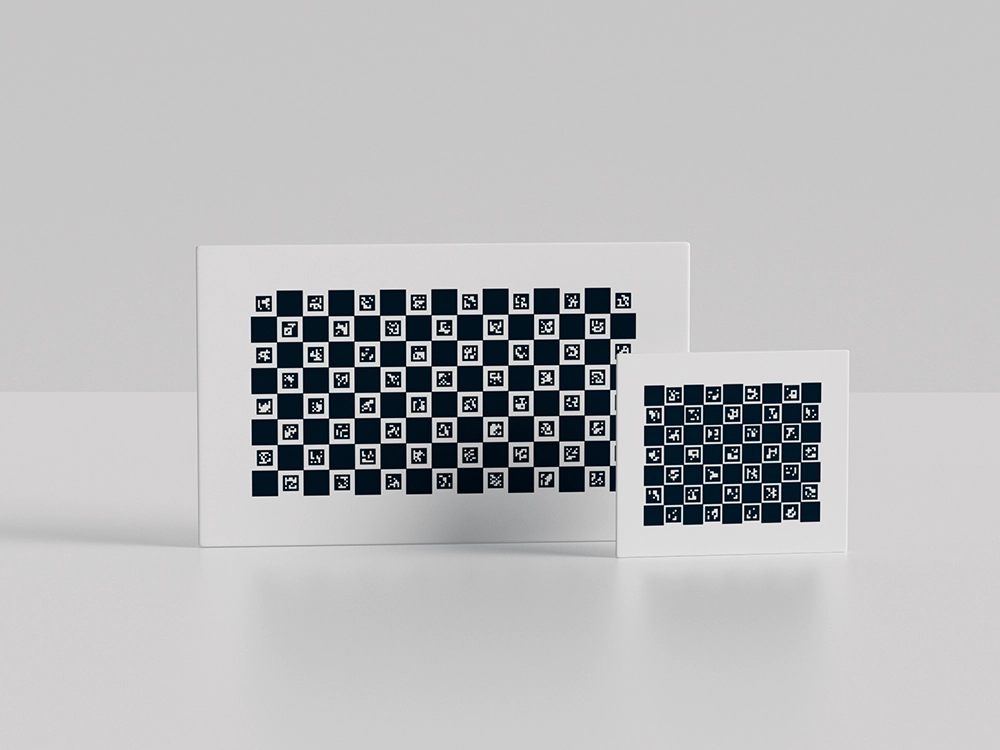
A calibration pattern gives a camera a field of reference points with known geometry. The families differ in feature type (corner, centroid, coded marker), whether points are individually identified, and which software expects them. Overview of checkerboard, ChArUco, dot/circle grid and AprilGrid, how to choose by toolchain and application, and why the substrate sets the accuracy ceiling.
Checkerboard vs Dot Grid Calibration Targets: Corner Detection, Centroid Bias, and How to Choose
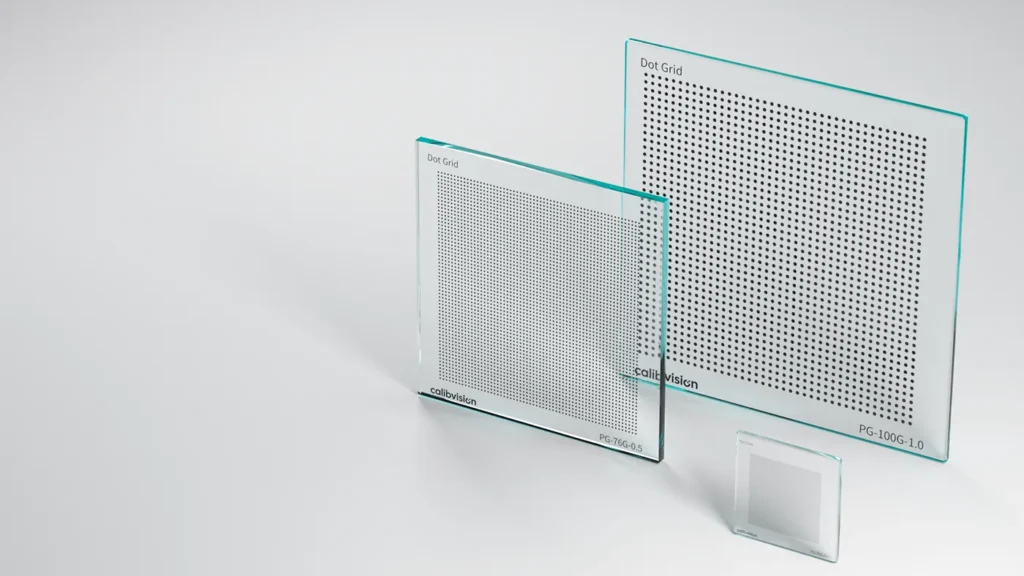
A checkerboard is detected by its corners (saddle points); a dot grid by the centroids of its dots. Corners are projectively invariant — no systematic offset under perspective; dot centroids are lower-noise and denser but carry a perspective/eccentricity bias unless the detector models the ellipse. What that means for accuracy, which software expects which pattern, substrate accuracy from ±0.5 µm, and how to choose.
ChArUco Calibration Boards: Coded-Marker Targets for Partial-View and Multi-Camera Calibration
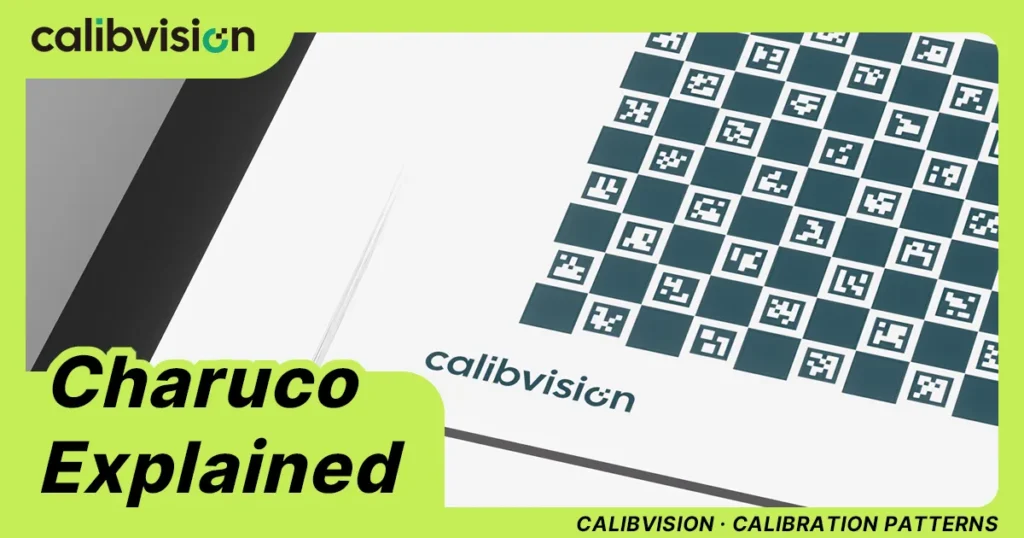
A ChArUco board is a checkerboard with coded ArUco markers in its white squares — sub-pixel corners plus a unique ID at each one, so calibration succeeds even when the board is tilted, occluded or only partly in frame. What it is, why it beats a plain checkerboard, the four specs that matter, how to choose a configuration and substrate, how it differs from AprilGrid, and how to order the right target.
OpenCV/Checkerboard Camera Calibration Targets: Essential Tools for Precision Machine Vision
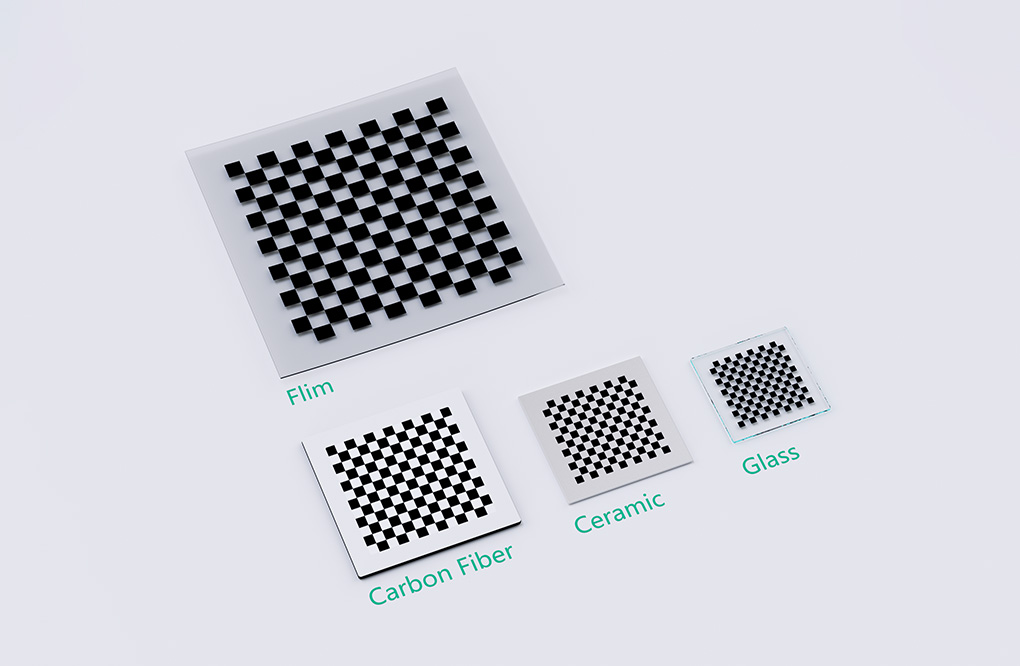
OpenCV/Checkerboard Calibration Targets enable precise camera calibration for industrial vision systems, correcting lens distortion and ensuring measurement accuracy. Available in various materials and sizes, these targets are essential tools for manufacturing, robotics, and quality inspection applications.
How to Clean a Calibration Target — Safely, Without Damaging the Pattern
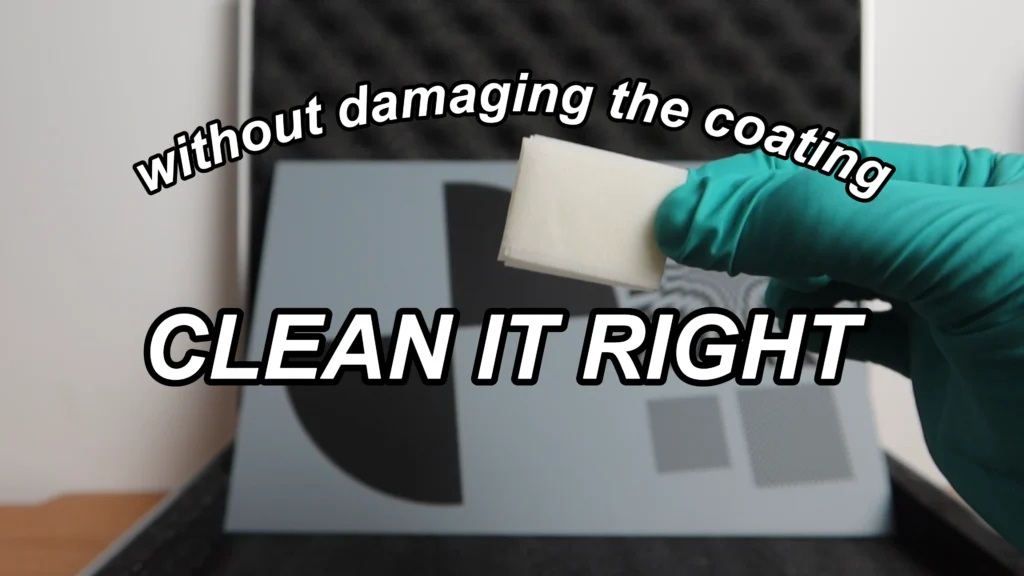
How to safely clean a glass or ceramic calibration target — removing dust, fingerprints, and marks without scratching the pattern, plus which solvents to use, what to avoid, and how to store it.
The Ultimate Guide to Test Target Selection and Customization: 5 Golden Rules for Perfect Camera Calibration
Are you struggling with test target selection for your imaging system? Confused about patterns, materials, and specifications? With countless options in the market, wildly varying prices, and increasingly demanding test requirements, choosing the right calibration target can feel like navigating a minefield. Stop right there! We’ve compiled the most comprehensive guide to test target selection […]