
The Best Calibration Targets and Test Charts: A Complete Comparison by Use
A comparison of the most widely used calibration targets and test charts, organised by what they measure rather than lumped together. Geometric targets — checkerboard, ChArUco, dot grid, AprilGrid — solve camera geometry and distortion; resolution and image-quality charts — USAF 1951, ISO 12233, ISO 15739 — measure sharpness, resolution and noise. Definitions, applications, the software each pairs with, and where to buy.
USAF 1951 Target Buying Guide: 6 Specs to Decide Before You Order
Buying a USAF 1951 target comes down to six decisions: the top resolution (group/element) you need, positive or negative polarity, physical size, substrate and chrome coating, the tolerance and flatness your measurement demands, and whether you need traceable calibration. A practical buying guide with a selector by application and the specs that actually matter.
USAF 1951 vs ISO 12233: Which Resolution Target Should You Use?
USAF 1951 and ISO 12233 both measure resolution, but differently: USAF is a visual, pass/fail limit in line pairs per millimetre from three-bar targets; ISO 12233 is an automated MTF/SFR curve from slanted edges. USAF suits optical hardware, microscopy and quick bench checks; ISO 12233 suits digital camera and lens image-quality testing. A neutral comparison to help you pick — with each pointing to the right target.
Positive vs Negative USAF 1951 Targets: Which One to Use
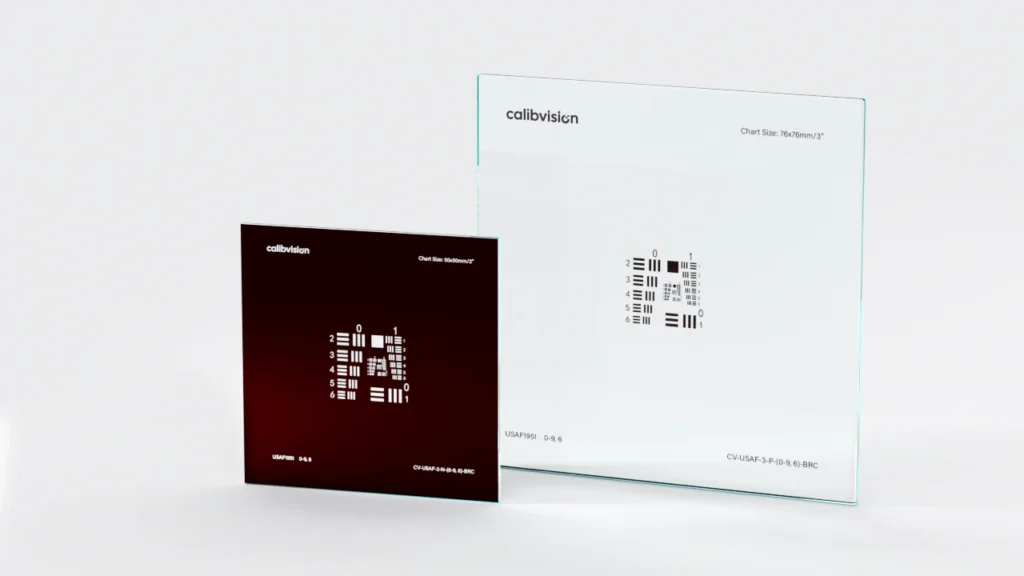
A positive USAF 1951 target has opaque chrome bars on a clear background; a negative target has clear bars cut into a chrome field. The choice is set by your illumination: positive for brightfield and camera MTF, negative for darkfield, phase contrast, DIC and collimator or backlit work. What each is, how they image, a selection table by application, and the substrate that sets accuracy.
ISO 16505 SFR and MTF Testing for Camera Monitor Systems
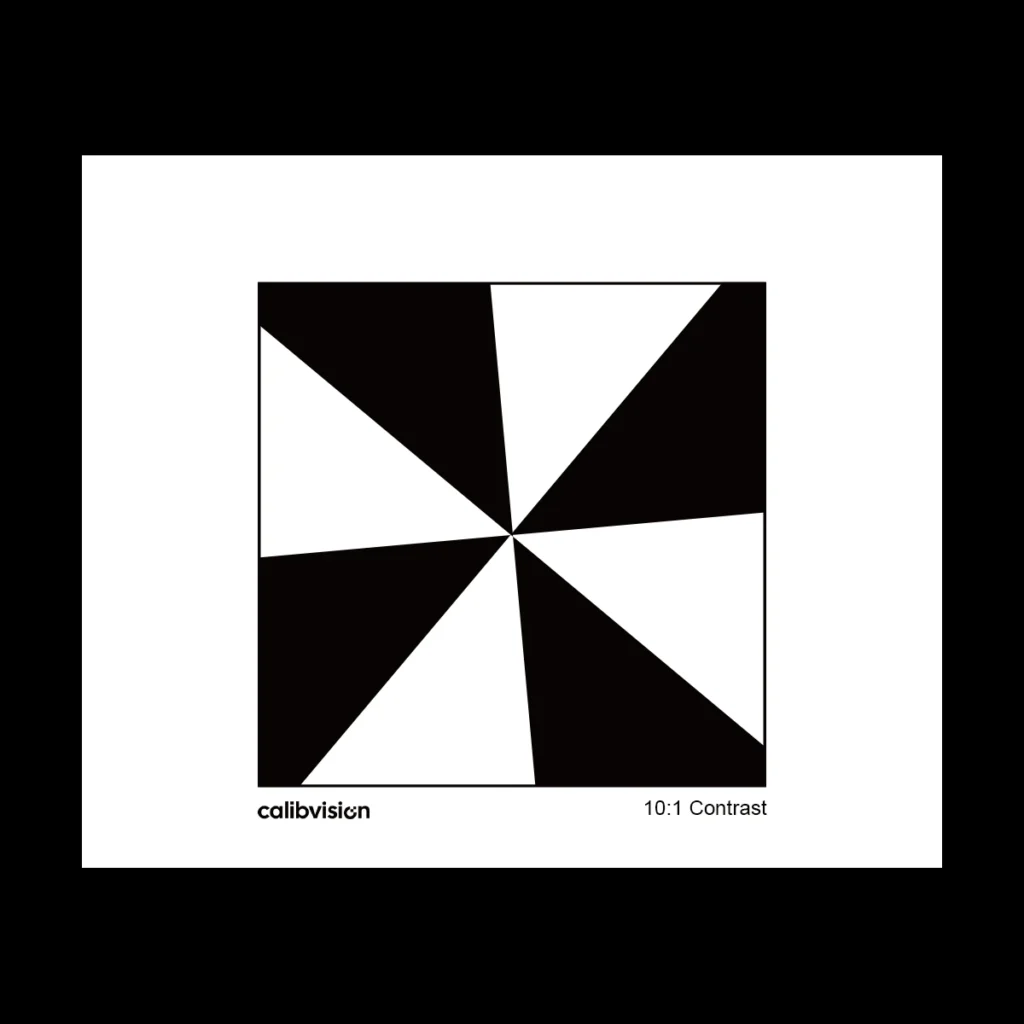
ISO 16505 is the standard for camera monitor systems (CMS) that replace a vehicle’s mirrors, and its SFR chart measures the resolution of the whole camera-to-monitor chain — not just the camera. Why CMS testing images the display with a second camera, the slanted-edge SFR chart on an 18% gray background, the LW/PH spatial-frequency unit that trips people up, the multi-chart bundle ISO 16505 defines, and how it differs from ISO 12233.
ISO 15739 Noise and Dynamic Range Testing: The Grayscale Step Chart, SNR, and OECF
ISO 15739 is the international standard for measuring the noise and dynamic range of digital cameras, using a grayscale step chart of patches with known density. The mean of each patch builds the OECF and the standard deviation gives the noise, from which SNR and dynamic range follow. What the standard measures, reflective versus transmissive charts, the visual-noise metric added in the 2023 edition, why uniform illumination is the make-or-break, and how ISO 15739 complements ISO 12233 as the other half of image quality.
Symmetric vs Asymmetric Circle Grids for Camera Calibration
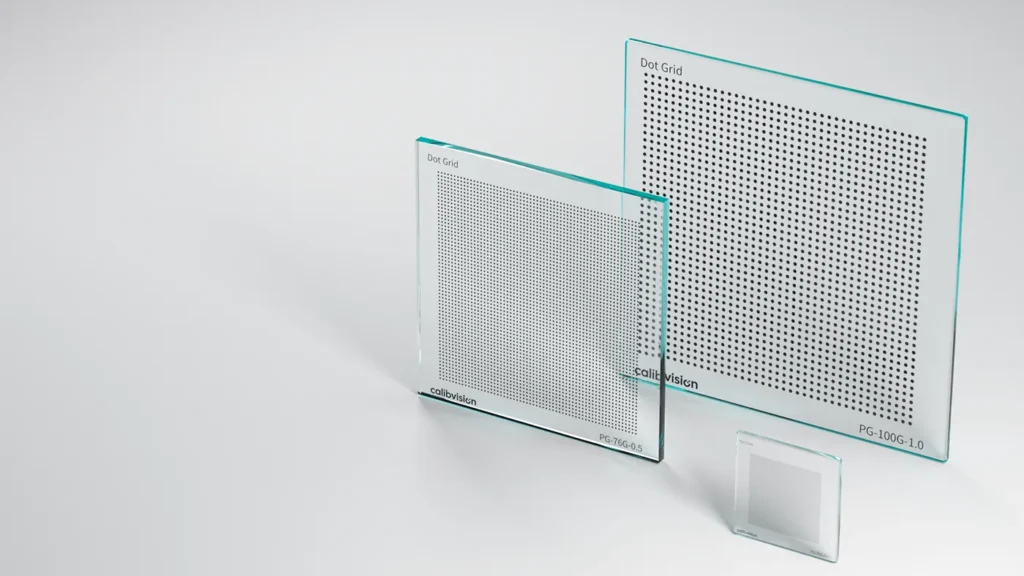
Circle grids are the third common OpenCV calibration pattern, in two layouts. The asymmetric (staggered) grid removes the 180° orientation ambiguity of the symmetric grid and packs more points, which is why it is the recommended layout. How findCirclesGrid counts patternSize for each (the (4,11) gotcha), why circle centroids carry a perspective bias, blob-detector tuning, and how substrate sets the accuracy ceiling.
MATLAB Camera Calibration with a Checkerboard: Board Size, the Even/Odd Rule, and the Calibrator App
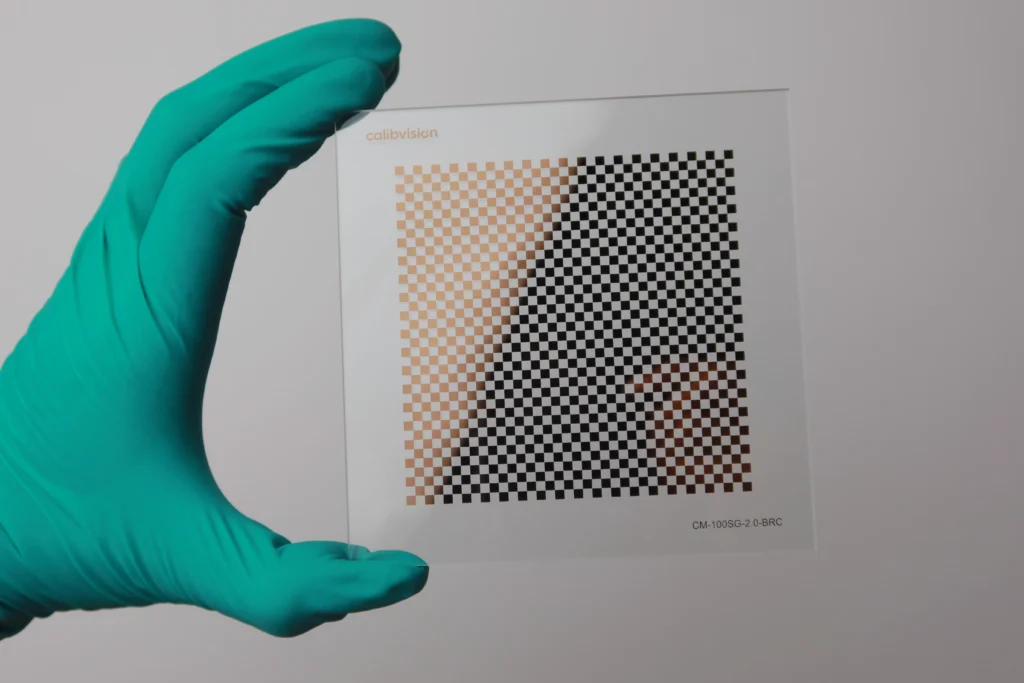
MATLAB’s Camera Calibrator app calibrates from a checkerboard, but it is stricter than OpenCV: it needs a board with an even number of squares on one edge and an odd number on the other, which produces two black and two white corners so the app can fix orientation and origin. Board size is counted in squares (points are the interior corners), plus the detectCheckerboardPoints / generateCheckerboardPoints / estimateCameraParameters workflow, stereo and fisheye, and why the target sets the accuracy ceiling.