
USAF 1951 Chart PDF & Printable Targets: What They Can (and Can’t) Do
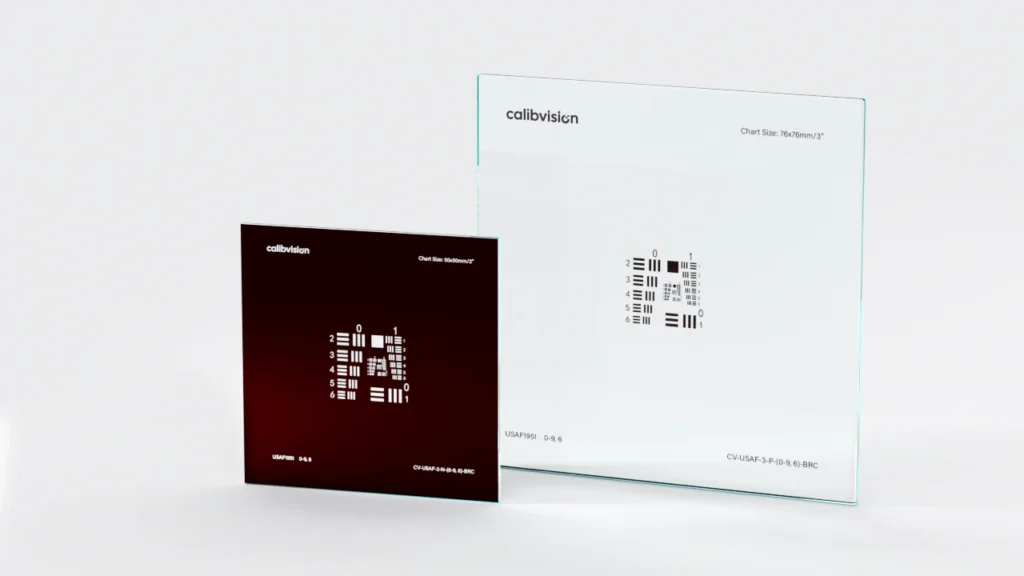
Yes, you can download and print a USAF 1951 chart PDF—but a printed target maxes out around Group 4–5 (16–32 lp/mm) with soft edges. Here’s when a printable chart works, and when you need chrome on glass to measure real resolution.
The Complete Guide to LiDAR Reflectance Targets (2026)
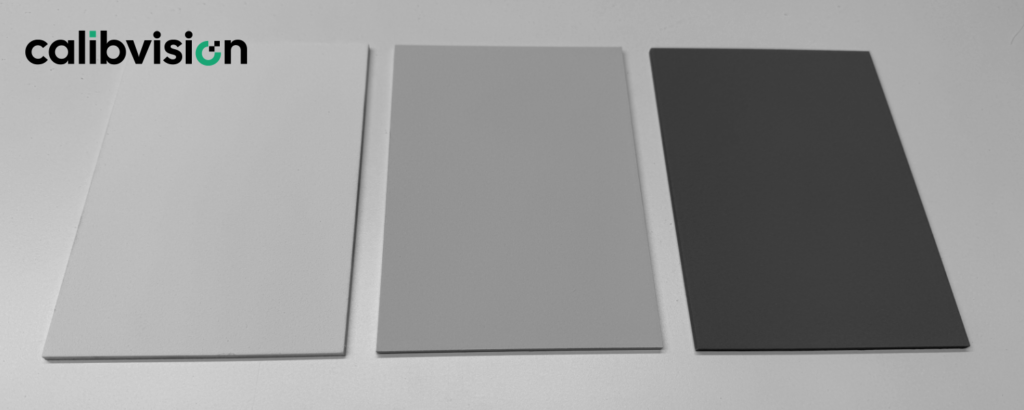
A LiDAR reflectance target is a calibrated panel that reflects a precisely-measured percentage of laser light, used to characterize sensor detection range, accuracy, and intensity output. This complete guide covers wavelength selection (905nm, 1550nm, 940nm, 850nm), reflectance values, Lambertian vs specular surfaces, materials, sizing, and applications across automotive, robotics, and consumer LiDAR.
5 Industries Revolutionized by Precision Diffuse Reflectance Standards
Last Updated: January 2025 | Reading Time: 13 minutes Introduction In a Tesla factory in Fremont, California, a robotic vision system inspects battery cells at a rate of 120 per minute. Each cell must be classified by surface condition—detecting micro-scratches, discoloration, or contamination that could indicate manufacturing defects. The difference between accepting a defective cell […]
Custom Checkerboard Calibration Targets for Semiconductor Wafer Inspection
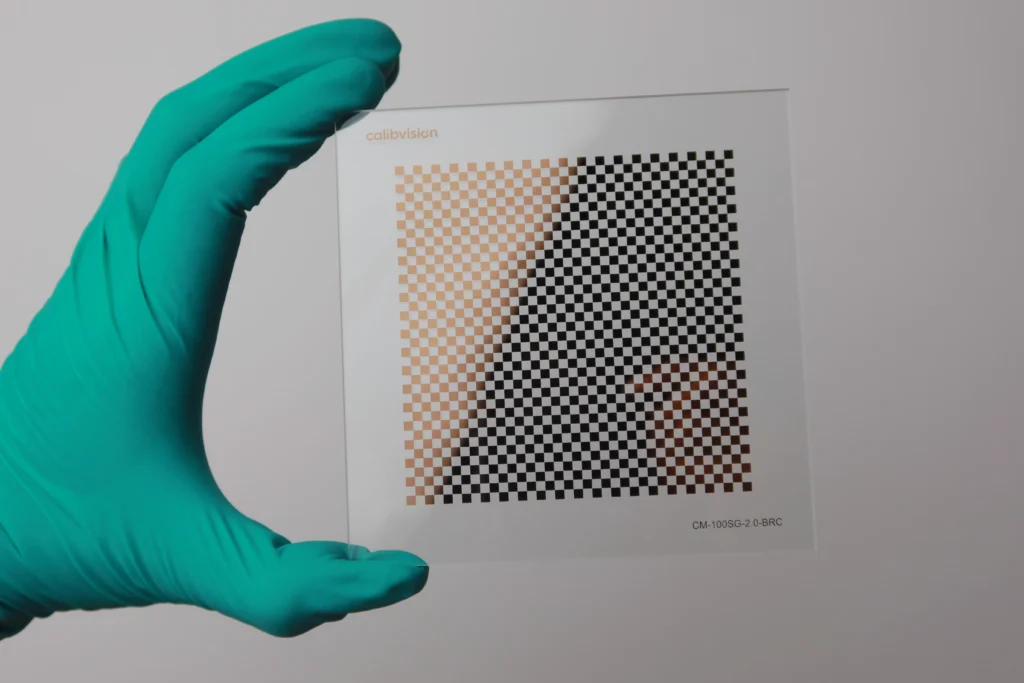
In semiconductor wafer inspection, your measurement is only as accurate as your calibration target. When you’re detecting particles smaller than 50 µm, verifying die placement to micron tolerances, or measuring kerf width after dicing, a standard ±1 µm printed checkerboard isn’t a calibration tool — it’s a source of error. This guide covers why semiconductor […]
Why Manufacturing Quality Matters: Cleanroom Photolithography vs Conventional Reflectance Targets
Last Updated: January 2025 | Reading Time: 11 minutes Introduction Two reflectance standards sit side by side on a lab bench. Both claim “50% reflectance at 905nm.” Both look identical to the naked eye—matte gray surfaces, similar size, similar price point. You pick one, calibrate your $100,000 automotive LiDAR, collect three months of validation data, […]
How to Choose Diffuse Reflectance Standards: 7 Critical Specifications to Consider
Last Updated: January 2025 | Reading Time: 14 minutes Introduction You’re about to spend $500 to $15,000 on diffuse reflectance standards for your LiDAR or optical testing project. Make the wrong choice, and you’ll face: Make the right choice, and you’ll have: The difference? Understanding seven critical specifications that separate professional-grade reflectance standards from inadequate […]
What is a Halcon Calibration Target?
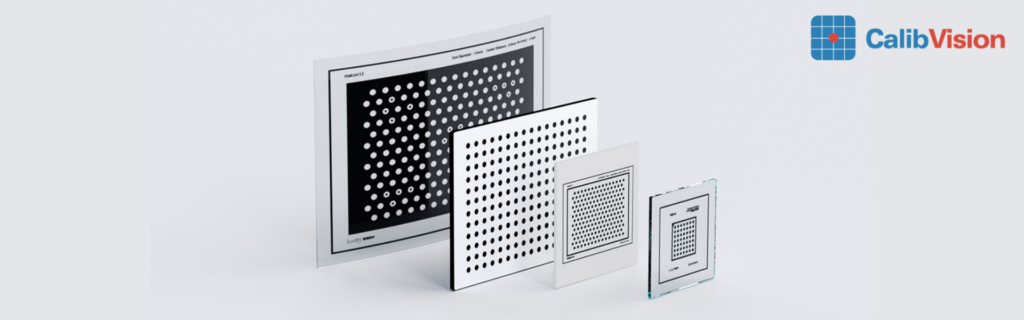
Halcon calibration targets are precisely manufactured physical objects with known geometric properties that serve as reference patterns for camera and machine vision system calibration. These specialized targets enable Halcon software to determine critical camera parameters including focal length, lens distortion, and spatial positioning, transforming standard cameras into accurate measurement instruments.
The calibration process involves capturing multiple images of the target from various angles and positions, allowing Halcon’s algorithms to analyze the known patterns and calculate precise camera parameters. Common target types include circular dot arrays, checkerboard patterns, and hexagonal arrangements, with customization options available through Halcon’s create_caltab operator.
These targets are essential for applications requiring high-precision measurements, including quality control inspection, robot guidance, 3D scanning, and dimensional analysis. By providing sub-pixel accuracy and correcting lens distortion effects, Halcon calibration targets enable reliable and consistent results across different operational conditions.
The proper selection and implementation of calibration targets significantly impact system performance, with factors such as working distance, accuracy requirements, environmental conditions, and target material playing crucial roles in achieving optimal calibration results. Professional implementation typically involves capturing 10-20 calibration images with the target filling approximately one-third to two-thirds of the camera’s field of view for maximum effectiveness.
What Is a USAF 1951 Test Target? Structure, Formula, and How to Read It
What a USAF 1951 resolution test target is, how its groups and elements are structured, the lp/mm formula, the positive/negative and substrate variants, and how to read one correctly.