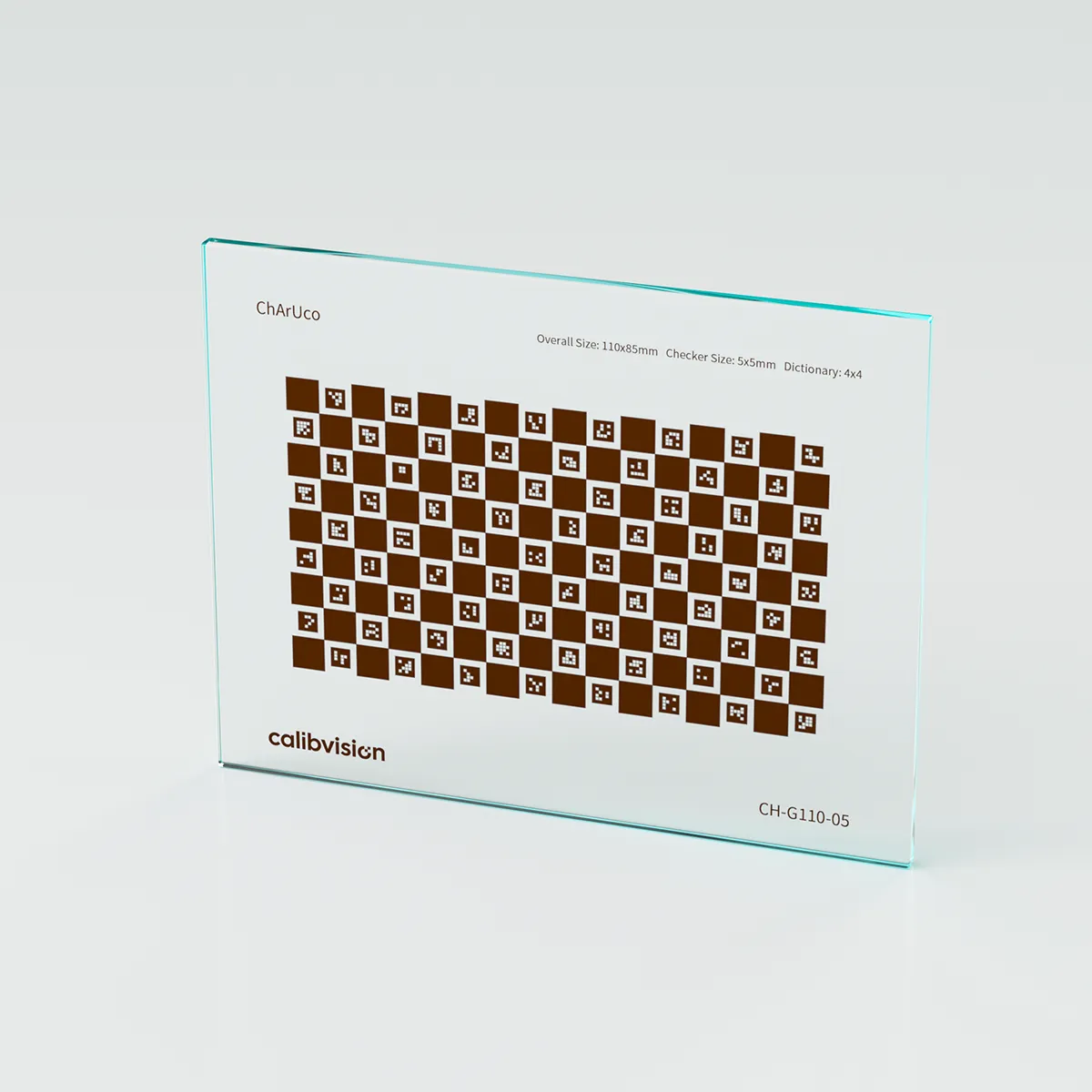
Laser triangulation calibration is often misunderstood. When measurement results become unstable, noisy, or inconsistent, many engineers first suspect the algorithm. In reality, a large portion of these issues originate from something much more fundamental: the calibration target itself, especially its surface coating and how it interacts with laser light.
What is Calibration in Laser Triangulation
A laser triangulation system measures 3D profiles by projecting a laser line onto an object and capturing its deformation using a camera. The system does not directly measure real-world dimensions. Instead, it detects pixel positions and converts them into spatial coordinates through calibration.
This means calibration is the process that links what the camera sees to actual physical measurements. If calibration is inaccurate, every measurement derived from the system will also be inaccurate.
Key Requirements for Calibration Targets
For laser triangulation systems, a proper calibration target must meet several critical requirements to ensure stable and reliable results.
Controlled Reflectivity
Laser is an active light source, and uncontrolled reflection can distort the laser line. A suitable calibration target must manage reflectivity so that the laser response remains consistent across the surface.
High Contrast
The system needs to detect feature points accurately under laser illumination. Without sufficient contrast, point detection becomes unstable, directly affecting calibration accuracy.
Sharp Edge Definition
Calibration relies on precise geometric features. If edges are blurred or poorly defined, the system cannot locate them accurately, leading to reduced precision.
Surface Uniformity
The entire calibration target must respond consistently to the laser. Variations in surface behavior can cause measurement differences across the field of view.
Dimensional Stability
The physical structure of the target must remain stable under different environmental conditions. Materials that deform or expand can introduce calibration errors.
Large Size Capability
Many laser triangulation systems operate with large fields of view. A calibration target must be available in larger sizes without sacrificing quality or performance.
Why Coating Selection Matters
One of the most critical yet overlooked factors in calibration is coating selection. Different coatings interact with laser light in very different ways, and this directly impacts measurement stability.
In practice, many common issues such as calibration drift, noisy edges, or inconsistent results are caused by coating mismatch rather than software or algorithm limitations. Choosing the wrong coating can introduce subtle errors that are difficult to diagnose and correct.
Comparison of Common Coatings
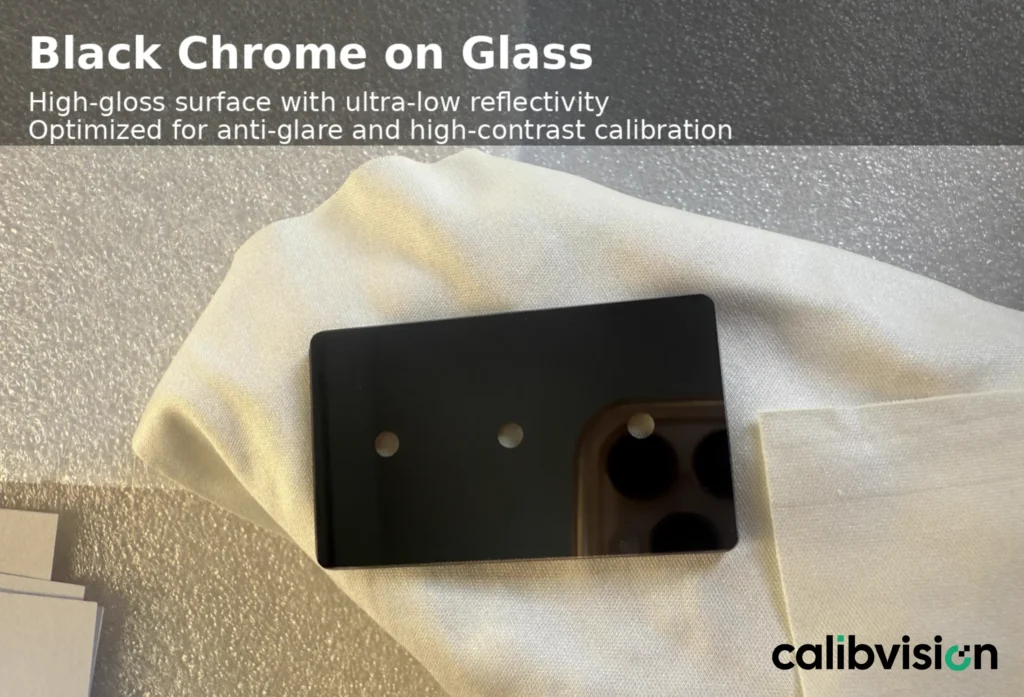
Black chrome coatings provide strong contrast but are typically more expensive and difficult to produce at larger sizes. Their performance can also vary depending on the laser wavelength, which limits their flexibility.
Blue chrome coatings are more widely available and can work in certain scenarios. However, their reflectivity control is not always stable enough for high-precision laser triangulation applications.
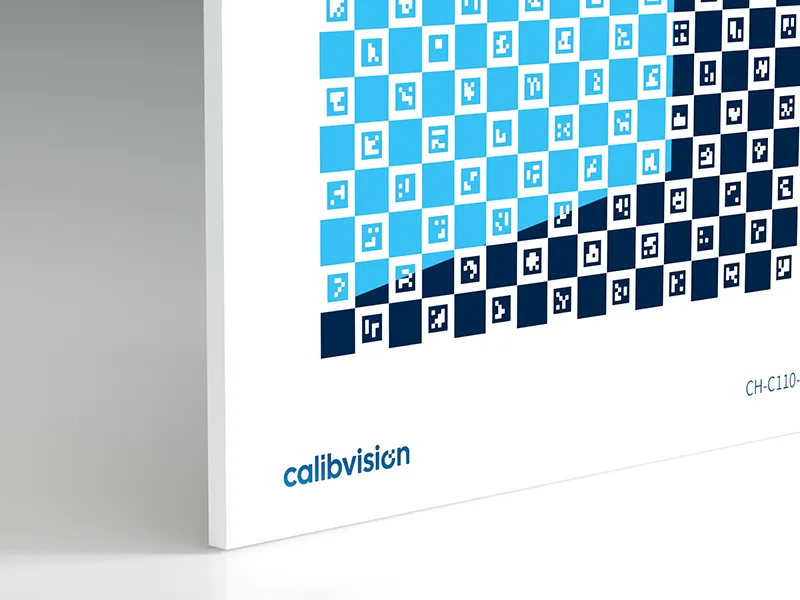
Brown chrome coatings offer a more balanced solution. They provide controlled reflectivity, high contrast, and consistent surface response. In addition, they are more suitable for large-format calibration targets and offer better overall stability in real-world applications.
| Coating Type | Reflectivity | Optical Characteristics | Key Advantages | Recommended Applications |
|---|---|---|---|---|
| Brown Chrome | ~25% (Medium) | Balanced reflectivity with stable response | Moderate contrast, high stability, cost-effective | General-purpose calibration, suitable for both backlight and front-light systems |
| Blue Chrome | ~15% (Medium-Low) | Lower reflectivity with controlled scattering | Widely used in European and US markets, reliable performance | Mixed lighting conditions, standard calibration setups |
| Bright Chrome | >80% (High) | Mirror-like high reflectivity | Strong signal return, enhanced visibility in low-light conditions | Low illumination environments, long-distance imaging, high signal requirement scenarios |
| Black Chrome | ~3% (Very Low) | Near light-absorbing, anti-reflective surface | Extremely high contrast, anti-glare, minimizes reflection interference | Strong illumination, direct front lighting, coaxial lighting, high-glare environments |
Common Calibration Mistakes
A common assumption is that any high-quality calibration board will work as long as the pattern is correct. However, calibration is not just about pattern geometry. It is also about how the surface behaves under laser illumination.
Many teams encounter issues such as unstable measurements or inconsistent calibration results because the coating is not optimized for their specific setup. These problems often lead to repeated testing, wasted time, and unnecessary adjustments.
Why Brown Chrome is Often the Best Choice
Brown chrome is widely recommended for laser triangulation calibration because it addresses the most critical factors simultaneously. It controls reflectivity more effectively, maintains high contrast, and ensures stable performance across the entire surface.
This makes it particularly suitable for applications that require high accuracy, repeatability, and large-area calibration.
| Scenario | Recommended Coating | Reason |
|---|---|---|
| General-purpose (standard conditions) | Brown Chrome | Most stable and cost-effective option |
| Mixed lighting (front + backlight, international standard) | Blue Chrome | Balanced performance, widely adopted |
| Low light / long distance | Bright Chrome | Maximizes signal strength |
| Strong light / glare environments | Black Chrome | Suppresses reflection, improves contrast |
| High ambient noise / stray light | Black Chrome | Best anti-glare performance |
Key Insight:Coating selection should be based on lighting conditions and reflectivity requirements rather than color preference. The goal is to achieve stable optical response, high contrast, and minimal measurement interference under your specific system setup.
If you are unsure which coating is suitable, selection can be optimized based on your lighting type, imaging distance, and calibration accuracy requirements.
Conclusion
In laser triangulation systems, calibration accuracy depends not only on the algorithm but also on the physical properties of the calibration target. Among these factors, coating selection plays a decisive role.
Choosing a compatible coating helps ensure stable, accurate, and repeatable measurements, while the wrong choice can introduce hidden errors that affect the entire system.
If you are selecting a calibration target for your laser triangulation system, it is essential to consider laser wavelength, field of view, and performance requirements. Making the right choice from the beginning can save significant time and cost in the long run.
If you are unsure which calibration target best fits your application, you can share your system details and requirements to get a tailored recommendation.