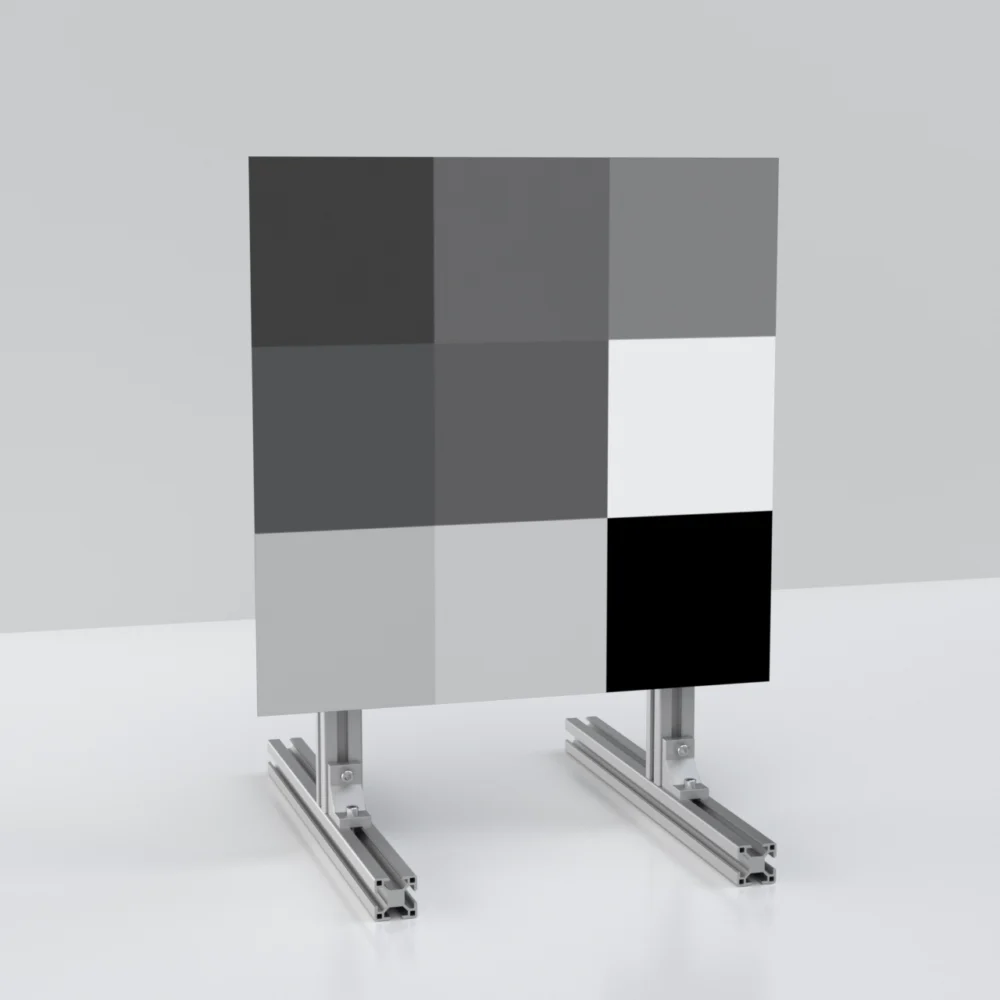
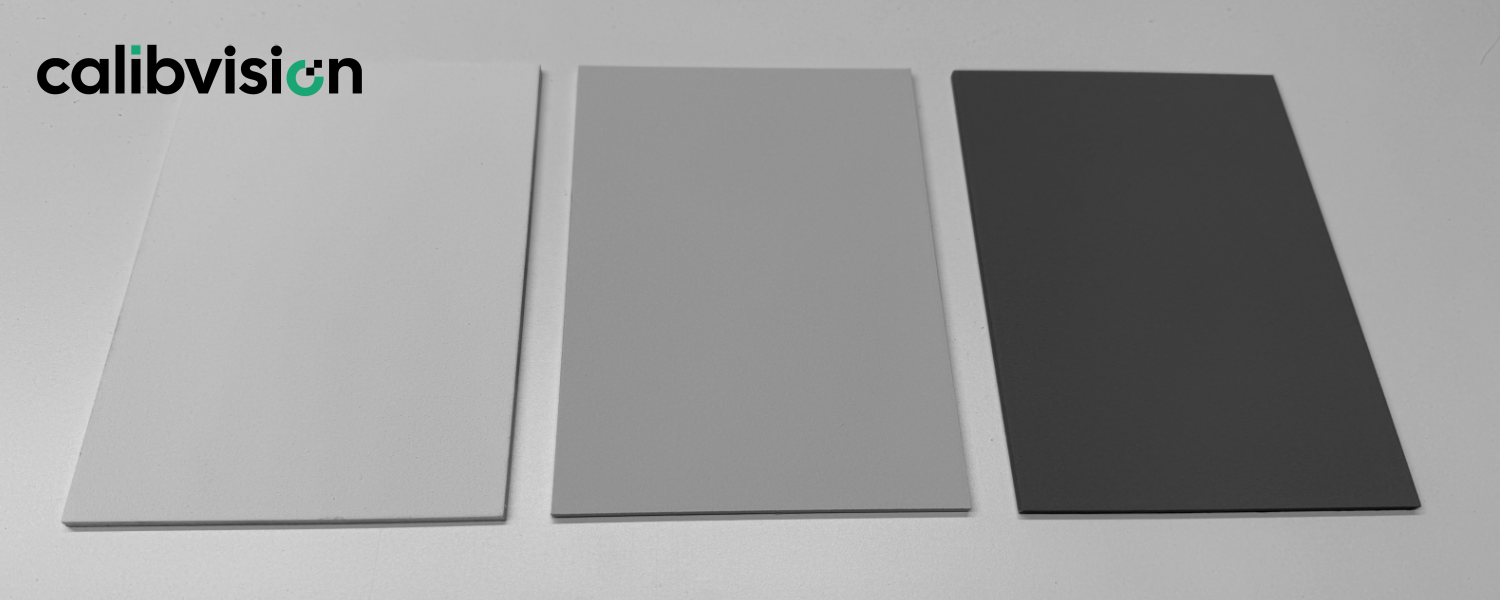
A LiDAR reflectance target is a precisely manufactured panel that reflects a known, controlled percentage of incoming laser light. It’s the reference object you point a LiDAR system at to measure how well that system detects, ranges, and characterizes objects in the real world. Without reflectance targets, every LiDAR performance claim — detection range, accuracy, false positive rate, weather robustness — is just a marketing number with no way to verify.
If you build, integrate, test, or buy LiDAR systems, this guide covers everything you need to know: how reflectance targets work, why specific wavelengths and reflectance values matter, how to choose the right target for your application, and how the manufacturing process affects what you get.
I’ve been building reflectance targets for LiDAR engineers, automotive Tier 1 suppliers, and robotics teams at CalibVision for years. Below is the full picture, written from the perspective of what actually matters when you’re spec’ing a target — not what looks impressive in a brochure.
What Is a LiDAR Reflectance Target?
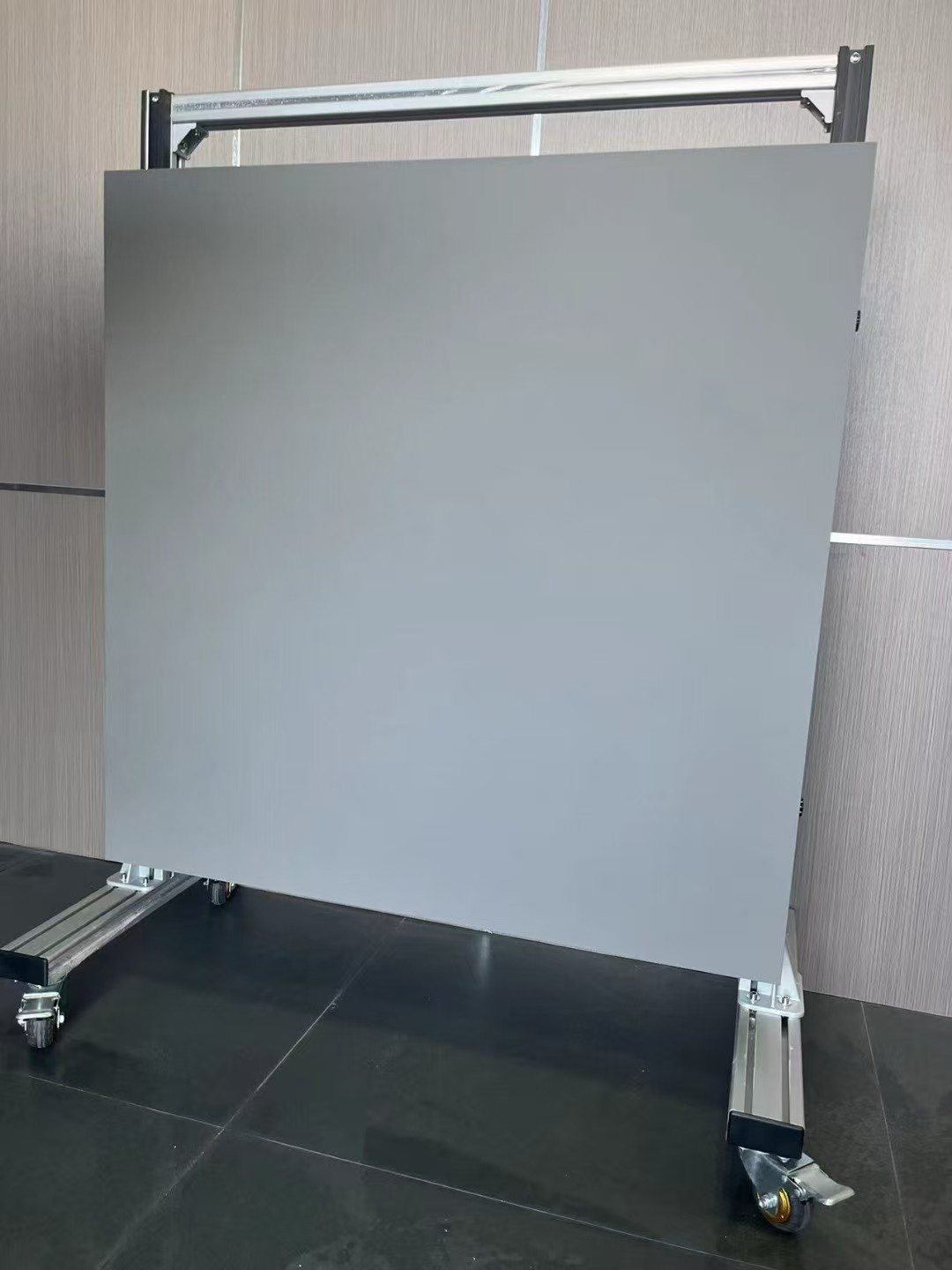
A LiDAR reflectance target is a flat panel coated with a specially engineered surface that reflects a precisely-measured percentage of the laser light that hits it. The most common reflectance values are 10%, 50%, and 90% — these three together cover the realistic range of what a LiDAR sensor will encounter in the real world, from dark asphalt to white road markings.
Three things define a usable reflectance target:
- Calibrated reflectance value — measured to a known accuracy across the LiDAR wavelength being tested
- Lambertian (diffuse) reflection — the surface scatters incoming light evenly in all directions, so the measured reflectance is independent of the angle the LiDAR hits it from
- Spectrally flat response — reflectance stays consistent across the wavelength of the LiDAR being tested (this matters more for some materials than others)
Without all three of these properties, the target is unreliable. A surface that reflects 50% from one angle but 30% from another, or 50% at 905nm but 70% at 1550nm, doesn’t give you the controlled reference you need to characterize LiDAR performance.
How LiDAR Uses Reflectance to Detect and Range Objects
To understand why reflectance targets matter, you need a basic picture of how LiDAR sees the world. A LiDAR sensor fires a laser pulse at an object, the pulse reflects off the object, and a sensor inside the LiDAR measures the returning light. From the time delay between firing and return, the LiDAR calculates the distance to the object. From the intensity of the returning light, the LiDAR estimates how reflective the object is — essentially “how much of my laser came back.”
The catch: detection range depends directly on how much light comes back. A highly-reflective white surface (90% reflectance) sends back nine times more light than a dark surface (10% reflectance) at the same distance. That means the same LiDAR can detect a white road sign at 200 meters but only see a black car at 70 meters — both real numbers from automotive LiDAR datasheets.
This relationship — between target reflectance and detection range — is the central physics of LiDAR performance. Reflectance targets exist so engineers can characterize this relationship under controlled conditions, before deploying a LiDAR in the real world where every surface has a different and unknown reflectance.
Why Reflectance Value (10%, 50%, 90%) Matters
The 10% / 50% / 90% trio became the industry standard because each value represents a meaningful real-world condition.
10% reflectance simulates worst-case scenarios. Black car paint, fresh asphalt at night, dark clothing on a pedestrian, wet road surfaces. If your LiDAR can reliably detect a 10% target at the distance you need, it can detect almost anything in real driving conditions. This is the stress test that defines maximum useful range.
50% reflectance simulates typical scenes. Grey concrete, average vehicle paint, building facades, vegetation. This is what your LiDAR will see most of the time in a normal day’s driving or operation. 50% targets characterize typical-case performance — the realistic working envelope of your sensor.
90% reflectance simulates highly reflective scenes. White vehicles, road markings, traffic signs, snow, light building surfaces. Importantly, 90% targets are also used to test signal saturation — the point where a sensor’s electronics get overwhelmed by too much returning light, which is a real failure mode at close range with bright targets.
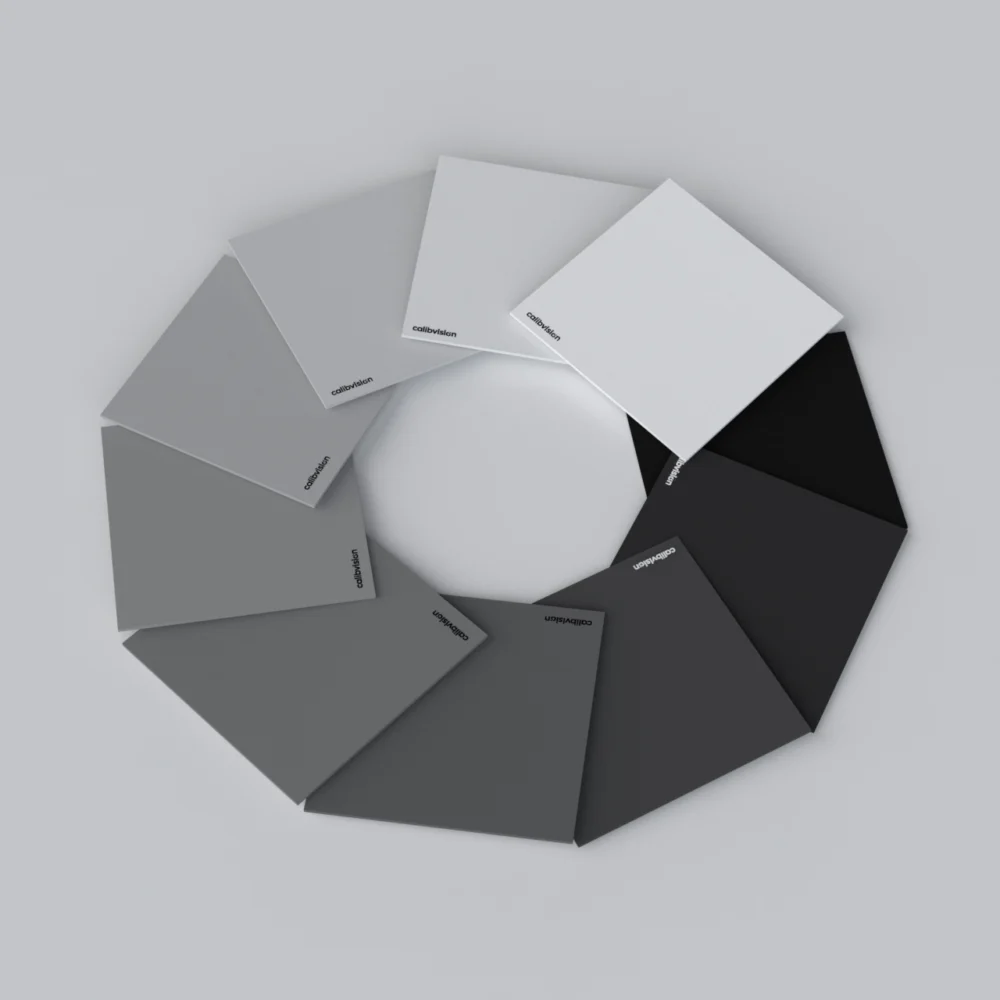
Industry test protocols typically require all three values measured at multiple distances to fully characterize a LiDAR. Some advanced test setups add 30% and 70% for finer resolution. This is why most professional LiDAR labs purchase a multi-reflectance set of 5 panels rather than individual targets — it covers the full curve in one purchase.
A point most general LiDAR articles miss: the specific reflectance values aren’t arbitrary. They were chosen to span the full dynamic range of real-world surfaces in a logarithmic-like spacing. 10% to 50% is a 5x ratio; 50% to 90% is a 1.8x ratio. This non-linear spacing gives engineers more resolution where it matters most — at the dark end where LiDAR struggles and detection range falls off most steeply.
Lambertian, Specular, and Retroreflective: The Three Types of Reflection
Not all reflective surfaces are created equal. There are three fundamentally different ways a surface can reflect light, and only one of them is appropriate for LiDAR test targets.
Lambertian (diffuse) reflection — the surface scatters incoming light equally in all directions. A perfect Lambertian surface looks the same brightness from any viewing angle. Most matte-finish painted surfaces, untreated paper, fabric, and natural materials behave roughly like Lambertian reflectors. Almost all professional LiDAR test targets are Lambertian, because Lambertian reflection makes the measured reflectance value angle-independent — meaning your test result doesn’t depend on exactly how the LiDAR was aimed.
Specular (mirror) reflection — the surface reflects light at a mirror-equal angle, like a polished glass or metal surface. Specular surfaces are extremely angle-dependent: hit them dead-on and you get massive return; hit them off-angle and you get nothing. Specular surfaces are useless as general LiDAR test targets because the measurement depends on perfect alignment, but they have niche applications in studying glare and reflection in real scenes (a wet road at night, a mirror, a polished car body).
Retroreflective — the surface reflects light directly back toward the source, regardless of angle. Traffic signs, safety vests, and road studs are retroreflective. They return enormously more light than a Lambertian surface of the same nominal reflectance, which is why they’re so visible to drivers and to LiDAR. Retroreflective targets are used for specific applications (testing automotive systems’ response to road signs, for example) but never for characterizing a LiDAR’s general detection range.
For 95% of LiDAR test work, the answer is Lambertian. CalibVision targets are engineered to behave as Lambertian reflectors across their working wavelength range, with measured deviation from ideal Lambertian behavior under 5% across viewing angles up to 60° off-axis.
→ For a deeper technical dive: Lambertian vs Specular vs Retroreflective Targets
LiDAR Wavelengths and How They Affect Target Choice
LiDAR systems operate at different wavelengths depending on application, and the wavelength affects which target material you need.
905nm — the dominant short-to-medium-range LiDAR wavelength. Used by most consumer-grade and industrial LiDAR (Hesai, Velodyne, RoboSense, Innoviz, Roborock, most automotive Tier 2). 905nm sits in the near-infrared just past the visible spectrum. The advantage is mature, low-cost laser diodes; the disadvantage is eye-safety limits restrict maximum power.
1550nm — the long-range automotive LiDAR wavelength. Used by long-range automotive LiDAR (Luminar, Aeva, Aurora, Innoviz Pro). 1550nm sits in the short-wave infrared (SWIR). The huge advantage is that 1550nm is much safer for human eyes, allowing higher laser power and therefore longer detection range. The disadvantage is more expensive components and different material behavior — most “white” materials look different at 1550nm than they do at 905nm.
940nm — the consumer ToF wavelength. Used in iPhone, iPad, Vision Pro, Meta Quest, AR/VR headsets, and many face-recognition systems. Short range (under 5m typically), low power, optimized for small form factor.
850nm — the security and indoor IR wavelength. Used in IP security cameras, indoor robotics, AGVs, and infrared illumination systems. Slightly visible as a faint red glow if you look directly at the source — which is why 940nm is preferred when stealth matters.
A target calibrated at 905nm is not necessarily valid at 1550nm or 940nm. Some materials (particularly PTFE-based diffuse reflectors) hold their reflectance reasonably flat across these wavelengths; others (painted surfaces, dyed fabrics) shift significantly. For accurate testing, use a target calibrated specifically for your sensor’s wavelength.
→ For 905nm specifics: 905nm LiDAR Reflectance Target Guide
→ For 1550nm specifics: 1550nm LiDAR Reflectance Target for Automotive Applications
Sizing Your Target: Distance, Beam Divergence, and Detection
The right target size depends on three things: how far away the target sits from the LiDAR, the LiDAR’s beam divergence angle, and how many laser pulses you need to hit the target during a measurement.
The basic principle: at any given distance, a LiDAR’s laser beam has spread to some footprint size. If the target is smaller than the beam footprint, only part of the laser energy hits the target — the rest hits background and gets returned (or doesn’t return) from somewhere else. This contaminates the measurement.
A practical rule of thumb: the target should be at least 3x the beam footprint diameter at the test distance. For most automotive LiDAR with ~0.1° to 0.3° beam divergence, this works out to:
- At 50m distance: target should be at least 150-300mm wide
- At 100m: at least 300-600mm wide
- At 200m: at least 600-1200mm wide
- At 300m: at least 900-1800mm wide
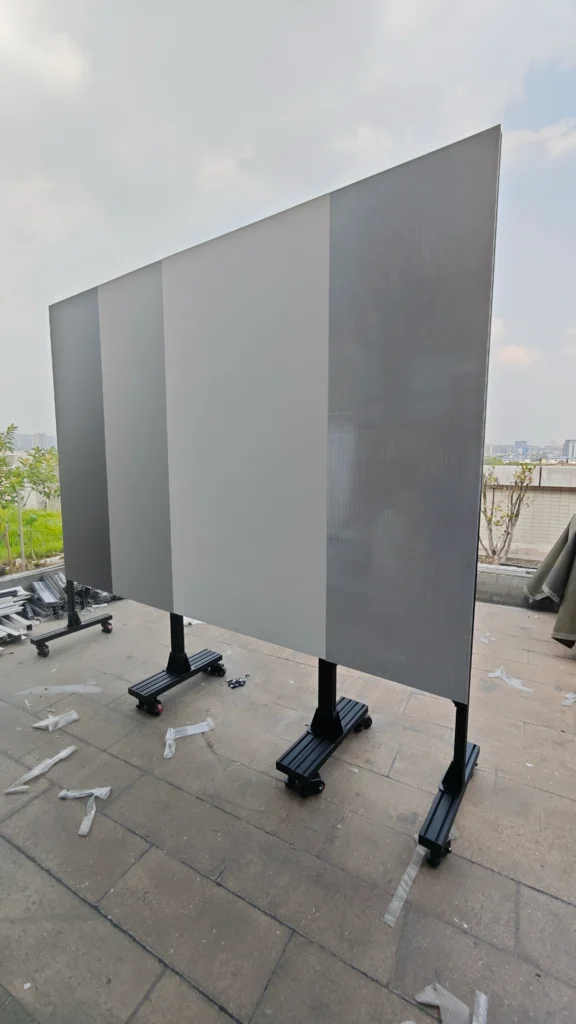
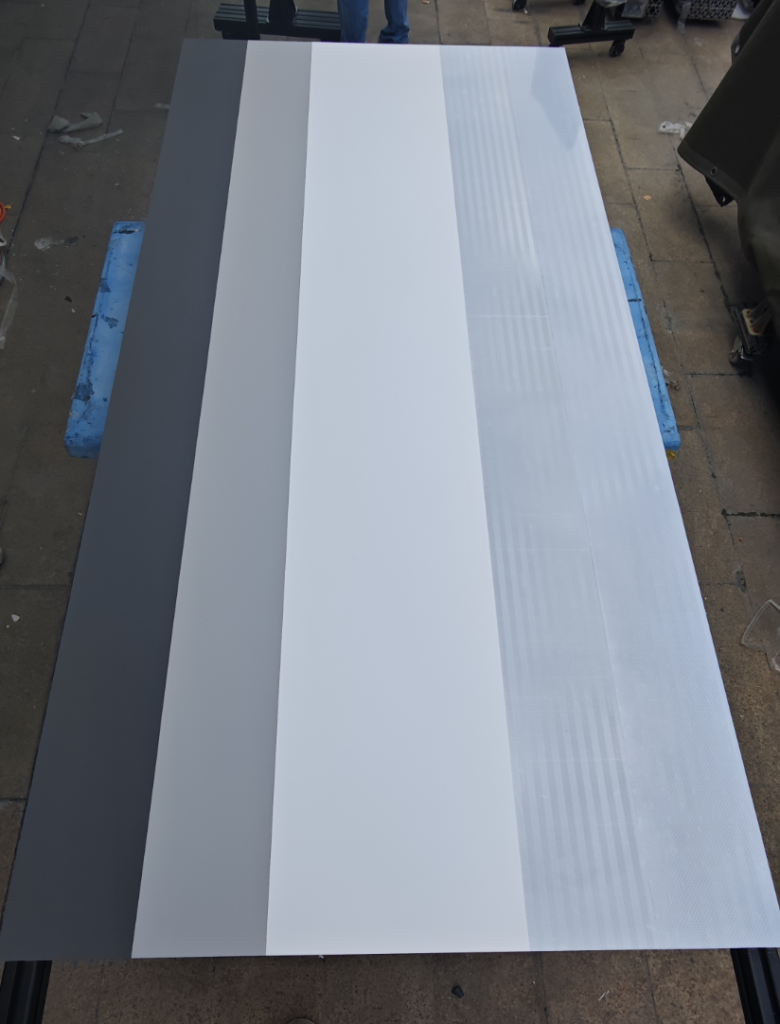
For long-range automotive LiDAR (200m+), this often means targets larger than 1m × 1m — sizes that can’t be casually shipped or stored. CalibVision custom-manufactures targets up to 3m × 5m for long-range automotive testing facilities and outdoor test tracks.
A second consideration: multi-reflectance arrays combine 5 or more reflectance values into a single panel, separated by sharp boundaries. This lets a LiDAR test the full reflectance curve in one shot, which is faster than rotating individual single-value targets in and out of the test setup.
→ For detection range math and lookup tables: LiDAR Detection Range vs Reflectance
Materials Used in LiDAR Reflectance Targets
The material a target is made from determines its wavelength flatness, durability, weather resistance, and price. Five materials are common in professional LiDAR test targets.
PTFE (Teflon)-based diffuse coatings. The gold standard for spectrally flat reflectance. PTFE holds its reflectance value within ±2% across a wide wavelength range from visible through SWIR. Used in laboratory-grade reference standards. Downside: relatively expensive and not as durable for outdoor use.
Spectralon (sintered PTFE). A premium variant of PTFE-based reflectors used by metrology institutes and high-end research labs. Even more spectrally flat than coated PTFE, with reflectance certified to better than ±0.5% in some configurations. Expensive but the reference for precision work.
Painted or coated panels. Most cost-effective solution. Industrial paints designed for specific reflectance values and wavelengths. Wavelength flatness is moderate (±5-10% across the LiDAR range), but cost is much lower and the panels can be made any size. Suitable for production-line testing and field testing where extreme precision isn’t needed.
Ceramic-coated panels. Used for outdoor and high-temperature applications. More durable than painted panels, holds calibration through temperature swings, but more expensive. Common in automotive outdoor test tracks.
Specialty composites (carbon fiber backing, weatherproof laminates). Used when targets need to withstand outdoor weather, vibration, or transport stress. The reflective surface is the same as one of the above; the substrate provides structural integrity.
CalibVision uses different material approaches depending on the use case — PTFE-based coatings for laboratory work, painted panels for cost-sensitive production testing, and specialty composites for outdoor and weatherproof applications. The right material is matched to the application, not chosen for its own sake.
How to Test LiDAR Performance Using Reflectance Targets
The basic test sequence for characterizing a LiDAR system uses reflectance targets in three test types:
Test 1 — Detection range. Place a 10% reflectance target at increasing distances from the LiDAR until the LiDAR can no longer reliably detect it (typically defined as detection probability above 90% across multiple measurement frames). This gives you the maximum useful detection range for that sensor at low-reflectance conditions. Repeat at 50% and 90%.
Test 2 — Range accuracy. At a fixed distance (typically 10m, 50m, 100m), measure the reported distance to a target of known reflectance. Compare to the actual ground-truth distance. The difference is the range accuracy at that distance and reflectance. Run across multiple reflectance values to characterize whether accuracy depends on signal strength.
Test 3 — Intensity calibration. With targets of known reflectance values placed at the same distance, measure the LiDAR’s reported intensity for each. The relationship between target reflectance and reported intensity should be predictable — if a 50% target reads 5x stronger than a 10% target, your LiDAR’s intensity output is well-calibrated. Departures from this expected relationship indicate calibration issues that affect all downstream perception algorithms.
These three tests, run with a multi-reflectance set, define the working envelope of any LiDAR system. They form the basis for spec sheets, OEM acceptance procedures, and competitive comparisons.
→ Full step-by-step test setup: How to Test LiDAR Performance with Reflectance Targets
Applications Across Industries
LiDAR reflectance targets are used in nine major application areas, with very different requirements in each.
Autonomous and assisted driving. OEMs and Tier 1 suppliers (Tesla, Waymo, Mobileye, Aurora, Innoviz, etc.) test LiDAR perception systems against multi-reflectance targets at distances out to 300m. Target sizes are large (often 1m+ on a side), and outdoor weather robustness is critical. Wavelengths are typically 905nm or 1550nm.
Consumer LiDAR (smartphones, AR/VR). Apple iPhone, iPad Pro, Vision Pro, Meta Quest, and similar devices use 940nm ToF sensors at short range. Test targets are smaller (often 200-600mm), and the focus is on accuracy and material-dependent reflectance characterization (testing how skin, fabric, glass affect depth measurement).
Robotic vacuum cleaners and mobile robots. Roborock, iRobot, Ecovacs, AGVs and AMRs from Geek+ and similar companies use 905nm or 850nm LiDAR for navigation. Target requirements are mid-size (300-600mm), often Lambertian, with focus on indoor lighting conditions and dark-surface detection (the underside of furniture, cables, dark carpet).
Industrial automation and inspection. Factory floor LiDAR for AGV navigation, packaging line inspection, and quality control. Reflectance targets used to verify sensor performance during periodic maintenance and after relocation.
Drone and aerial LiDAR. Survey drones, agricultural drones, and aerial mapping platforms use LiDAR at 905nm and 1064nm. Reflectance targets used for both pre-flight calibration and ground control point reference during flight.
Surveying and metrology. Survey-grade terrestrial LiDAR scanners (Leica, FARO, Trimble) use reflectance targets to verify accuracy in lab conditions and as reference points in field surveys. Sub-millimeter accuracy requirements drive use of premium PTFE/Spectralon targets.
Military and aerospace. Defense LiDAR, UAV target detection, and similar applications. Often custom wavelengths and custom reflectance values; specifications driven by classified test protocols.
Research and academic. University labs, research institutes, and corporate R&D using LiDAR to publish papers on perception, SLAM, and sensor fusion. Multi-reflectance sets and known-reference targets are standard equipment.
Quality assurance for LiDAR manufacturers themselves. LiDAR sensor manufacturers (Hesai, Velodyne, Luminar, etc.) use reflectance targets in their own production-line acceptance testing. This is often the largest single buyer category for high-volume reflectance target orders.
Standards and Regulations
Several international and industry standards reference reflectance target specifications. If your work touches certification, regulatory submission, or OEM acceptance, knowing which standards apply matters.
ISO 13855 covers safety distance calculations for LiDAR-based safety systems in industrial automation. References standardized reflectance values for test setup.
EN 17387 and EN 1525 cover safety standards for AGVs and similar mobile robots in European markets. Test protocols specify reflectance values for obstacle detection verification.
SAE J3088 is the developing automotive industry standard for LiDAR sensor performance characterization. Defines test setups using calibrated reflectance targets at 10%, 50%, and 90%.
ISO 17636 and related metrology standards cover the calibration chain for reflectance reference materials. Important for traceability when test results need to be defensible in court, regulatory submissions, or international deliverables.
CalibVision can provide reflectance targets traceable to national metrology institute standards (China, USA, EU) on request, with bilingual (English/Chinese) certification suitable for ISO audits and peer-reviewed publication.
When to Choose a Standard Target vs Custom
About 80% of LiDAR test work uses standard target sizes and reflectance values. The remaining 20% has constraints that don’t fit standard products.
Choose a standard target when:
- You’re testing a single LiDAR or small batch
- Your test setup uses standard distances (typically under 50m)
- Standard reflectance values (10%, 50%, 90%) cover your application
- Standard wavelength coverage is enough
Choose a custom target when:
- You need a specific size (very small for tabletop testing, very large for long-range outdoor testing)
- You need non-standard reflectance values (e.g., 30% specifically, or 1% for stress testing detection floor)
- Your sensor uses a non-standard wavelength (e.g., 1064nm survey LiDAR, 1310nm research LiDAR)
- Your application requires outdoor weather resistance
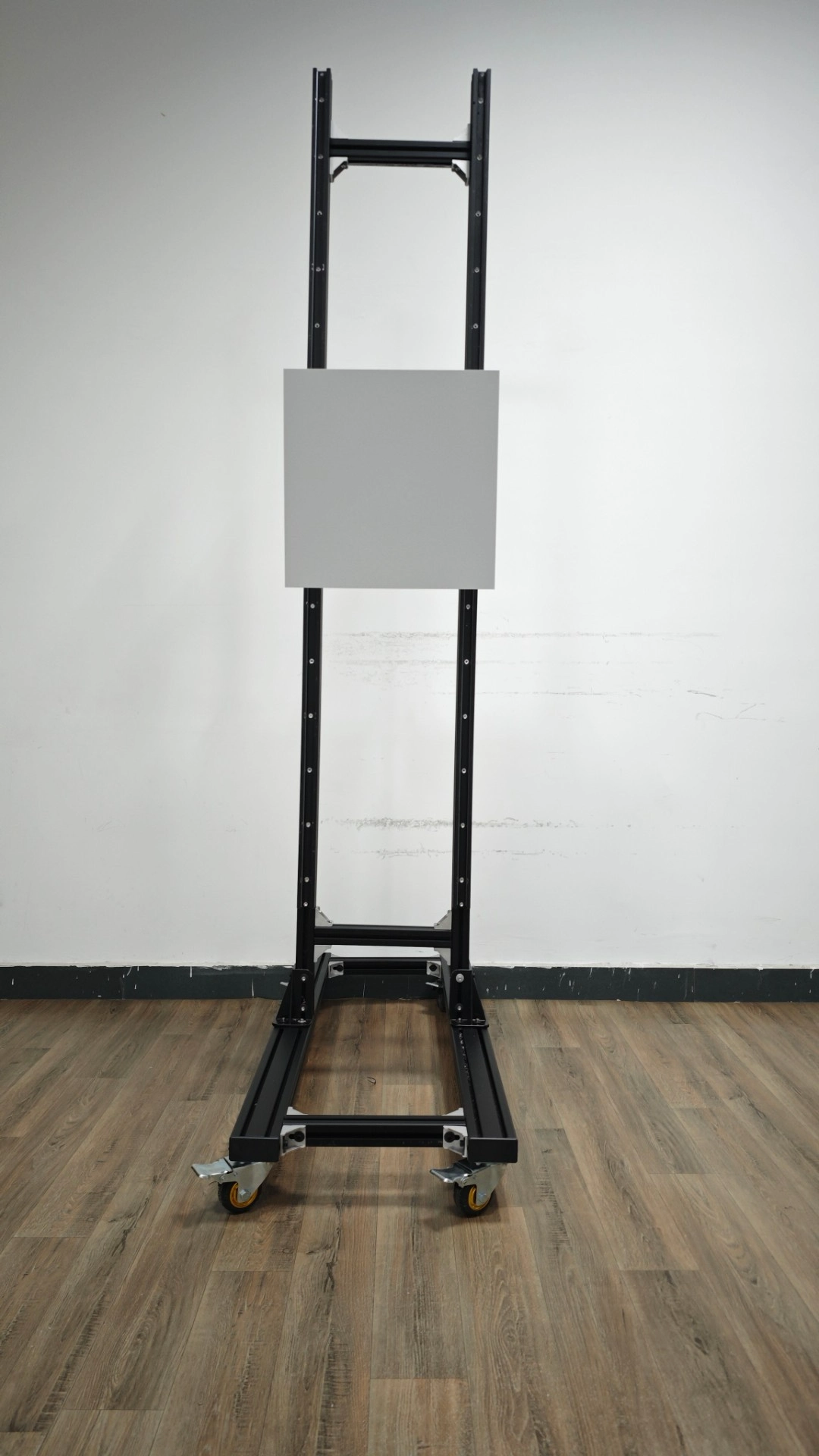
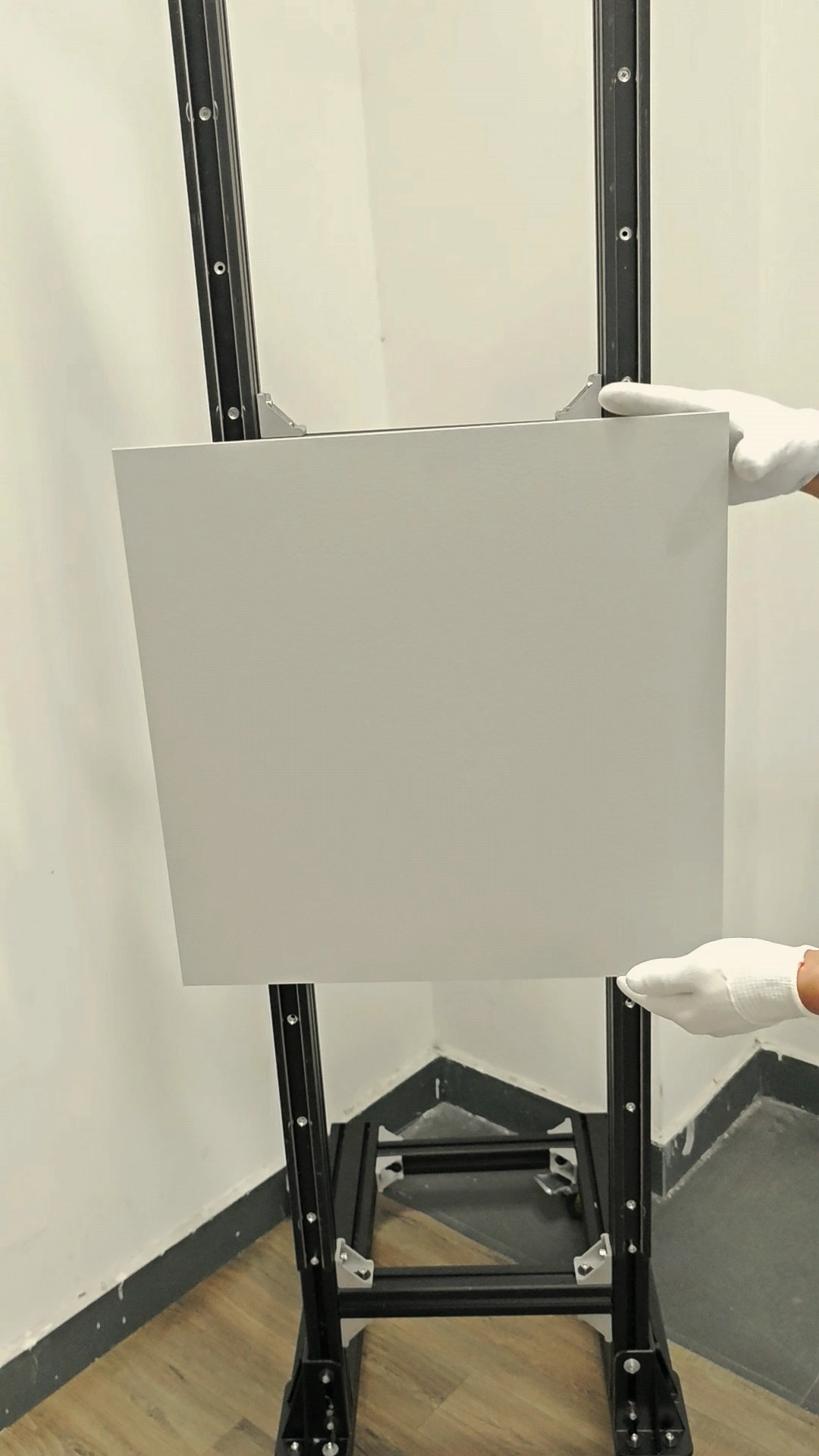
- You need integrated mounting hardware, frames, or test fixtures
- You’re producing reference targets for internal QA at scale and want them branded or specifically dimensioned
For custom orders, lead time at CalibVision is typically 2-4 weeks depending on size, materials, and certification requirements. Pricing scales with size and certification level.
→ Custom target details and lead times: Custom LiDAR Reflectance Targets
FAQs
What is the standard reflectance value for LiDAR testing?
10%, 50%, and 90% are the three standard reflectance values used across the LiDAR industry. 10% represents worst-case low-reflectance conditions (dark vehicles, asphalt), 50% represents typical scenes, and 90% represents highly reflective surfaces (white vehicles, road markings, snow). Most professional test setups use all three values together as a multi-reflectance set.
What’s the difference between a Lambertian target and a regular flat target?
A Lambertian target scatters incoming light equally in all directions, so the measured reflectance is the same regardless of the angle the LiDAR hits it. A “regular” matte panel may behave roughly as Lambertian but isn’t characterized or guaranteed to behave that way. Professional LiDAR test targets are specifically engineered and verified as Lambertian to ensure measurements don’t depend on perfect alignment.
Can I use the same reflectance target for 905nm and 1550nm LiDAR?
Sometimes, but not always. PTFE-based reflectance targets (the high-end materials) hold their reflectance reasonably flat across both wavelengths. Painted targets often shift significantly between 905nm and 1550nm. If accurate test results matter, use a target specifically calibrated for the wavelength of your sensor — or buy a target characterized at multiple wavelengths and use the appropriate reflectance value for each test.
How big should my LiDAR test target be?
Size depends on test distance and the LiDAR’s beam divergence. As a rule of thumb, the target should be at least 3x the laser beam footprint diameter at the test distance. For most automotive LiDAR at 50m, that means targets at least 150-300mm wide; at 200m, at least 600-1200mm. For long-range automotive testing at 300m+, custom-sized targets up to 3m × 5m are common.
What wavelength does my LiDAR use?
Check the sensor’s datasheet. The most common wavelengths in 2026 are: 905nm (most consumer and short-range automotive LiDAR — Hesai, Velodyne, RoboSense, most current production LiDAR), 1550nm (long-range automotive — Luminar, Aeva, Aurora, Innoviz Pro), 940nm (consumer ToF — iPhone, iPad, Vision Pro), and 850nm (IR security cameras and indoor robotics).
Are reflectance targets the same as calibration targets?
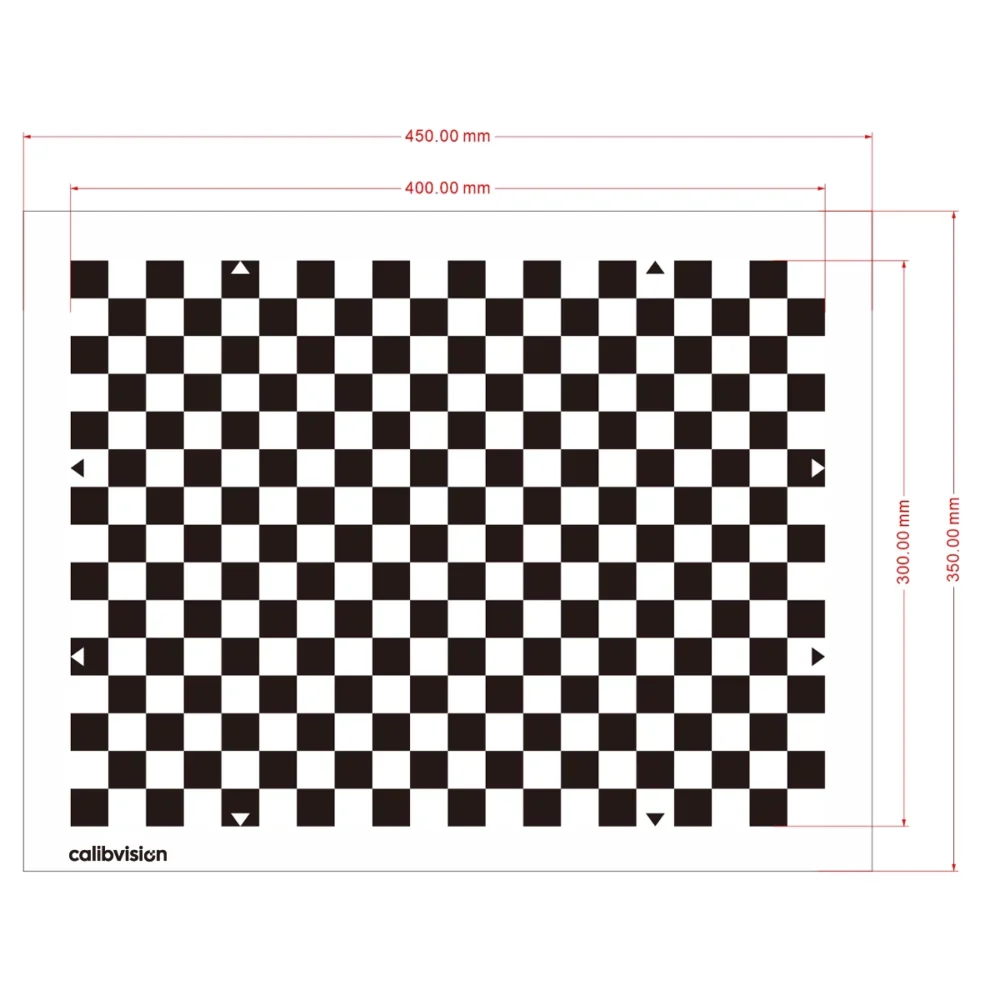
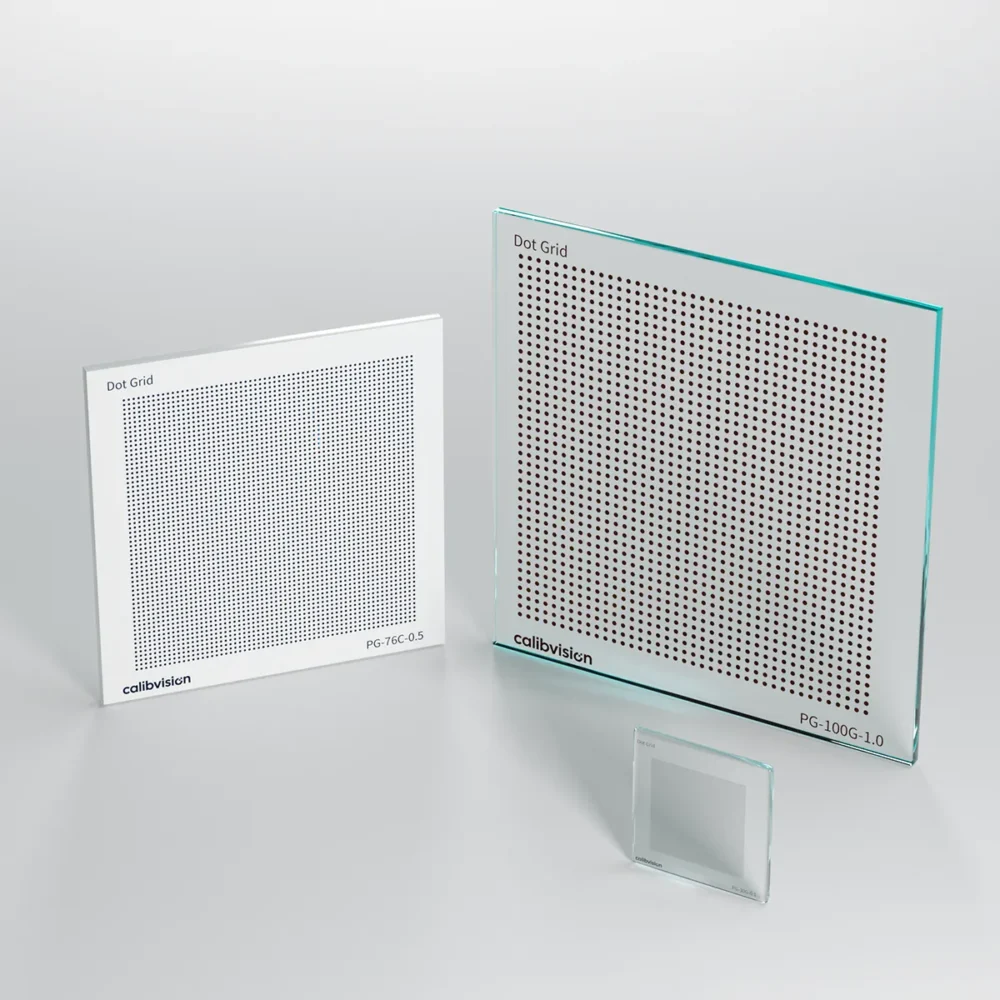
A reflectance target is one type of calibration target. The broader category of “calibration targets” includes geometric targets (checkerboards for camera calibration, AprilGrid for SLAM), color targets (ColorChecker for camera color profiling), and reflectance targets specifically for measuring sensor response to known reflectance values. For LiDAR work, reflectance targets are the primary calibration tool.
Can I make my own LiDAR test target?
Possible but not recommended for any work where results matter. Achieving truly flat, known-value Lambertian reflectance requires specialized materials and characterized manufacturing — DIY targets typically have ±15-20% reflectance variance and angle-dependent behavior that contaminates measurements. The cost of a professional target is small compared to the cost of incorrect performance data.
How accurate are CalibVision LiDAR reflectance targets?
Standard CalibVision reflectance targets are calibrated to ±2% absolute reflectance accuracy at the specified wavelength. Premium PTFE-based targets are calibrated to ±0.5%. For metrology-grade work requiring traceable certification, we offer optional third-party calibration and certification through accredited metrology institutes.
Get LiDAR Reflectance Targets from CalibVision
CalibVision manufactures LiDAR reflectance targets for all four major LiDAR wavelengths (905nm, 1550nm, 940nm, 850nm), in standard reflectance values (10%, 50%, 90%) and custom values (1-99%). Standard sizes range from 300mm × 300mm to 1500mm × 1500mm; custom sizes go up to 3m × 5m.
For laboratory and metrology work, we offer per-batch reflectance characterization reports, traceability certificates (English/Chinese, suitable for ISO audits), and third-party metrology institute submission as optional services. For production testing at scale, we offer volume pricing and consistent batch-to-batch quality.
If you’re testing a single LiDAR, our Multi-Reflectance Set (5 panels at 10%, 30%, 50%, 70%, 90%) is the most efficient starting point. If you’re testing a long-range automotive LiDAR or have non-standard requirements, Custom orders are quoted with 2-4 week lead time.
Shop LiDAR Reflectance Targets → | Request a Custom Quote →
What to Read Next
- 10%, 50%, and 90% Reflectance Targets — Which Do You Need? — practical decision guide for choosing reflectance values.
- 905nm LiDAR Reflectance Target: Selection and Testing Guide — deep-dive into the most common LiDAR wavelength.
- 1550nm LiDAR Reflectance Target: Long-Range Automotive Testing — for automotive long-range LiDAR work.
- How to Test LiDAR Performance with Reflectance Targets — step-by-step lab setup guide.
- Custom LiDAR Reflectance Targets: When Standard Sizes Aren’t Enough — for non-standard sizes, wavelengths, or reflectance values.