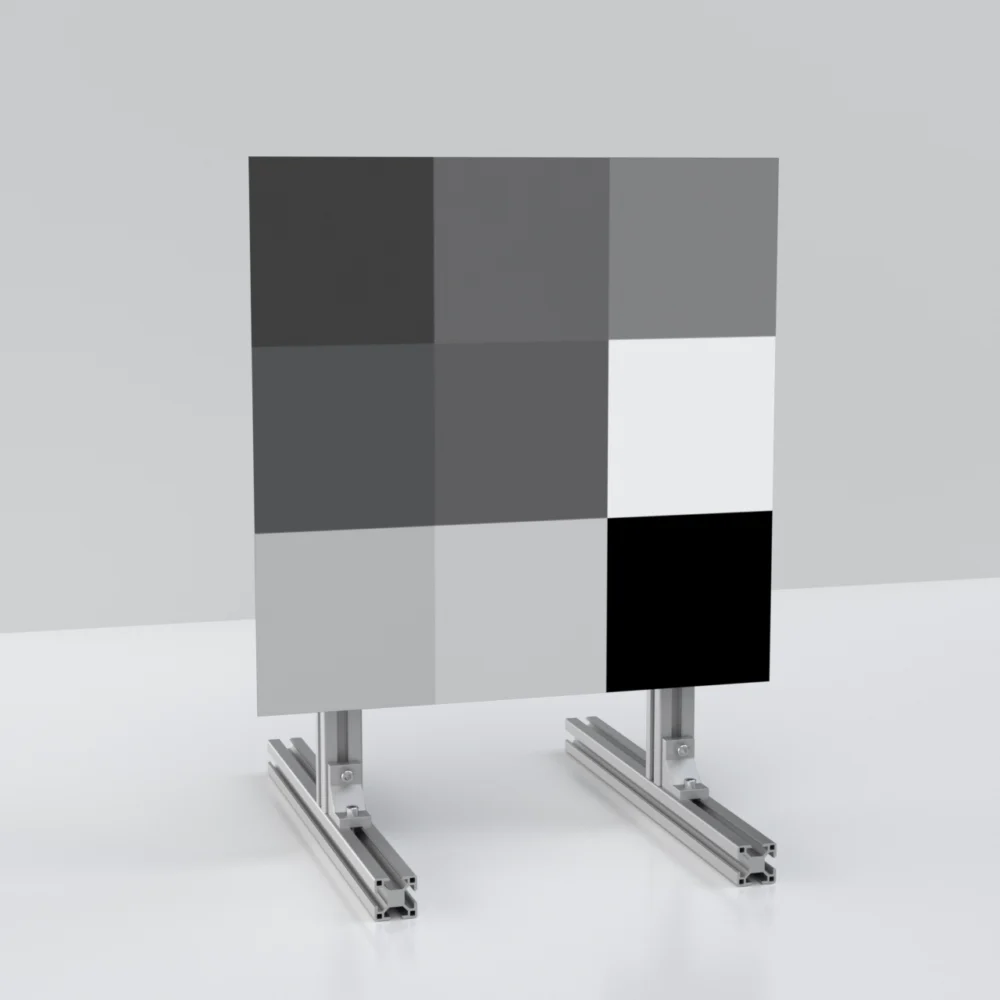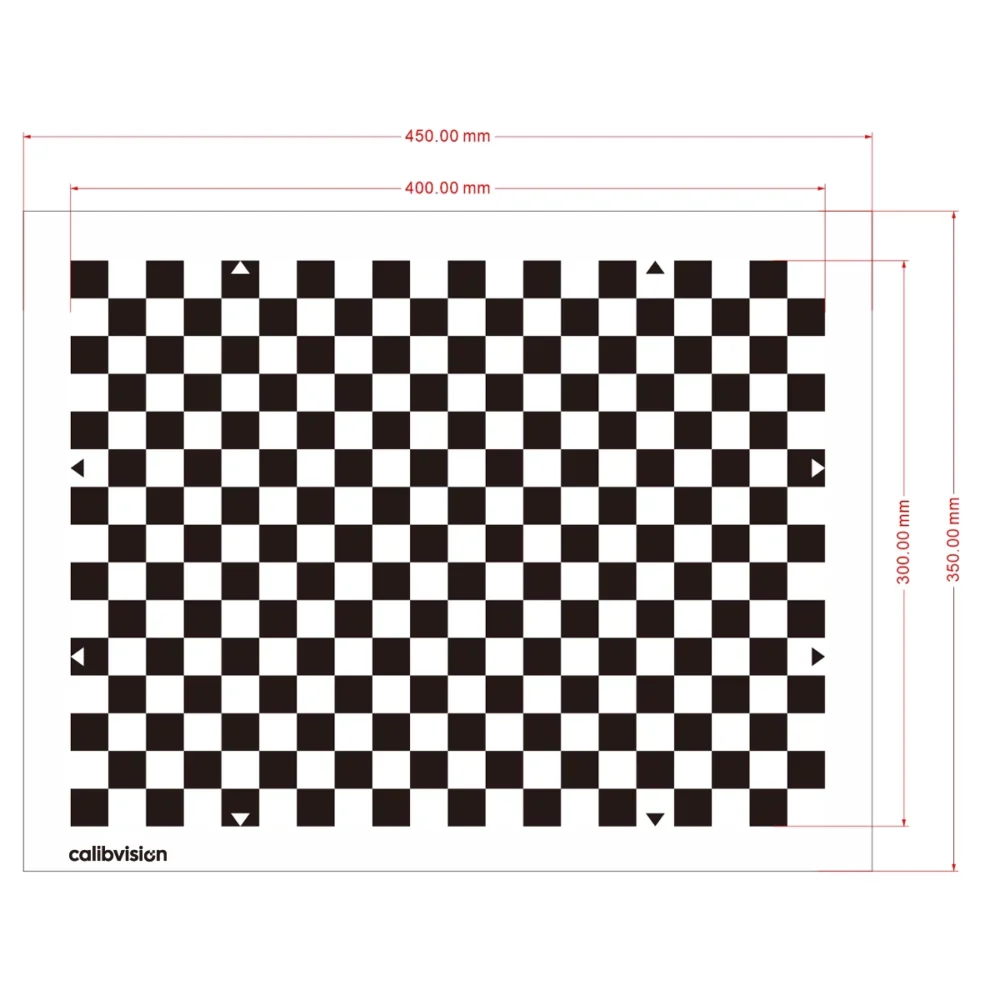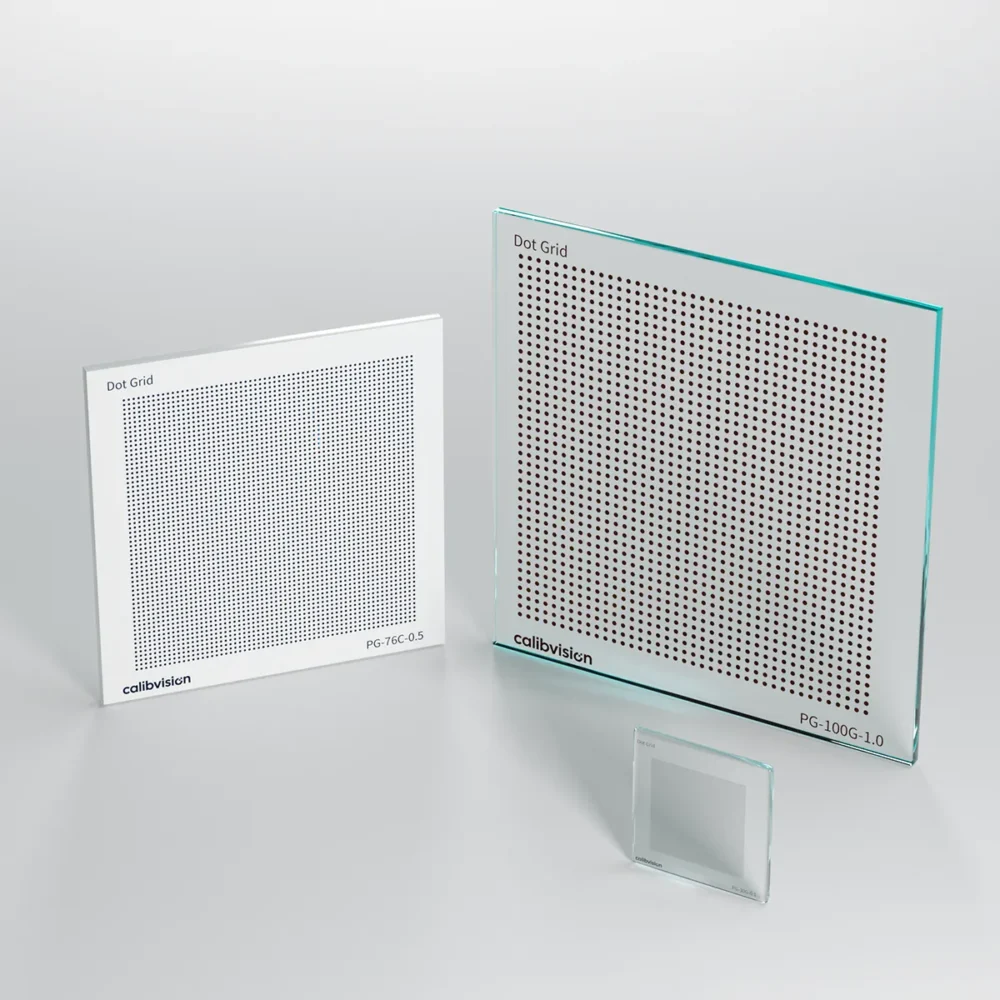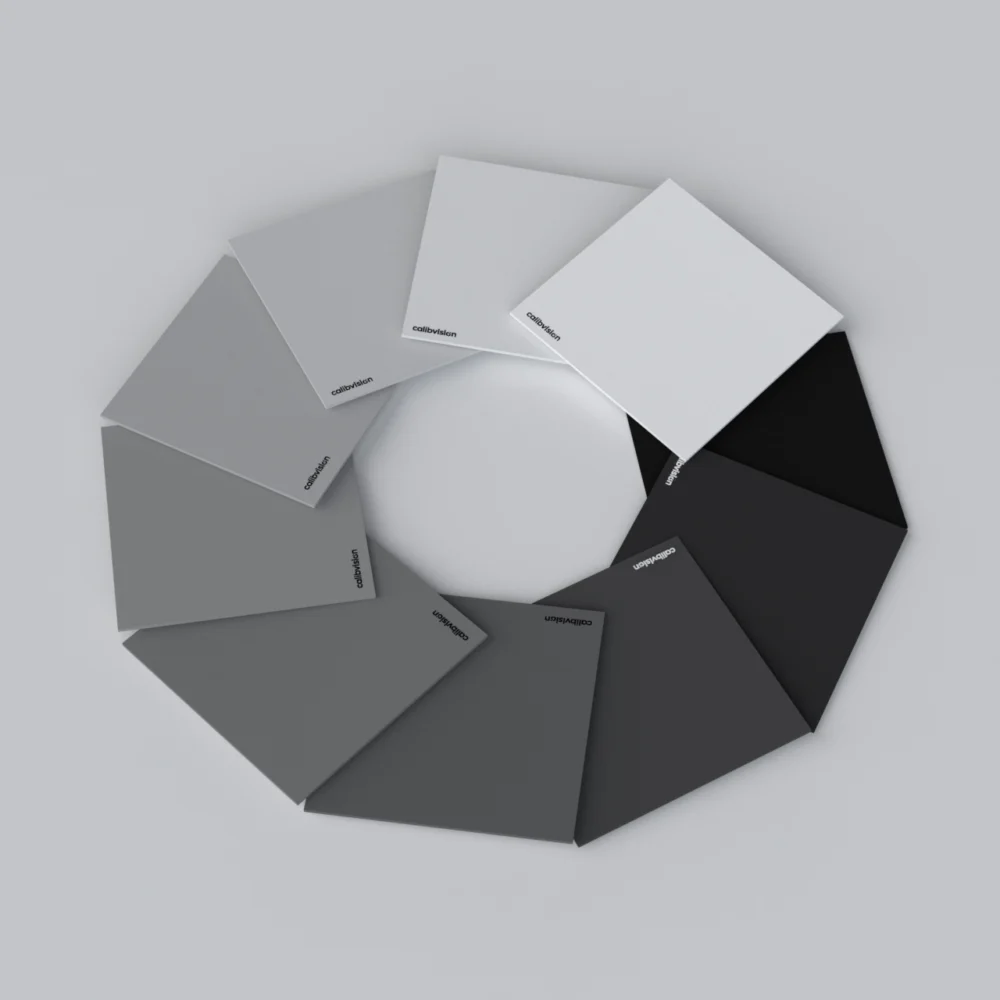
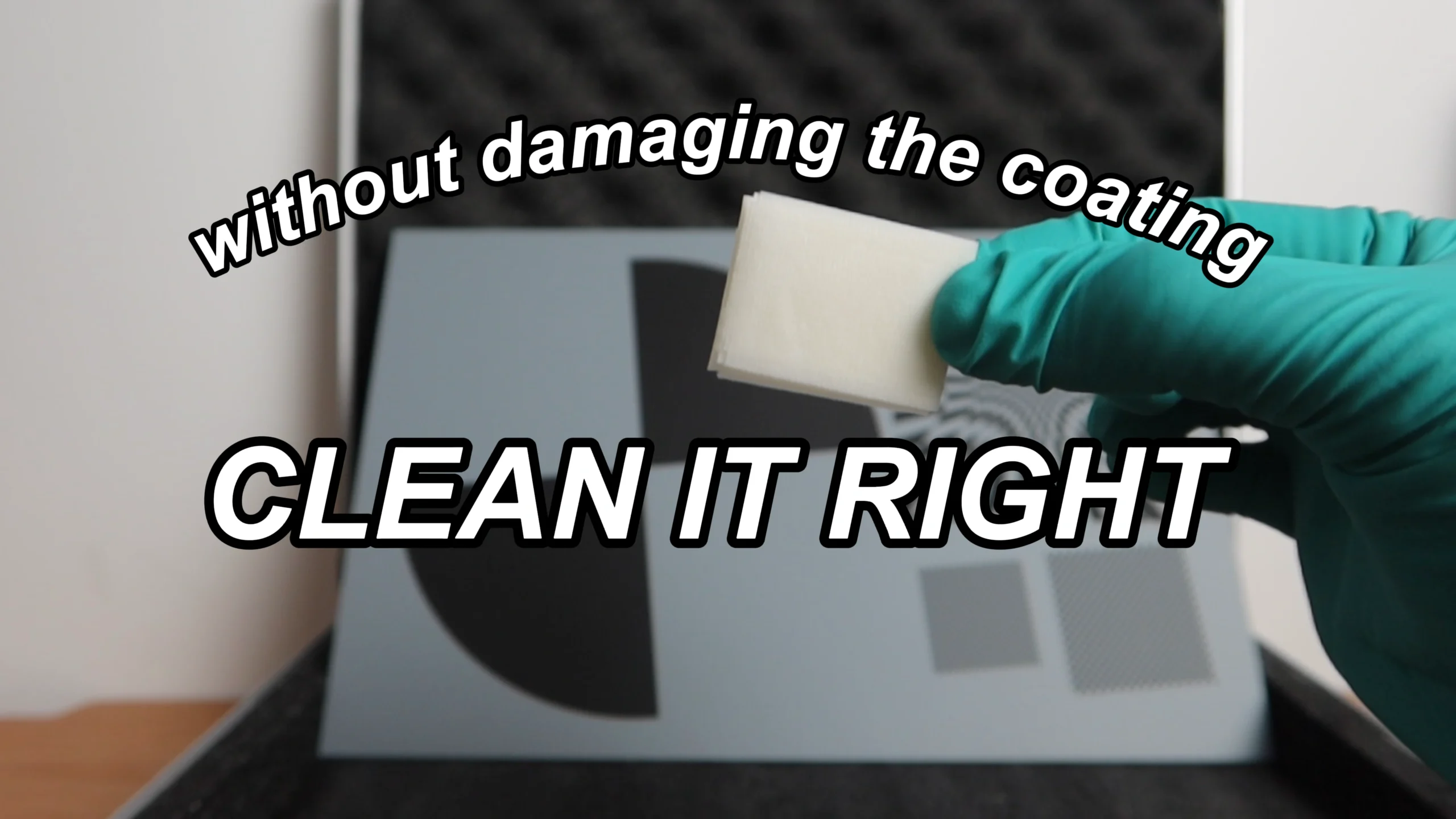
To clean a calibration target, first blow off loose dust with an air blower — never wipe dry. Then gently wipe fingerprints or marks with a lint-free optical wipe lightly dampened with isopropyl alcohol (IPA), moving in one direction only. Never use paper towels, acetone, abrasive cleaners, or scrub the surface. Store the target pattern-side up in its original case.
A calibration target is a precision optical reference — the “ground truth” your entire vision system is measured against. A single scratch, fingerprint, or coating mark on the pattern can introduce error into every measurement the camera makes afterward. The good news: with the right method, cleaning is quick and low-risk. The wrong method — a dry wipe, a paper towel, the wrong solvent — is where targets get permanently damaged.
This guide covers exactly how to clean, handle, and store glass and ceramic calibration targets, so yours stays accurate for years.
Watch: How to Clean a Calibration Target ?
Before You Start: Why Cleaning Method Matters
The pattern on a calibration target is a micron-accurate chrome or optical coating on glass (or ceramic). It’s thin, precise, and unforgiving of abrasion. The two most common ways targets get ruined are both avoidable:
- Wiping dry dust — dragging grit across the surface acts like sandpaper and leaves fine scratches.
- Using the wrong material — paper towels, tissues, and ordinary cloth are abrasive at the micron scale; solvents like acetone can attack coatings.
Treat the target like a high-end camera lens, and you’ll never go wrong.
How to Clean a Calibration Target: Step by Step
Step 1 — Put on clean gloves and handle by the edges. Wear clean, lint-free gloves and hold the target by its edges. Never touch the patterned surface with bare fingers — skin oils leave fingerprints that scatter light and attract dust.
Step 2 — Blow off loose dust first. Use an air blower (a rubber blower bulb) or clean, oil-free compressed air to blow dust off the surface. Do not wipe dry dust — loose particles will scratch the coating if you drag them across it.
Step 3 — Wipe marks with the right wipe and solvent. For fingerprints or stubborn marks, use the lens wipe included in your CalibVision package, or lightly dampen a lint-free optical wipe with isopropyl alcohol (IPA). The wipe should be barely moist, not dripping.
Step 4 — Wipe gently, in one direction. Wipe in a single direction across the surface — not back and forth, and never in circles. Use light pressure and let the solvent do the work. Then let the target air-dry; don’t buff it.
Step 5 — Store it correctly. Return the target pattern-side up to its original case, away from humidity, dust, and direct sunlight. Proper storage prevents most of the cleaning you’d otherwise need to do.
Can You Use Alcohol to Clean a Calibration Target?
Yes — isopropyl alcohol (IPA) is the standard, safe solvent for cleaning chrome-on-glass calibration targets, and it will not remove the coating when used correctly. Apply it to a lint-free optical wipe (never pour it directly on the target), wipe gently in one direction, and let it air-dry.
A quick note on special coatings: targets with specialized optical or gray-scale coatings can have different solvent sensitivities. If your target has a non-standard coating, confirm the recommended solvent with your supplier before cleaning. For CalibVision targets, IPA is confirmed safe on our standard chrome-on-glass finishes.
What NOT to Use
Avoid these entirely — they’re the fastest way to permanently damage a target:
- Paper towels or tissues — abrasive at the micron scale; they scratch coatings
- Ordinary cloth or shirt sleeves — trap grit, leave fibers
- Acetone or aggressive solvents — can attack coatings and adhesives
- Abrasive or household cleaners — leave residue and micro-scratches
- Scrubbing or circular motion — grinds particles into the surface
- Wiping dry dust — always blow it off first
What TO Use
- Air blower or clean, oil-free compressed air (for dust)
- Lint-free optical wipes or the enclosed lens wipe
- Isopropyl alcohol (IPA) as the solvent
- Clean, lint-free gloves for handling
- The original case for storage
Handling & Storage Best Practices
Good handling means less cleaning. A few habits that keep targets accurate:
- Always handle by the edges; keep the pattern side up during use and transport.
- Avoid drops, impacts, and stacking targets face-to-face without protection.
- Store in the original case, away from humidity and direct sunlight — glass and ceramic are dimensionally stable, but coatings and edges still benefit from a controlled environment.
- For critical metrology work, re-verify the target periodically, especially after heavy handling.
Frequently Asked Questions
How do I clean a glass calibration target?
Blow off loose dust with an air blower first — never wipe it dry. Then gently wipe fingerprints or marks with a lint-free optical wipe lightly dampened with isopropyl alcohol, moving in one direction only. Let it air-dry and store it pattern-side up.
Can I use alcohol to clean a calibration target?
Yes. Isopropyl alcohol (IPA) is the standard, safe solvent for chrome-on-glass calibration targets and won’t remove the coating when used correctly. Apply it to a lint-free wipe rather than pouring it on the target, wipe gently in one direction, and let it air-dry.
What should I never use to clean a calibration target?
Never use paper towels, tissues, ordinary cloth, acetone, or abrasive household cleaners, and never scrub or wipe in circles. These scratch the coating or attack it chemically. Also avoid wiping dry dust — always blow it off first to prevent scratches.
How do I remove dust from a calibration target?
Use an air blower or clean, oil-free compressed air to blow the dust away without contact. Do not wipe dry dust off with a cloth — dragging particles across the surface can scratch the coating. Only wipe once the loose dust is gone.
How should I store a calibration target?
Store the target pattern-side up in its original protective case, away from humidity, dust, and direct sunlight. Handle it only by the edges with clean gloves. Good storage prevents contamination and keeps the pattern accurate, reducing how often you need to clean it.
Does cleaning affect a calibration target’s accuracy?
Correct cleaning does not affect accuracy — glass and ceramic substrates are dimensionally stable. Damage from improper cleaning does: scratches, coating wear, or residue degrade pattern contrast and edge quality, which can introduce measurement error. Clean gently and only when needed.
Keep Your Targets Accurate for Years
A calibration target only does its job if the pattern stays clean and undamaged. Blow off dust, wipe gently with IPA and a lint-free wipe in one direction, avoid anything abrasive, and store it properly — that’s the whole method. Handled this way, a quality glass or ceramic target stays a reliable reference for years of use.
Hey, I’m Ben Tsang, founder of CalibVision and a vision systems specialist. With over 15 years in machine vision and optical engineering, I’ve helped clients in 30+ countries — vision engineers, application engineers, QA managers, and lab technicians — solve their toughest inspection challenges. This guide is part of our mission to make vision and imaging testing more accurate and reliable.
Need a replacement or a custom calibration target? [ Explore our calibration targets → ] [ Request a Quote → ]