
How to Measure Camera Dynamic Range with an OECF Chart — A Complete Practical Guide

There’s a mistake we see every month in camera test labs around the world: a team buys an 80:1 reflective OECF chart to characterize a brand-new HDR sensor that claims 14 stops of dynamic range. They run the test, get a measurement of about 6.5 stops, and conclude that “the sensor doesn’t perform as advertised.” […]
How to Test Microscope Objective Quality — A Complete Guide with USAF 1951
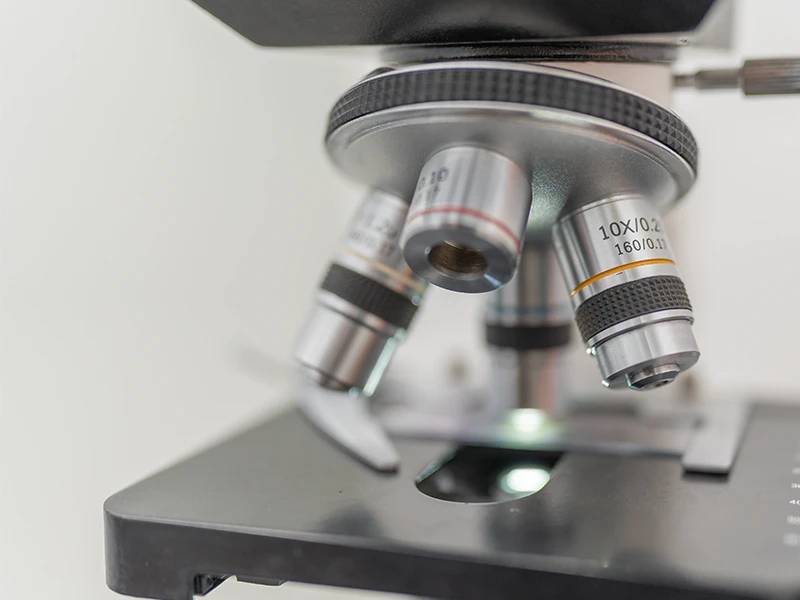
Every microscope user eventually wonders: Is my objective still performing to spec? Maybe images look softer than they used to. Maybe a critical experiment requires absolute sharpness. Maybe you just inherited a shared scope and don’t know its history. Whether you’re a research biologist, a microscopy core facility manager, an industrial QC engineer, or a […]
ISO 15739:2017 vs 2023 — What Changed in 6 Years (Complete Guide for Camera Test Engineers)
If you’ve been measuring camera noise the same way since 2017, you might be using a procedure that’s no longer compliant with the latest international standard. ISO 15739:2023 — the 4th edition of the international standard for digital camera noise measurement — was published on April 21, 2023. It cancels and replaces ISO 15739:2017 with […]
How to Read a USAF 1951 Resolution Test Chart — Complete Guide for Optical Engineers

The USAF 1951 chart is the most widely used optical resolution target in microscopy, machine vision, and lens testing. Yet many engineers — especially those new to optical metrology — struggle with what seems like a simple question: “My camera can resolve down to Group 7 Element 3. What does that actually mean?” This guide […]
Classic ISO 12233 vs eSFR Chart: Which Test Chart Do You Need?

TLDR — The 30-Second Answer Buy the classic ISO 12233 chart if you need backward compatibility with legacy test rigs, visual resolution reading from hyperbolic wedges, or a single chart that covers 1:1 / 4:3 / 3:2 / 16:9 framing in one shot. Buy the eSFR ISO chart if you are running automated image quality […]
905nm LiDAR Reflectance Target: Selection and Testing Guide

905nm is the dominant wavelength for short-to-medium-range LiDAR systems in 2026 — used by Hesai, Velodyne, RoboSense, Innoviz, Roborock, and most current-generation automotive forward-sensing LiDAR. This guide covers why 905nm dominates, who uses it, recommended target sizes and reflectance values for 905nm testing, and the common pitfalls that invalidate test results at this wavelength.
Autonomous Vehicle LiDAR Testing — Complete Reflectance Target Guide (2026)
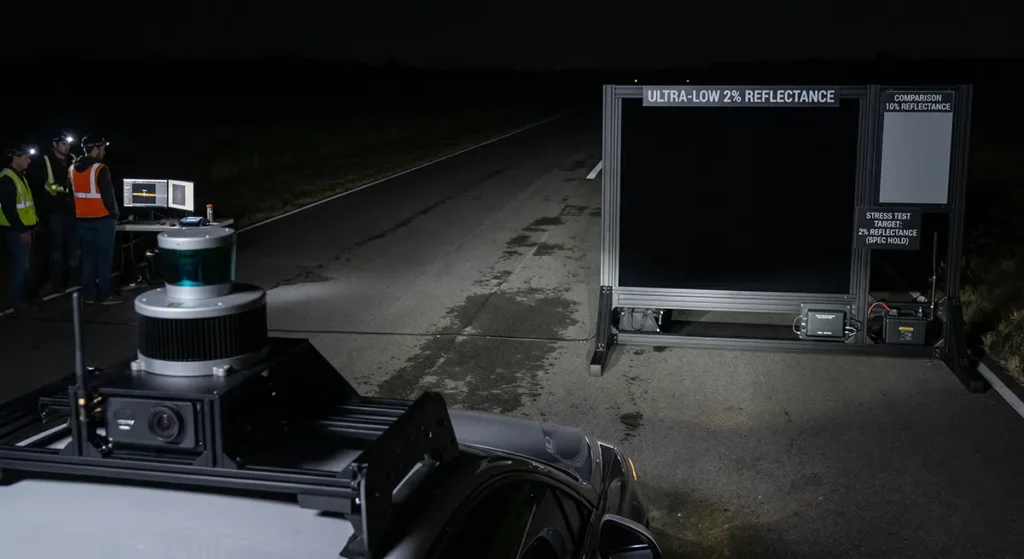
Autonomous vehicle LiDAR testing follows a structured progression from research validation through OEM acceptance to production qualification, with reflectance target requirements that escalate at each stage. This guide covers SAE Level requirements, ISO 21448 SOTIF and ISO 26262 functional safety frameworks, multi-reflectance test protocols, and what separates a defensible AV LiDAR test program from one that fails OEM scrutiny.
LiDAR Detection Range vs Reflectance — Complete Physics Guide (2026)
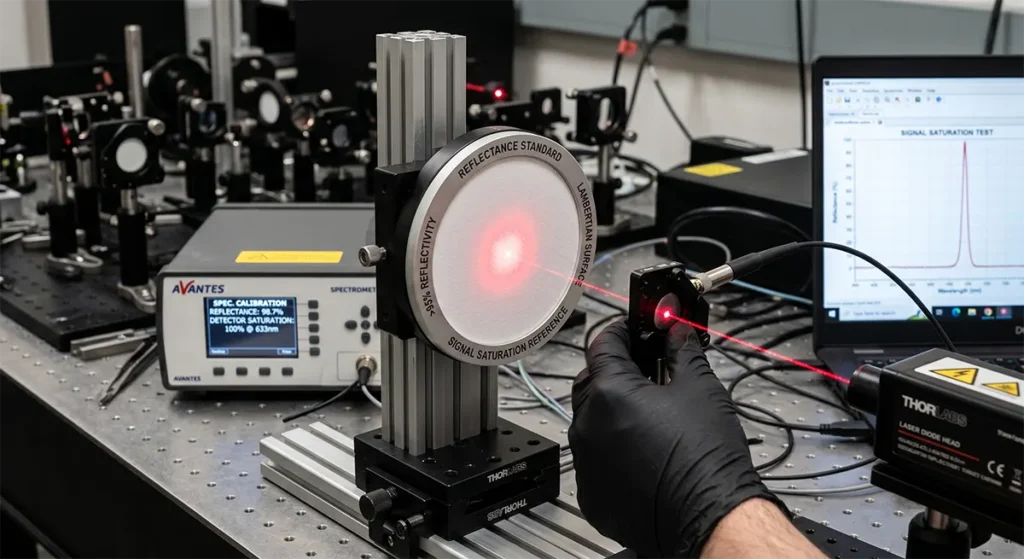
LiDAR detection range scales with the square root of target reflectance — a 90% target detects at roughly 3× the range of a 10% target. This guide explains the LiDAR range equation, why datasheet “maximum range” claims need careful interpretation, and how to use reflectance test data to predict real-world detection performance against any scene.