
1550nm LiDAR Reflectance Target — Long-Range Automotive Testing Guide (2026)
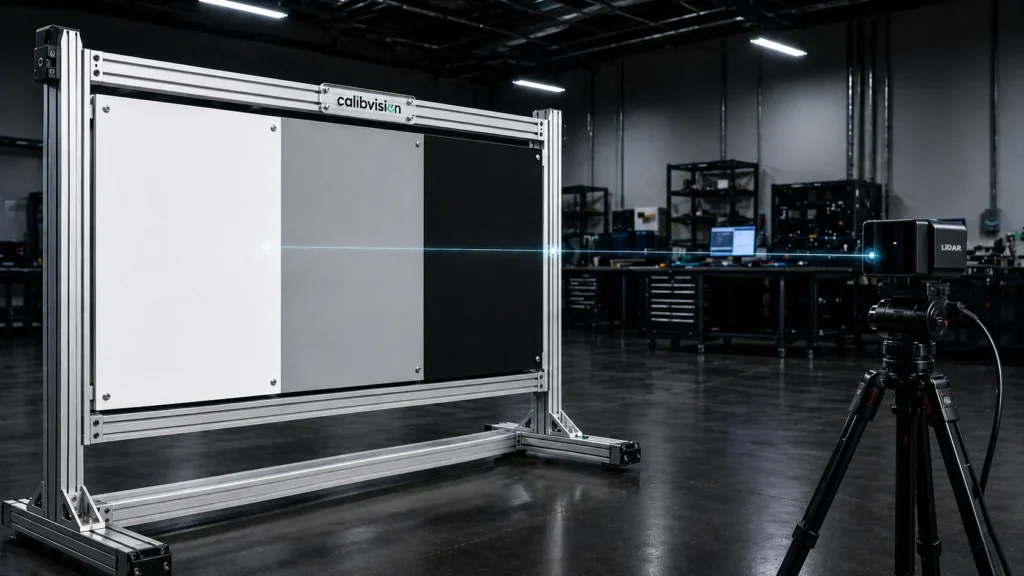
1550nm is the wavelength of choice for long-range automotive LiDAR — used by Luminar, Aeva, Aurora, Innoviz Pro, and Hesai AT-class systems for detection beyond 250m. This guide covers why 1550nm dominates long-range LiDAR, who’s using it, recommended target sizing for 200-400m testing, and the SWIR-specific calibration considerations that make 1550nm test setups different from 905nm.
Custom LiDAR Reflectance Targets — When Standard Sizes Aren’t Enough (2026)
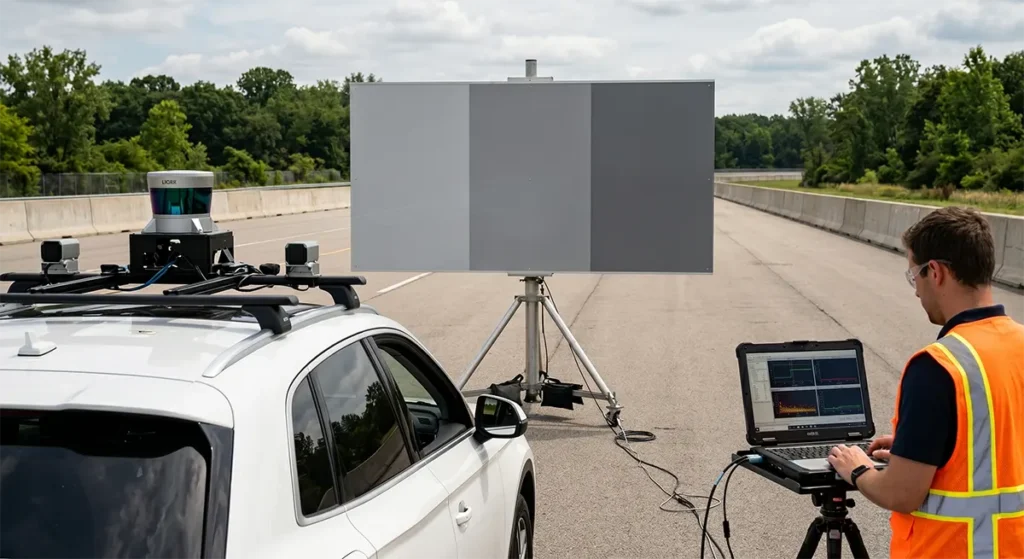
Custom LiDAR reflectance targets cover applications where standard sizes, reflectance values, or wavelengths don’t fit your test program. This guide explains when custom is the right call, what’s manufacturable (sizes up to 3m × 5m, reflectance from 1% to 99%, custom mounting and weatherproof options), and how to spec a custom order to get usable results on the first delivery.
Lambertian vs Specular vs Retroreflective Targets — Which Do You Need? (2026)

Three fundamentally different reflection modes — Lambertian (diffuse), specular (mirror), and retroreflective (back-toward-source) — define optical and LiDAR test targets. Lambertian is the standard for reproducible measurement. This guide explains the physics behind each, when to use them, and how to verify your target actually behaves the way it should.
How to Test LiDAR Performance with Reflectance Targets (2026 Lab Setup Guide)
A complete LiDAR performance test characterizes detection range, range accuracy, and intensity calibration using calibrated reflectance targets in a controlled lab environment. This step-by-step guide walks through equipment requirements, environmental controls, the three core test protocols, common mistakes that invalidate results, and the documentation needed for OEM-defensible test reports.
10%, 50%, 90% Reflectance Targets — Which Do You Need? (2026)
The industry-standard reflectance values for LiDAR testing are 10%, 50%, and 90% — each one tests a different sensor behavior. The 10% target stress-tests detection range; the 50% target characterizes typical performance; the 90% target verifies saturation behavior. This guide explains when to use each, and when custom values matter.
How Long Does a ColorChecker Last? When to Replace Yours (2026)
A ColorChecker 24 lasts about 2 to 5 years in professional use before pigment fading and surface wear push the patches outside their published reference tolerance. Light studio use can extend that to 5 to 7 years. Heavy travel, on-location, or daily handling can shorten it to 18 months. There’s no fixed expiration date — […]
What Are the 24 Colors on a ColorChecker? Full Reference Values (2026)
The 24 colors on a ColorChecker are arranged in a 4 × 6 grid, divided into 18 chromatic patches and 6 grayscale patches. The chromatic patches simulate naturally-occurring colors found in real scenes — skin tones, foliage, sky, common reds and yellows. The grayscale patches step from white (95% reflectance) down to black (about 3%) […]
How to Use a ColorChecker 24 in DaVinci Resolve: Step-by-Step (2026)
To use a ColorChecker 24 in DaVinci Resolve, shoot a reference frame of the chart in your scene lighting, import the footage, navigate to the Color page, drag the chart frame onto a node, right-click and select Color Match, draw the chart bounds with the four corner handles, set your source and target gamuts, and […]