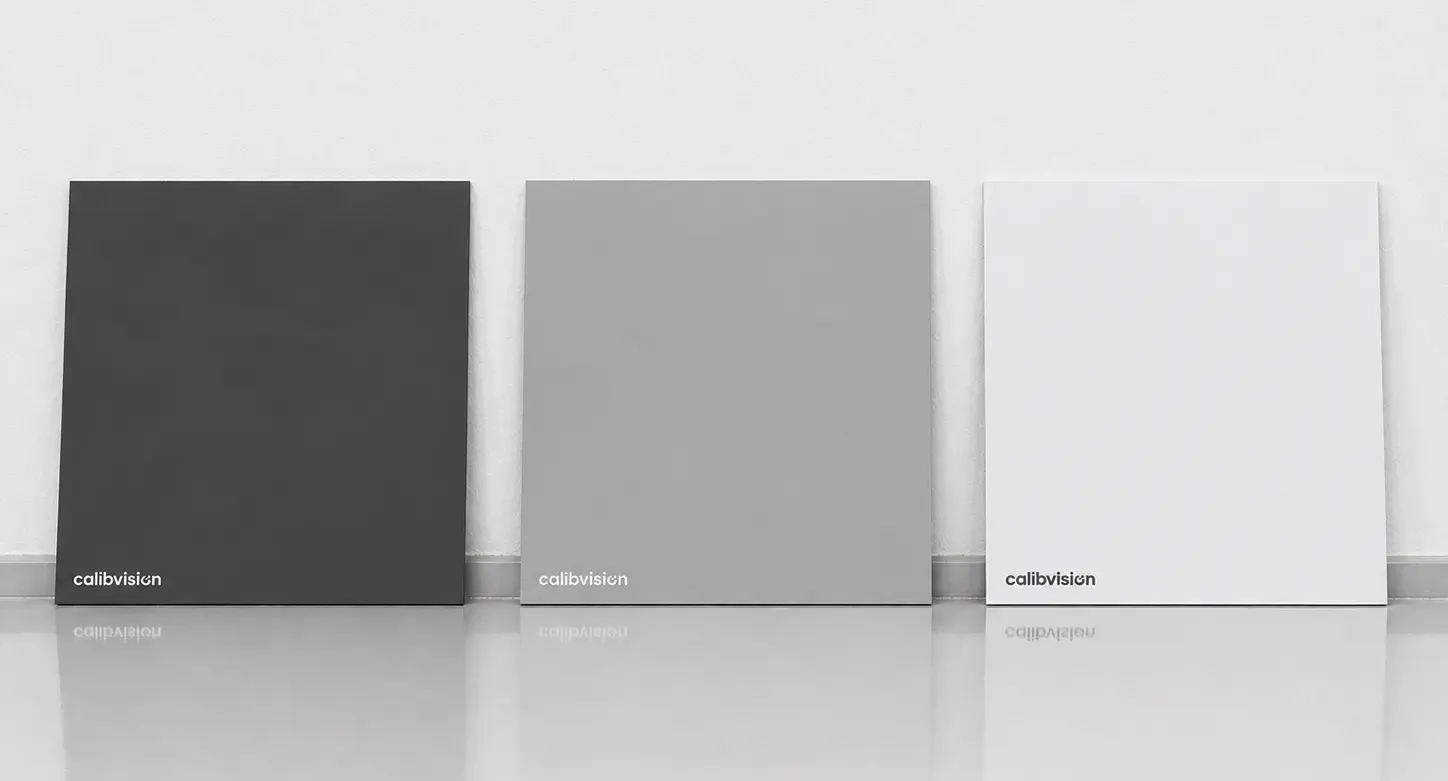
There are three fundamentally different ways a surface can reflect light, and almost every optical or LiDAR test target falls into one of them. Lambertian surfaces scatter light evenly in all directions and look the same brightness from any viewing angle. Specular surfaces reflect light at a mirror-equal angle, like polished glass or metal. Retroreflective surfaces return light back toward its source, regardless of incoming angle — the way road signs and safety vests appear bright in your headlights.
For LiDAR performance testing, optical metrology, spectrometer calibration, and most camera characterization work, Lambertian targets are the standard. They give you measurements that don’t depend on perfect alignment, which is what makes test data reproducible. But each of the three reflection modes has applications where it’s the right choice — and knowing which is which is the first technical decision in any optical test program.
This guide walks through what each reflection mode is, how it’s mathematically defined, when to use each, and how to verify that the target you bought actually behaves the way it’s supposed to.
What Is a Lambertian Surface?
A Lambertian surface is a theoretical idealization: a perfectly diffuse reflector where the luminance (apparent brightness) is the same regardless of viewing angle. Lambert’s cosine law, formulated by Johann Heinrich Lambert in 1760, states that the reflected radiant intensity from a Lambertian surface is proportional to the cosine of the angle between the viewing direction and the surface normal.
In plain language: a Lambertian surface scatters incoming light hemispherically and uniformly. Whether you view it from straight on, from 30°, or from 60° off the surface normal, you measure the same apparent brightness. The surface looks the same from any angle.
No real-world surface is perfectly Lambertian, but several engineered materials get close:
- Sintered PTFE (Spectralon and equivalents) — within ±2-3% of ideal Lambertian behavior across viewing angles up to 80° off-axis, with reflectance up to 99% across 250-2500nm
- Coated PTFE diffuse reflectors — within ±5% of ideal Lambertian across angles up to 60°, lower cost than sintered PTFE
- Pressed barium sulfate (BaSO₄) — historical Lambertian standard, mostly replaced by PTFE-based materials today
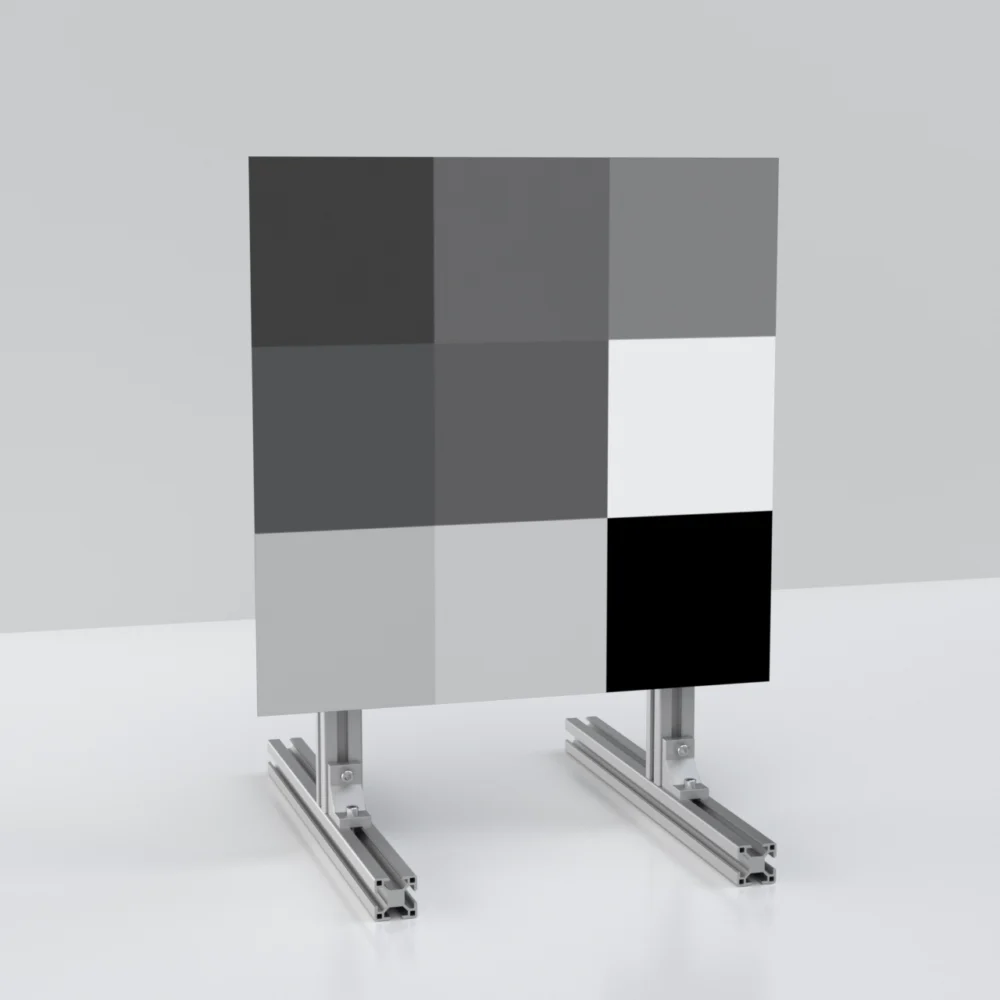
- Engineered Lambertian coatings on aluminum or honeycomb composite substrate — calibrated reflectance at specific wavelengths, used in LiDAR test boards
What makes a Lambertian surface valuable is angle-independence. When you measure reflectance with a spectrophotometer or characterize detection performance with a LiDAR, you don’t need to align the target to within fractions of a degree. The measurement comes out the same across a range of geometries — which is why all reproducible optical test work uses Lambertian references.
What Is a Specular Surface, and When Is It Used?
A specular surface reflects light at a single angle equal and opposite to the incoming angle, like a mirror. The angle of incidence equals the angle of reflection, with no scattering into other directions.
Specular surfaces appear in two contexts in optical and LiDAR work:
Most polished metal and glass surfaces in real-world scenes are specular — car bodies, windows, water surfaces, glossy paint. When LiDAR encounters these surfaces in actual operation, the laser beam either bounces straight back (if hitting at near-normal incidence) or off into space (if hitting at an oblique angle). Either outcome can produce detection failures or false signals, which is why specular reflection is one of the dominant failure modes in real-world LiDAR perception.
Specular targets are sometimes used for specialty calibration work — characterizing how a sensor responds to mirror-like returns, testing glare suppression algorithms, simulating wet road conditions, or aligning beam paths in optical bench setups. But specular targets are never used for general performance characterization because the measurement depends entirely on alignment angle. Even 1° of misalignment can change measured intensity by 50%+ or eliminate the return entirely.
Specular reflection is governed by Fresnel equations, which describe how reflectance varies with incidence angle, polarization, and the optical properties of the material. Most specular materials have reflectance under 10% at near-normal incidence (think glass) but can reach 90%+ at grazing incidence (which is why a wet road looks bright when you’re driving toward the setting sun).
For LiDAR test targets, specular surfaces are something to avoid in the test path, not something to use as the target itself. Background walls, bench surfaces, and equipment behind the target should be matte (non-specular) to prevent secondary reflections from contaminating the measurement.
What Is a Retroreflective Surface, and When Is It Used?
A retroreflective surface returns light directly back toward its source, regardless of the incoming angle. Three optical principles can produce this behavior:
Corner-cube retroreflectors use three mutually perpendicular mirror surfaces meeting at a point. Any ray entering the cube reflects off all three faces and exits parallel to its incoming direction, displaced but traveling back toward the source. Used in road studs (“cat’s eyes”), surveying retroreflectors, and the Lunar Laser Ranging experiments that measure Earth-Moon distance.
Spherical bead retroreflectors use millions of tiny glass or polymer spheres embedded in a surface coating. Each bead acts as a small lens that focuses incoming light onto its back surface, where it reflects and returns through the bead toward the source. Used in road paint, traffic signs, and high-visibility safety vests.
Cube-corner prismatic sheeting combines the corner-cube principle with mass-production plastic sheeting. The most common modern retroreflective material — used in license plates, lane markers, and modern traffic signs.
Retroreflective surfaces return enormously more light to the source than Lambertian surfaces of the same nominal reflectance. A 90% retroreflective traffic sign appears 10-100x brighter to the LiDAR than a 90% Lambertian target at the same distance, which is why traffic signs are highly visible to driver-assistance systems even at long range.
For LiDAR testing, retroreflective targets are used in three specific contexts:
- Testing automotive system response to road signs and license plates — verifying that perception systems handle the over-bright returns from retroreflective scene elements without saturating or producing false positives
- Long-range alignment and survey work — corner-cube retroreflectors as known reference points, where you need a strong return at extreme distance
- Calibration of LiDAR intensity algorithms specifically for retroreflective scene handling — characterizing where the sensor’s intensity output saturates
Retroreflective targets are never used for general LiDAR performance characterization because their angular response is so non-Lambertian that any alignment variation produces wildly different measurements. They’re characterized separately, for the specific use cases above.
Why Do Professional LiDAR Test Targets Use Lambertian Surfaces?
Three reasons make Lambertian the right choice for general LiDAR and optical test targets:
Measurement reproducibility. A Lambertian target produces the same measured reflectance whether the LiDAR is aimed dead-center on the target normal or 30° off-axis. This means small alignment errors don’t contaminate test data. Without Lambertian behavior, every test result is alignment-dependent, which makes it impossible to compare measurements across different operators, different test sessions, or different facilities.
Mathematical simplicity for radiometric calculations. Lambertian’s cosine law is simple to invert. If you know the target reflectance ρ and the illumination geometry, you can analytically predict the radiant power returning to the sensor. This makes Lambertian targets useful for radiometric calibration of cameras, spectrometers, and LiDAR intensity output. With non-Lambertian targets, the same calculation requires a full BRDF (Bidirectional Reflectance Distribution Function) characterization, which is much more involved.
Realistic simulation of typical natural scenes. Most real-world matte surfaces — concrete, vegetation, painted walls, fabric, dry pavement — behave roughly Lambertian. A test result against a Lambertian target predicts real-world performance better than a result against a specular or retroreflective surface, because it matches what the LiDAR will encounter in actual deployment.
These properties are why automotive OEM acceptance testing, LiDAR sensor manufacturers’ production-line QA, academic LiDAR research, and metrology institute calibration work all use Lambertian targets as the primary reference.
How Is Lambertian Behavior Mathematically Defined?
For readers who need the technical definition (you can skip this section if you just want practical guidance):
The radiant intensity reflected from a Lambertian surface in a given direction is:
I(θ) = I₀ × cos(θ)
where I₀ is the intensity along the surface normal and θ is the angle between the viewing direction and the normal. This is Lambert’s cosine law.
Crucially, the luminance (intensity per unit projected area) of a Lambertian surface is constant across all viewing angles:
L = I(θ) / (A × cos(θ)) = I₀ / A = constant
Because A × cos(θ) is the projected area visible from angle θ, and I(θ) decreases by exactly the same cosine factor, the apparent brightness stays constant. This is what makes a Lambertian surface look uniformly bright from any angle — the geometric effects cancel out.
The full Bidirectional Reflectance Distribution Function (BRDF) of an ideal Lambertian surface is:
f_r(ω_i, ω_r) = ρ / π
where ρ is the surface reflectance and π normalizes the integral over the hemisphere. The BRDF is independent of both incident direction ω_i and reflected direction ω_r — meaning the surface scatters light in all hemispherical directions equally, regardless of where the light came from.
In practice, real Lambertian targets approximate this behavior within tolerance. CalibVision targets are characterized for Lambertian behavior across viewing angles up to 60° off the surface normal, with deviation from ideal Lambertian within ±5% across that range — typical for engineered Lambertian coatings.
How Do You Verify a Target Is Truly Lambertian?
Three methods, in increasing order of rigor:
Visual inspection under controlled lighting. Illuminate the target with a single directional light source. Walk around it and observe whether the brightness changes with viewing angle. A truly Lambertian target looks the same from any angle. A non-Lambertian target shows visible bright spots, hot spots, or specular highlights that move as you move. This catches obvious failures but doesn’t quantify Lambertian behavior precisely.
Goniospectrophotometer measurement. A goniospectrophotometer measures reflectance as a function of incidence and viewing angle simultaneously. Measure the target at multiple geometries (e.g., 0°/15°, 0°/45°, 0°/60° incident/viewing pairs) and compare the reflectance values. A Lambertian target shows reflectance constant within ±2-5% across all measured geometries. Deviation outside this range indicates the surface is non-Lambertian and should not be used as a quantitative reference.
Full BRDF characterization. For metrology-grade applications (CMA-accredited or NIST-traceable references), the target’s BRDF is measured across a dense sampling of geometric configurations — often 50-200 incidence/viewing angle pairs. The measured BRDF is compared against ideal Lambertian (ρ/π) and the deviation is documented in the calibration certificate. This is the standard for spectrometer calibration references and metrology institute deliverables.
CalibVision targets ship with reflectance data measured at standard geometry (typically 0°/45° or D65 hemisphere). For applications requiring full BRDF characterization, we provide goniospectrophotometer measurement on request as an optional service through partner metrology labs.
Which Reflection Mode Should You Choose for Your Application?
A practical decision guide:
LiDAR performance characterization (detection range, range accuracy, intensity calibration) → Lambertian. This is where 95% of LiDAR test work falls. The angular independence and mathematical simplicity make Lambertian the only practical choice for reproducible test data.
Spectrometer calibration, laser power measurement, or radiometric reference work → Lambertian, specifically high-reflectance sintered PTFE (Spectralon-class). The combination of near-perfect Lambertian behavior and 99% reflectance approximates an ideal diffuse reflector, which is the reference these instruments need.
Camera color profiling, color science, optical metrology → Lambertian. Same reasoning as LiDAR — measurement reproducibility depends on angular independence.
Testing automotive system response to road signs or license plates → Retroreflective targets (in addition to your standard Lambertian set). Retroreflective targets simulate the high-intensity returns from retroreflective scene elements, which can saturate sensors or trigger false positives.
Surveying, alignment, or long-range optical reference work → Retroreflective corner-cube prisms. The strong return signal from retroreflectors is exactly what these applications need.
Characterizing how your sensor handles glare or wet road conditions → Specular targets. These are specialty test items, used to simulate the mirror-like returns from polished surfaces.
Testing perception against typical real-world scenes → Lambertian. Real-world matte surfaces (asphalt, concrete, vegetation, painted walls) are roughly Lambertian, so Lambertian test targets predict real-world performance better than specular or retroreflective targets.
General optical testing (any application not listed above) → Default to Lambertian. The properties that make Lambertian valuable (angular independence, mathematical simplicity, real-world relevance) apply broadly. Choose specular or retroreflective only when your application specifically requires those reflection modes.
What Mistakes Do People Make When Choosing a Reflectance Target?
Five common mistakes that lead to wasted budget or invalid test data:
Buying a non-Lambertian target without realizing it. Generic “matte” surfaces — flat paint, fabric, paper — are roughly Lambertian but not characterized or guaranteed. Their angular response varies enough to corrupt precision measurements. Always verify Lambertian behavior is specified and measured before treating a target as a quantitative reference.
Using a retroreflective target as a general-purpose reflectance reference. Some “reflectance test cards” sold for hobby photography use retroreflective coating to look bright. These are unsuitable for LiDAR or optical metrology — their angular response is so non-Lambertian that test results vary wildly with alignment.
Assuming high-reflectance means high-precision. A 90% retroreflective surface is much brighter than a 90% Lambertian surface, but it’s not more accurate as a reference. The right reflectance value for your application depends on what you’re testing — not how bright the target looks.
Ignoring wavelength dependence. Lambertian behavior at visible wavelengths doesn’t guarantee Lambertian behavior at 905nm or 1550nm. Some materials shift toward more specular behavior in the near-infrared. For LiDAR work, verify Lambertian characterization at your sensor’s wavelength.
Confusing apparent brightness with reflectance value. A surface that looks “white” to the eye might reflect 75% at visible wavelengths but only 60% at 905nm. Reflectance is wavelength-specific — the visual appearance is just whatever falls out of the engineering, not a direct indication of reflectance value.
FAQs
What is the difference between Lambertian and matte?
“Matte” means non-glossy in everyday language but isn’t a precise optical term. A matte paint surface is roughly Lambertian — scatters light fairly uniformly — but the angular response isn’t characterized or guaranteed within tolerance. “Lambertian” specifically means the surface obeys Lambert’s cosine law within a measured tolerance, typically ±2-5% of ideal across viewing angles. All Lambertian surfaces are matte, but not all matte surfaces are Lambertian to the precision needed for quantitative measurement.
Is Spectralon the same as Lambertian?
Spectralon is a specific brand name for sintered PTFE diffuse reflectance material made by Labsphere. It’s the closest commercially available approximation of an ideal Lambertian surface — within ±1-2% of perfect Lambertian across most viewing angles. “Lambertian” is the broader category; Spectralon is one specific high-quality member of that category. Other manufacturers produce Lambertian-grade sintered PTFE under different brand names with similar performance.
What’s the BRDF of a Lambertian surface?
The Bidirectional Reflectance Distribution Function of an ideal Lambertian surface is constant: f_r = ρ/π, where ρ is the surface reflectance. This means the surface scatters incoming light equally in all directions over the hemisphere above it, regardless of the incoming direction. The BRDF being constant is what makes Lambertian behavior mathematically tractable for radiometric calculations.
Can a surface be partially Lambertian?
Real surfaces always show some deviation from ideal Lambertian behavior. The question is how much deviation, and whether it’s acceptable for your application. Engineered Lambertian coatings used in LiDAR test targets typically deviate by ±5% across viewing angles up to 60° off-axis. Premium sintered PTFE deviates by ±1-2% across angles up to 80°. Specialty research-grade Lambertian standards can achieve ±0.5% across the full hemisphere, at much higher cost.
Why are road signs retroreflective and not Lambertian?
Road signs are designed to be visible at night when illuminated by car headlights from a low angle. A Lambertian sign would scatter most of the headlight illumination upward and to the sides, with only a small fraction returning to the driver’s eyes. A retroreflective sign returns most of the headlight illumination directly back along the headlight beam path — meaning back toward the driver — making it 100x brighter than a Lambertian sign would be. The choice is purely functional: for visibility under directional illumination, retroreflective is dramatically better than Lambertian.
Does a perfectly Lambertian surface exist in reality?
No — perfect Lambertian behavior is a mathematical idealization. Real surfaces always show some angular variation, surface texture artifacts, polarization sensitivity, or wavelength dependence that deviates from ideal. The closest practical approximations are sintered PTFE materials (Spectralon and equivalents), which achieve ±1-2% deviation from ideal across most usable conditions. For nearly all practical purposes, sintered PTFE is “Lambertian enough.”
How do I know if I need a Lambertian target or a retroreflective target?
Ask what you’re testing. If you need reproducible measurements that don’t depend on perfect alignment — virtually all LiDAR characterization, camera profiling, optical metrology — you need Lambertian. If you’re specifically testing how your sensor handles retroreflective scene elements (road signs, license plates, safety vests) — you need retroreflective targets in addition to your standard Lambertian set. Default to Lambertian unless you have a specific reason for retroreflective.
Are CalibVision LiDAR reflectance targets Lambertian?
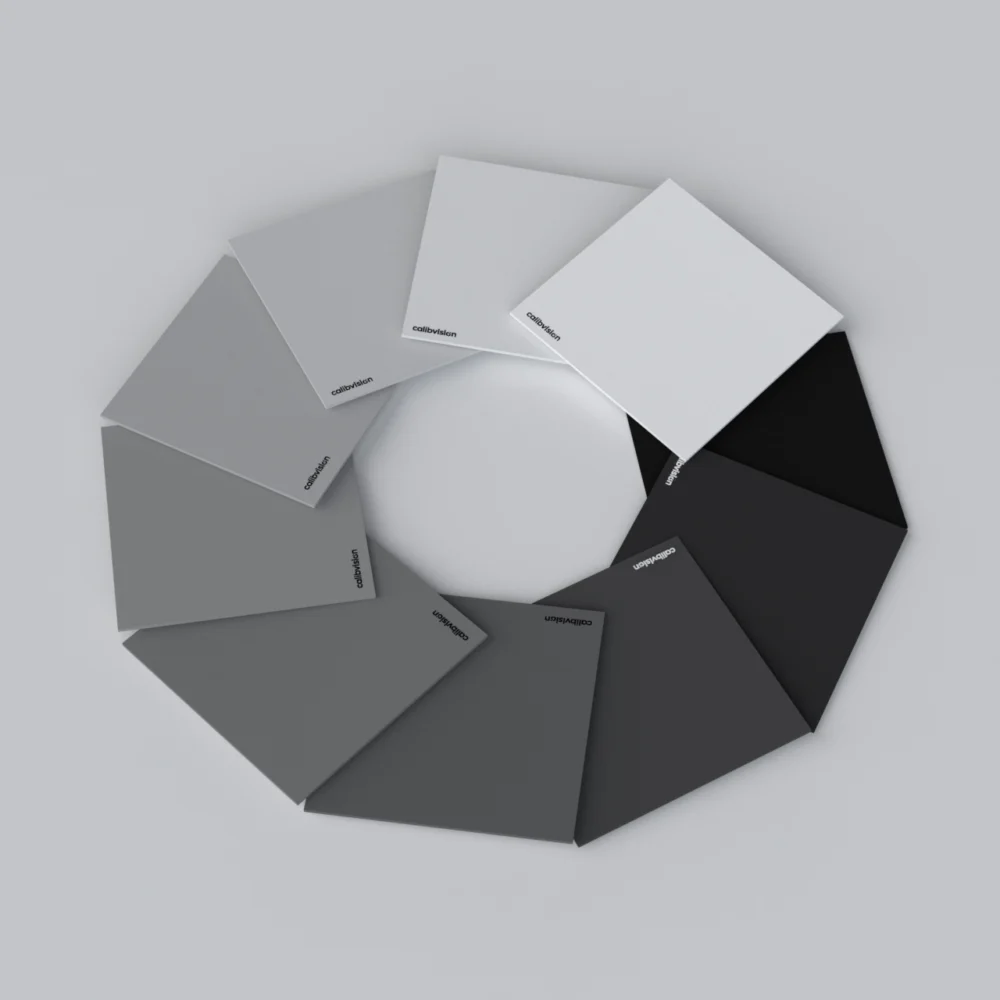
Yes. CalibVision’s diffuse reflectance targets are engineered for Lambertian behavior across viewing angles up to 60° off the surface normal, with measured deviation from ideal Lambertian within ±5% across that range. Each target ships with reflectance characterization documenting both the absolute reflectance value and angular response. For applications requiring tighter Lambertian tolerance (e.g., metrology-grade work needing ±1% characterization), we offer sintered PTFE reference standards as a separate premium product line.
Get Lambertian Reflectance Targets from CalibVision
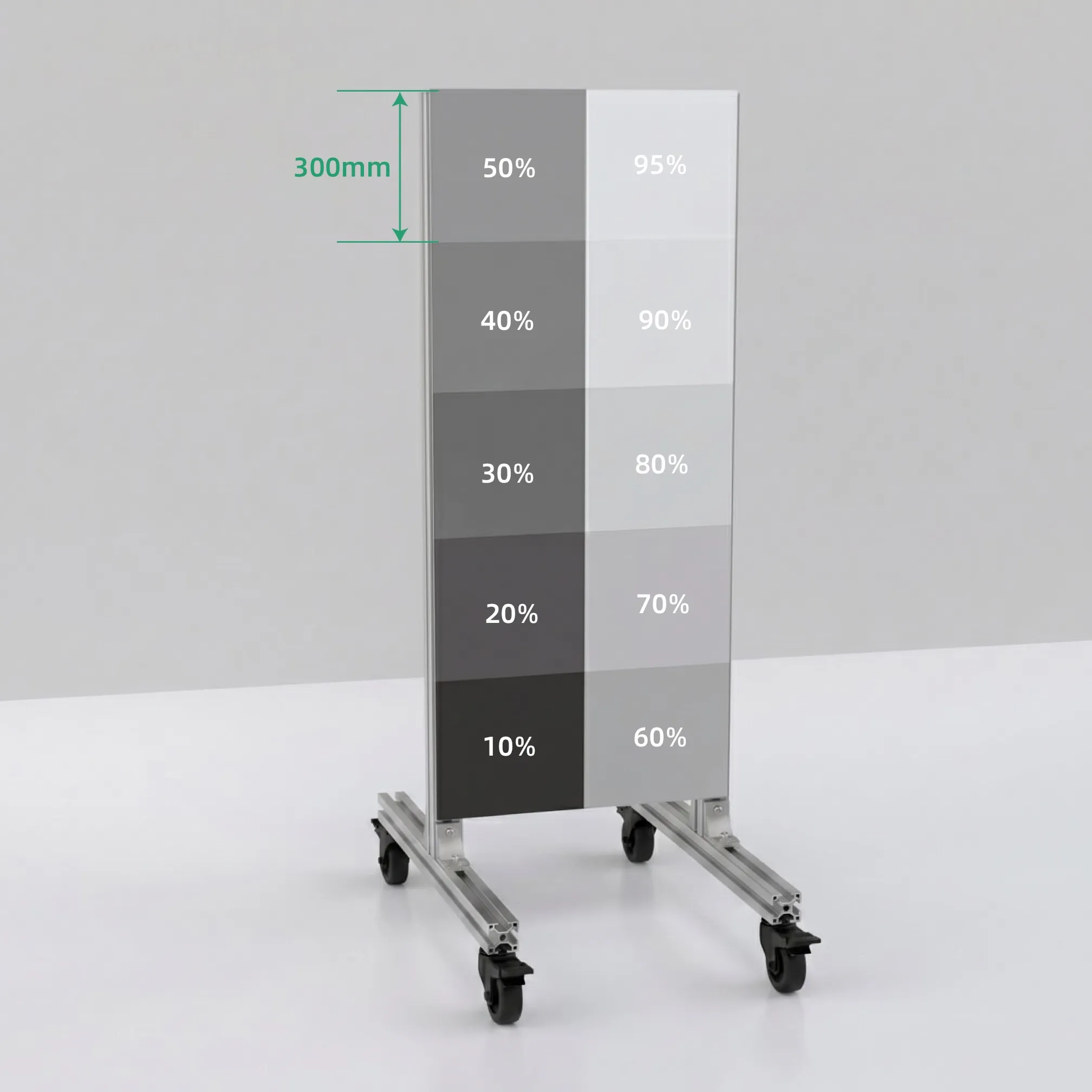
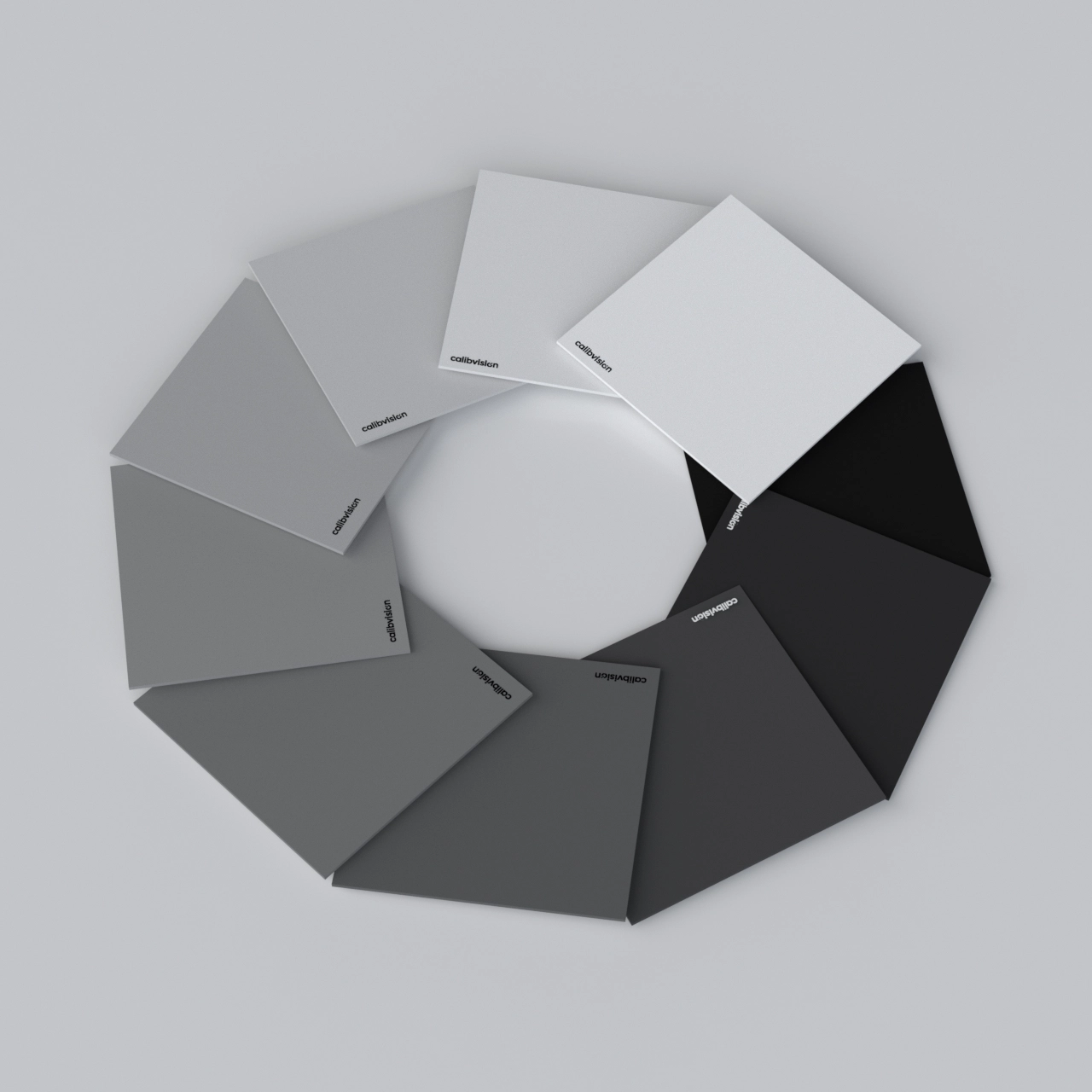
CalibVision manufactures engineered Lambertian reflectance targets across the full 1% to 99% reflectance range at all four major LiDAR wavelengths (905nm, 1550nm, 940nm, 850nm), plus sintered PTFE reference standards for metrology-grade applications requiring ±1-2% Lambertian tolerance across 250-2500nm.
For applications requiring formal Lambertian behavior verification (full BRDF characterization, goniospectrophotometer measurement), we provide additional documentation through CMA-accredited and CNAS-aligned partner metrology labs.
Shop 905nm LiDAR Reflectance Targets → | Browse All Reflectance Standards → | Request Custom Quote →
What to Read Next
- The Complete Guide to LiDAR Reflectance Targets — main reference covering reflectance fundamentals, materials, and applications.
- 10%, 50%, and 90% Reflectance Targets — Which Do You Need? — deep-dive into reflectance value selection for your test program.
- How to Test LiDAR Performance with Reflectance Targets — step-by-step lab setup guide.
- 905nm LiDAR Reflectance Target: Selection and Testing Guide — wavelength-specific guidance for the most common LiDAR systems.